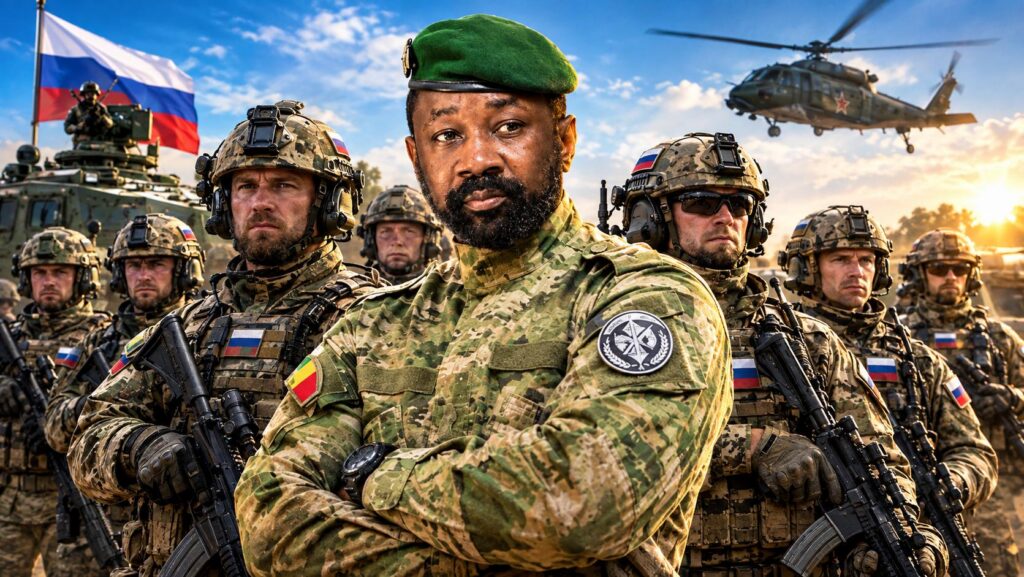
The three-year death toll of the russian paramilitary force in Mali has become a political flashpoint, triggering public debate and forcing hard questions about what comes next. Newly compiled figures indicate that at least 358 russian fighters have been killed since the contingent arrived in late 2021. The number has unsettled official narratives of a swift security reconquest and sparked reactions across Mali, from military barracks to the streets.
How the casualty figure came to light
Independent observers, conflict-monitoring groups and overlapping security leaks have pieced together the data. The force, once known as Wagner and now operating under the Africa Corps label, has left a trail of losses that tells a different story from the one promoted by the authorities.
A toll that dwarfs past interventions
Placed against the recent military history of the region, the figure is striking: in just three years, the russian partner has lost more than double the 59 French soldiers killed over nearly a decade of operations (Serval and then Barkhane) across the Sahel.
Why the gap is so wide
The difference stems largely from opposing operational doctrines. Western forces relied on air support, technological intelligence and the systematic avoidance of close contact. Russian fighters, by contrast, are thrown directly into front-line ground operations, conducting high-risk sweeps through heavily mined areas riddled with IED ambushes.
Attacks on Sévaré and Dioura: catalysts of the escalation
The bloody ambush at Tinzawatène in July 2024, which claimed more than 80 russian fighters alongside Malian armed forces, was the first major shock. But coordinated large-scale assaults on garrisons in the center and north have since pushed the toll even higher.
Repeated attacks on strategic installations in Sévaré and forward positions at Dioura have dealt painful setbacks to the joint FAMA / Africa Corps arrangement. Facing armed groups that exploit intimate knowledge of the terrain and modern tactical tools, including reconnaissance and strike drones, the russian troops have paid an extremely high price in attrition.
Impact on the junta and Moscow
The exorbitant human cost, combined with a financial bill estimated at hundreds of billions of CFA francs, casts doubt on the effectiveness of the security model imported from Moscow.
In barracks and among the population, questions are mounting about whether such a strategy can be sustained. The military transition’s initial promise was rapid pacification of the territory. Instead, the exponential rise in losses among the key partner illustrates the quagmire of a complex war of attrition whose human cost keeps climbing.
Reactions and what comes next
Public debate is intensifying. Some voices question the wisdom of relying on a partner whose losses are mounting faster than those of the force it replaced. Others worry that any drawdown could leave Malian forces exposed. For now, the junta and Moscow face a strategic reckoning: continue a costly engagement, adjust tactics, or rethink the partnership altogether. The coming months will show whether the current course can survive the weight of its own casualties.
You may also like
Chadian rebels in Lomé: the fallout, the debate, and what happens next for Togo
Moussa Kaka’s disappearance in Niamey: the fallout, the debate, and what happens next
Olympe Bhêly-Quenum at 100: how the literary world is reacting and what lies ahead
Niger fallout: General Tiani’s coup regret and the fear that now grips the palace
Mali’s media fallout: Maliweb.net and the fight for truthful reporting