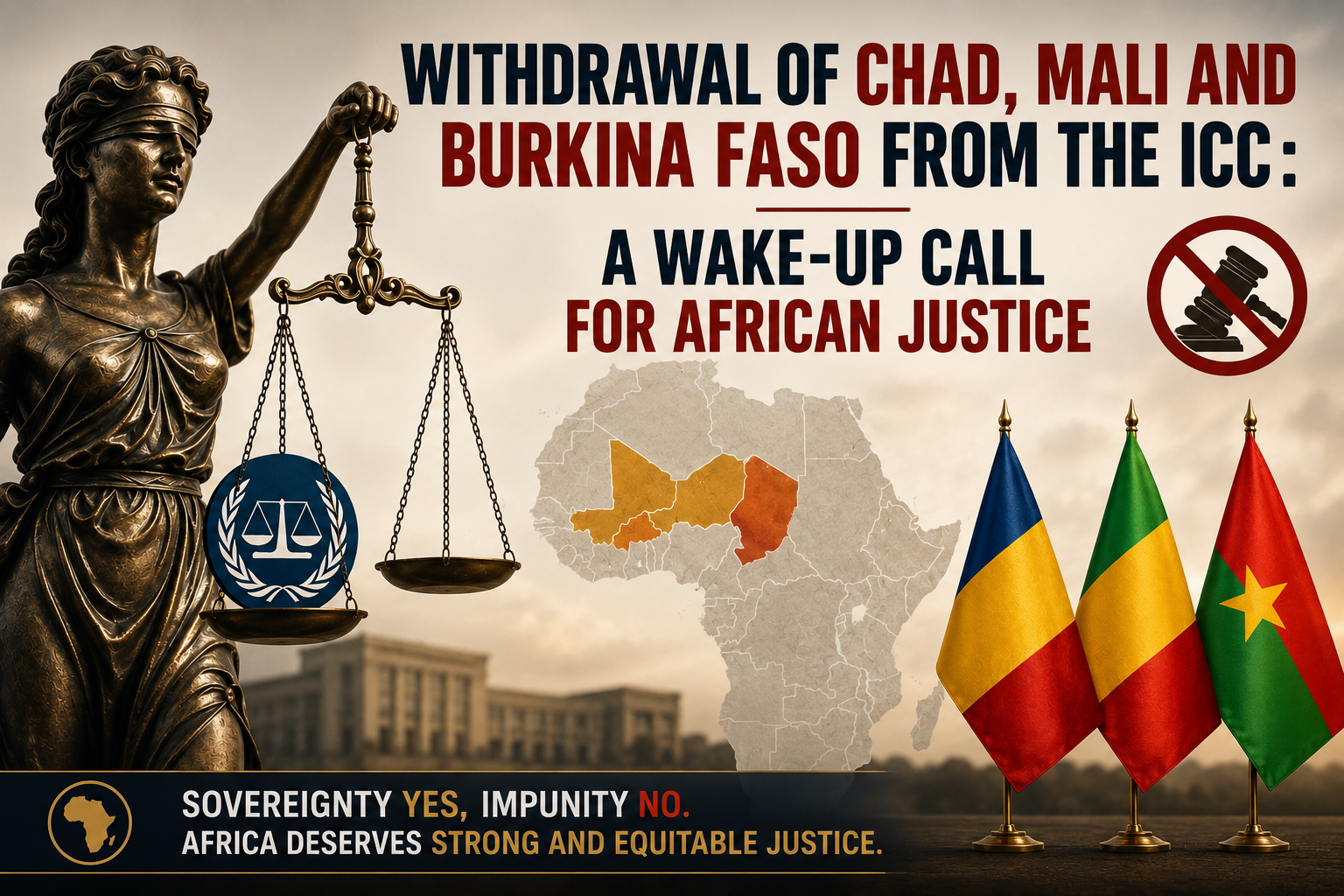
Regional Withdrawals Signal Distrust in International Justice
The recent decision by Chad to withdraw from the Rome Statute of the International Criminal Court (ICC) follows similar moves by Mali, Burkina Faso, and Niger. While authorities cite the Court’s perceived ineffectiveness and selective application of justice, these withdrawals reflect deeper tensions between African governments and international judicial institutions. The fundamental question remains: what safeguards exist for victims when states abandon global mechanisms without first establishing robust national alternatives?
Sovereignty Claims vs. Judicial Accountability
Governments defending their withdrawal argue that the ICC’s approach lacks impartiality, particularly in its focus on African cases while major global powers remain outside its jurisdiction. While these criticisms are not without merit, abandoning the Court altogether does not eliminate the crimes it was designed to address. Crimes against humanity, war crimes, and other grave violations persist regardless of a nation’s legal withdrawal from the Statute.
The withdrawal of Niger and its regional counterparts raises concerns about potential judicial gaps. Armed conflicts in these countries have led to widespread allegations of atrocities, with civilian populations bearing the brunt of violence. Human rights organizations have documented systematic abuses, yet victims face significant barriers to obtaining justice and reparations. The ICC’s departure could further limit their recourse to accountability.
National Justice as a Viable Alternative?
The argument for a stronger African judicial system holds merit, provided it meets stringent standards of independence and efficacy. A credible justice mechanism must:
Investigate crimes impartially, including those allegedly committed by state actors;
Ensure judicial independence from political interference;
Provide adequate resources for investigations and prosecutions;
Guarantee witness protection and victim participation in proceedings.
Without these guarantees, sovereignty risks becoming a shield for impunity rather than a tool for justice. The Hissène Habré trial demonstrated that African-led justice is possible, but scaling such efforts into sustainable institutions remains a challenge.
The Timing of Withdrawal: Legal and Practical Implications
While Chad officially notified the ICC on July 27, 2026, its withdrawal will only take effect one year later. Until then, the country remains bound by its obligations. Importantly, the ICC retains jurisdiction over crimes committed before the withdrawal becomes effective, ensuring that perpetrators cannot evade accountability by simply exiting the system.
However, the broader concern lies in the future. Once withdrawals take full effect, what mechanisms will ensure that alleged war criminals cannot exploit weakened oversight? The absence of international scrutiny could embolden perpetrators, particularly in regions plagued by prolonged conflict.
The Risk of Politicized Justice
Withdrawals occurring amid political centralization and shrinking civic spaces raise further alarms. A justice system that bows to governmental pressure cannot serve as a genuine alternative. Sovereignty, in this context, must mean more than rejecting external oversight it must entail a commitment to domestic accountability that is equally rigorous and uncompromised.
For victims of violence in the Sahel, the debate over the ICC may feel abstract. Yet the consequences are profoundly real: Who will investigate crimes? Who will ensure that witnesses are heard? Who will deliver justice when national institutions falter? While the ICC is not without flaws, it has served as a critical safety net where domestic systems fail.
A Call for Reform, Not Retreat
The withdrawals do not imply that the ICC is beyond critique. Rather, they underscore the need for meaningful reform to address African concerns. A justice system that is universally applied, impartial, and independent remains essential. The path forward must balance sovereignty with accountability, ensuring that no individual regardless of status escapes legal consequences for grave violations.
For the Sahel, the true test of sovereignty will be the ability to build judicial systems that are not only independent but also capable of delivering justice to all, particularly the most vulnerable. Anything less risks deepening the crisis of impunity in a region already grappling with profound instability.