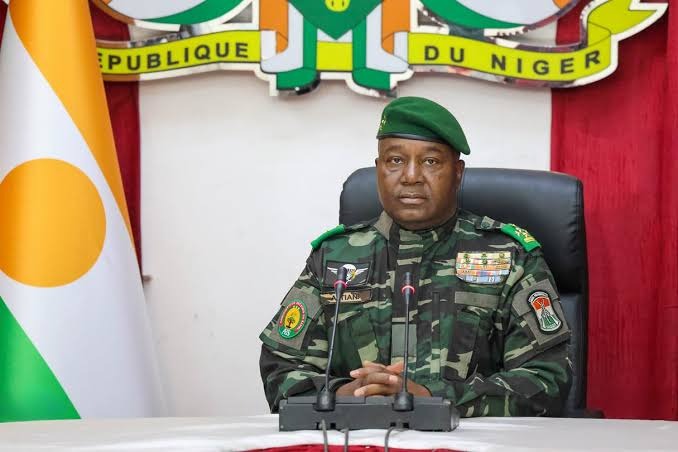
A government shake-up that changes faces, not outcomes
The decree signed on 15 September 2026 by General Abdourahamane Tiani is being sold as a routine administrative adjustment. In practice, it is a political rescue operation. Facing pressure on every front, the National Council for the Safeguard of the Homeland (CNSP) is tightening its inner circle, handing out rewards and locking down power as public discontent spreads.
Economic consequences: a cabinet built for control, not recovery
For ordinary Nigeriens, the practical effects are immediate and painful. Placing Colonel Bilaly Elhadj Gambobo at the helm of Agriculture and Livestock puts a military officer in charge of a sector that directly determines food prices and rural incomes. Farmers, herders and traders now deal with a command structure more focused on surveillance than on production. With food inflation already straining household budgets, the absence of a civilian, transparent approach to agriculture risks deepening shortages and pushing basic staples further out of reach.
Political panic after cracks in the army
This reshuffle did not come out of nowhere. It follows the August mutiny at Air Base 101 in Niamey, which shook the regime to its core. After purging and hastily reorganising the military command and the presidential guard, the Tiani government is now turning to the political side of its self-defence. The message is clear: the priority is survival, not service delivery.
Rewarding loyalists while youth unemployment climbs
The appointment of Abdourahamane Oumarou, leader of the UNPP party and a vocal figure in the sovereigntist movement, is the clearest sign of this drift. He is not being brought in for managerial skill but for his ability to drown out dissent. A loyalist since the July 2023 coup, he receives the Ministry of Youth and Refoundation as a reward. Meanwhile, young Nigeriens face soaring unemployment and shrinking opportunities. The CNSP is paying its propagandists while a generation struggles to find work.
Technocrats as human shields
To disguise the political horse-trading, the junta has inserted a few academic figures, such as Professor Mahamadou Saidou at Higher Education and Oumarou Maman at Humanitarian Action. But these appointments are cosmetic. How can Professor Saidou calm universities without financial resources? How can Oumarou Maman assist war-displaced civilians when state coffers are empty and international aid has been cut? These technocrats serve as shields and scapegoats for when the system collapses under the weight of poverty.
Businesses and households left to absorb the shock
The economic fallout extends beyond the countryside. Businesses in Niamey and across the regions contend with uncertain supply chains, reduced international support and a government more focused on internal loyalty than on creating conditions for investment. Small traders, transport operators and informal workers — the backbone of the urban economy — see no relief in this reshuffle. Instead, they see a cabinet designed to protect the regime, not to revive livelihoods.
A desperate patchwork, not a plan for Niger
This reshuffle is neither a strategy nor a vision for the future. It is a desperate patchwork by a government under siege, one that prefers to feed its loyal supporters rather than confront high living costs, economic crisis and the expectations of its people. Changing the faces around the table will not hide the failure of the system — and it is citizens, workers and businesses who will pay the price.
You may also like
Niger’s information crackdown: the real cost for citizens, businesses and the economy
Gabon’s public debt drops below 70% of GDP after audit
Digitalisation du foncier au Gabon : le Ministre de l’Économie rejoint le protocole avec SNEDAI GROUPE
Sonidep’s 2026 loss: how Niger’s cheap fuel policy is draining the state oil company
Cameroon’s Martinez Zogo case: lead investigator wraps up critical hearing