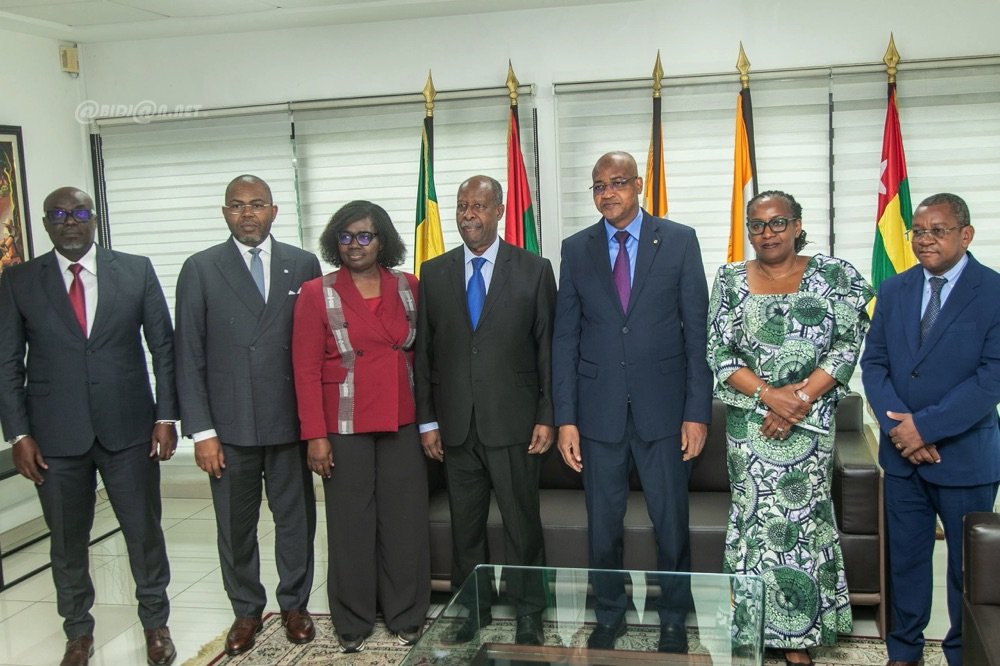
The consequences of a new security partnership between the Entente Council and the United Nations Office for West Africa and the Sahel (UNOWAS) will be felt far beyond diplomatic meeting rooms. Signed on Tuesday, 29 September 2026, in Abidjan-Cocody, the memorandum of understanding aims to strengthen cooperation on peace, stability, political dialogue and regional cooperation across West Africa and the Sahel. For ordinary citizens, traders and communities living in border areas, the accord could translate into more coordinated efforts to prevent violence, mediate local disputes and keep cross-border markets and roads open.
The two institutions are joining forces at a time when security, political, humanitarian and institutional challenges continue to test the region. The partnership is designed to preserve and expand spaces for dialogue between states and regional bodies — a move that could reduce the risk of isolated crises escalating into wider instability.
Cooperation under the memorandum rests on three main priorities. The first focuses on preventive diplomacy, mediation and political dialogue. This includes the possibility of strategic consultations, good offices initiatives and facilitation efforts. In practical terms, this could mean faster, quieter interventions when tensions rise between communities or governments, potentially sparing civilians the consequences of prolonged conflict.
The second priority covers peace and resilience in border areas. Both institutions plan to work on conflict prevention, social cohesion and the participation of young people and women in peace initiatives. For border communities — often the first to suffer when insecurity spills across frontiers — this could lead to more inclusive local peace structures and better early warning of emerging threats.
The third area is institutional strengthening and strategic analysis. This involves information sharing, joint studies, advisory assistance and capacity-building for the Entente Council. A stronger Entente Council could mean more effective regional responses to crises, with direct benefits for businesses operating in uncertain environments and for citizens who depend on stable governance.
The memorandum also confirms the Entente Council’s role as a platform for dialogue, consultation and diplomatic facilitation. When circumstances require, the organisation could help bring states — and different regional configurations — closer together. Such bridge-building may reduce the economic costs of political fragmentation, which often hit traders, transporters and consumers hardest.
To ensure the agreement is implemented, the two institutions will draw up annual joint work plans, designate focal points and hold regular follow-up consultations. Joint assessment, dialogue or diplomatic facilitation missions may also be conducted. These mechanisms are intended to keep the partnership active and responsive, rather than letting it languish on paper.
The memorandum is concluded for an initial period of three years.
Speaking at the signing ceremony, Leonardo Simão, Special Representative of the United Nations Secretary-General for West Africa and the Sahel, stressed the importance of this cooperation for promoting peace and stability in the region.
“There are always threats to peace. We cannot take peace as something definitive. We must always make efforts to maintain peace where it already exists, but also to recover peace where it does not exist,” he said.
Leonardo Simão also highlighted the experience of the Entente Council, created in 1959, before the Organisation of African Unity and the Economic Community of West African States (ECOWAS). According to him, this experience of cooperation between states provides a foundation on which new peace initiatives in the region can be built.
For Idi Ali, deputy executive secretary in charge of the interim executive secretary of the Entente Council, the agreement reflects recognition of the role the organisation can play in the current security context.
“The Entente Council is today a privileged framework for consolidating peace in the sub-region,” he said, noting in particular the presence within the organisation of both Sahelian and coastal countries.
He welcomed the signing of the memorandum with UNOWAS, estimating that it will consolidate relations between the two institutions and strengthen their contribution to peace in the sub-region.
Cyprien K.
You may also like
What Togo’s mediation push means for families and businesses in eastern DRC
How northern Nigeria’s kidnapping economy is bleeding rural communities dry
Benin’s growing security network: what new cooperation with Algeria means for citizens and the economy
What Louis Paul Motazé’s capital markets push means for Cameroonian households and businesses
Mali war crimes report: the human and economic cost of impunity for families in Ségou, Mopti and Tombouctou