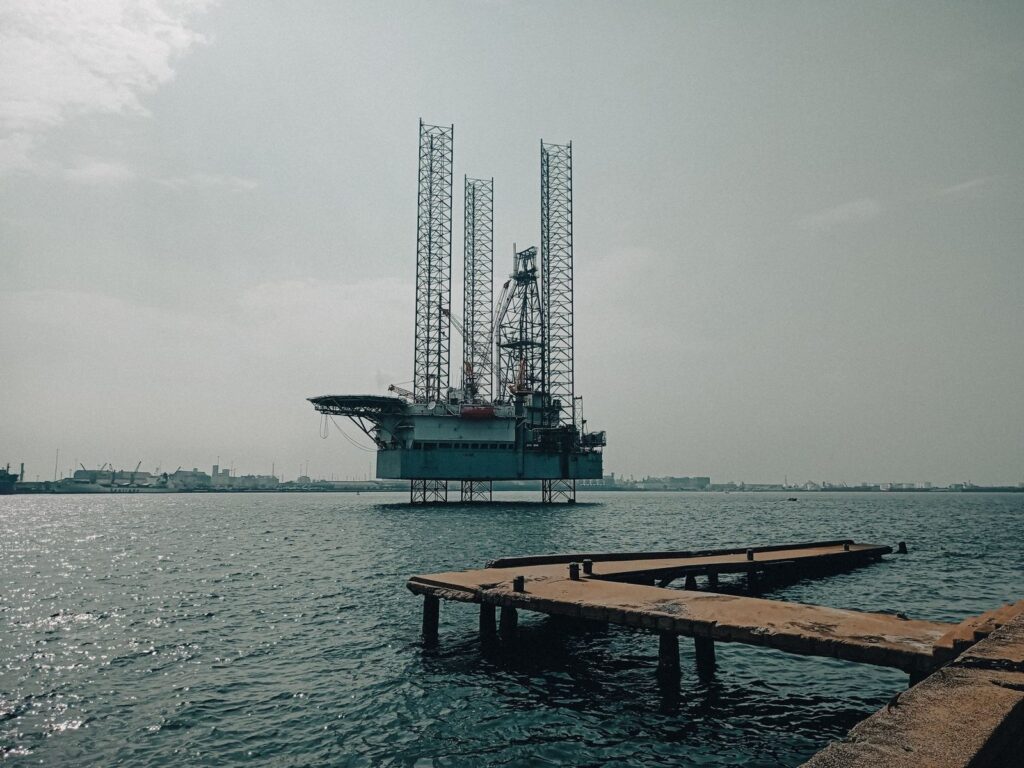
The long-delayed Thali offshore oil project in Cameroon has crossed a critical regulatory threshold that could reverberate far beyond the boardroom: President Paul Biya’s office has authorized Tower Resources to farm out 42.5% of its interest to Prime Global Energies, unlocking a promised $15 million investment in the work program. For a country banking on oil revenues to shore up public finances, the decision carries tangible consequences — it revives a project that had stalled for years due to a lack of drilling funds, potentially protecting future state income and local jobs tied to offshore operations.
The deal is structured as a farm-out, not a direct cash payment to Tower. Prime Global Energies will fund a share of the technical program in exchange for a non-operated stake, leaving Tower Resources Cameroon — the London-listed group’s local subsidiary — in charge of day-to-day operations. At the European Central Bank reference rate of September 28, 2026, the $15 million commitment is equivalent to roughly 8.65 billion CFA francs, a sum that could breathe life into a permit that has yet to produce a single barrel.
Administrative loose ends keep the deal in limbo
Presidential approval is not the final word. Tower’s half-year accounts, closed June 30 and published September 28, reveal that the company has only seen a copy of the presidency’s letter addressed to the Prime Minister’s office, the Ministry of Mines, Industry and Technological Development (Minmidt), and the National Hydrocarbons Corporation (SNH). The Minmidt still must draft the order extending the initial exploration period and issue the formal approval letter for the transfer.
Until those executed documents reach the parties, the transaction remains frozen. Tower acknowledges that the completion timeline is uncertain — a cautious stance that reflects the project’s turbulent history. Exploration has already slipped by several years because the operator lacked the financial muscle to launch drilling.
Prime Global Energies, registered in the United Kingdom and focused on upstream oil and gas, is no stranger to the sector. Until December 2024 the company was known as Prime Pakistan Limited, after operating under the name Eni Pakistan Limited. That lineage with Italy’s Eni gives it operational experience that may reassure Cameroonian authorities about the technical credentials of the incoming partner.
NJOM-3 pushed to the second quarter of 2027
The main purpose of Prime’s entry is to secure funding for NJOM-3, the next appraisal well on Thali. Tower has revised its schedule: drilling is now expected to start in early Q2 2027, from April onward, compared with a previous target of Q1. An earlier spud is not entirely ruled out, but management prefers to keep the most conservative window in its forecasts.
“We currently plan to commence drilling in early Q2 2027,” says Jeremy Asher, chairman and CEO of Tower Resources. The rig has not yet been contracted. The company continues to review available units on the market and has decided to stop commenting on the matter until a firm contract is signed. Agreements with other service providers needed for the operation, however, are already in place.
Part of the logistics is already set up in Douala. Tower has stored there, alongside other equipment destined for NJOM-3, a system that can suspend the well after testing and later reuse it for production if test results prove encouraging.
A cash-starved operator for which the deal is existential
Prime’s contribution is close to make-or-break for Tower. In its accounts, the group states it must either complete the Cameroonian farm-out, conclude another transaction on its assets, or raise additional capital to meet its commitments. As of June 30, 2026, the company held just $66,583 in cash against $2.91 million in current liabilities. It has never produced a barrel and generates no revenue.
In the first half of the year, $453,000 of expenditure was capitalized in Cameroon, down from $982,000 a year earlier. These commitments cover NJOM-3 preparation, engineering studies, drilling planning and the running of the Douala office. The $15 million pledged by Prime should cover the remaining balance needed for the appraisal well. Subsequent testing and any eventual commercial development of the field will require fresh rounds of funding.
What the Thali decision means for Cameroon’s economy
For Yaoundé, the stakes go beyond one permit. A successful NJOM-3 could confirm additional reserves, attract further investment and generate royalties and taxes that support public spending. A failure, by contrast, would leave the project dormant and reinforce the perception that Cameroon’s upstream sector struggles to convert approvals into production. The coming months — and the Minmidt’s pending paperwork — will determine whether the farm-out becomes a genuine economic lifeline or another missed opportunity.
You may also like
What the Entente Council–UNOWAS pact means for daily life in West Africa
What Togo’s mediation push means for families and businesses in eastern DRC
How northern Nigeria’s kidnapping economy is bleeding rural communities dry
Benin’s growing security network: what new cooperation with Algeria means for citizens and the economy
What Louis Paul Motazé’s capital markets push means for Cameroonian households and businesses