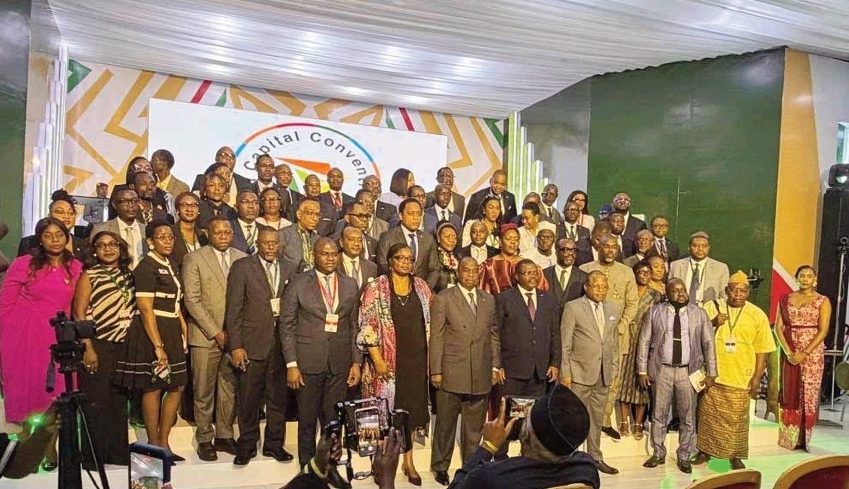
At the opening of the first Diamond Capital Convention in Douala on 24 September 2026, Finance Minister Louis Paul Motazé made the case for a deeper, more dynamic and more attractive financial market — one capable of supporting companies, infrastructure and the major economic transformation projects of Cameroon and CEMAC. The consequences for households, businesses and the wider regional economy could be far-reaching.
Louis Paul Motazé, Cameroon’s Minister of Finance, presided over the opening ceremony of the inaugural Diamond Capital Convention in Douala on 24 September 2026. The gathering brought together public authorities, investors, financial institutions, companies, regulators and other market players to discuss the challenges of financing the economy.
In his address, the minister urged stakeholders in the financial ecosystem to step up capital mobilisation in service of the real economy. Participants exchanged views on how to channel more resources toward productive sectors and to bridge the gap between available capital and the needs of project promoters.
Motazé stressed the need for a financial market that is deeper, more dynamic and more attractive, capable of accompanying businesses, infrastructure and the major economic transformation projects of Cameroon and the Central African Economic and Monetary Community (CEMAC).
Why a deeper market matters for ordinary citizens and businesses
The consequences of a shallow capital market are felt far beyond boardrooms. When companies cannot raise long-term financing locally, they delay expansion, curb hiring and sometimes relocate. For households, that translates into fewer job opportunities, slower income growth and higher prices when goods must be imported rather than produced locally.
Motazé’s call is therefore not merely technical. It points to a practical goal: directing capital toward industrialisation, local processing of raw materials, infrastructure, energy and digital sectors — areas that can create value, stimulate economic activity and generate employment.
For small and medium-sized enterprises, a more accessible market could mean an alternative to bank credit, which remains costly and often short-term. For citizens, it could gradually open the door to participating in the financing of productive activity through savings products and investment vehicles.
The trust factor: regulation, transparency and investor protection
Confidence occupies a central place in this dynamic. It rests on effective regulation, transparency, the quality of financial information, good governance and investor protection. Without these pillars, savers are unlikely to entrust their money to the market, and businesses will continue to struggle to find long-term partners.
The mobilisation of savings is another key issue. Developing an accessible and credible financial market should progressively strengthen the participation of economic actors and the wider population in financing productive activity. That, in turn, could reduce dependence on external borrowing and give the region more control over its own development trajectory.
From Douala to the wider CEMAC economy: what is at stake
Through this first edition of the Diamond Capital Convention, participants were called upon to emerge with concrete solutions to strengthen financing for the Cameroonian and community economies, support productive investment and accompany economic transformation.
For Cameroon and CEMAC, the challenge is to turn the capital market into a genuine lever of development — transforming available financial resources into productive investments, infrastructure, competitive companies and jobs. The real-world effects, if the momentum is sustained, would be measured in factories opened, roads built, young people employed and a more resilient regional economy.
You may also like
How northern Nigeria’s kidnapping economy is bleeding rural communities dry
Benin’s growing security network: what new cooperation with Algeria means for citizens and the economy
Mali war crimes report: the human and economic cost of impunity for families in Ségou, Mopti and Tombouctou
Mali’s fuel import loan: how the 8 billion CFA BOAD deal hits households, businesses and the wider economy
RAFFINOR-BF: the concrete impact of Burkina Faso’s gold refinery on citizens and the national economy