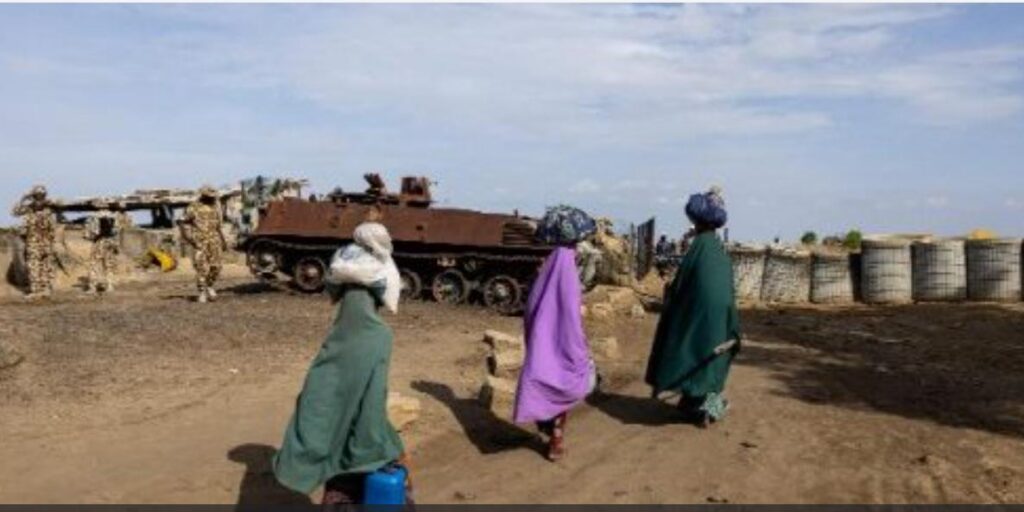
A weekend of terror that reshapes lives across two states
The human toll of Nigeria’s kidnapping crisis hit home once more this weekend as armed men swept through farming communities in Niger and Zamfara states, abducting at least 87 people in less than 48 hours. The victims were overwhelmingly women, and the attacks left behind smoldering homes, emptied villages, and families facing an agonizing wait for ransom demands that may never come — or may come at a price they cannot pay.
Saturday in Mariga: a harvest turned into a nightmare
The first strike unfolded on Saturday in Niger State’s Mariga area, where residents were gathering groundnuts in the fields. Gunmen on roughly 50 motorcycles descended on the farmland, seizing at least 47 farmers, many of them women. According to local accounts, the captives may be held in the Ma’undu forest. No ransom demands had reached the families at the time the reports emerged.
Sunday in Zamfara: reprisal raids torch villages
The following day, violence spread to neighboring Zamfara State. Around 40 women were taken from Yargada in the Gusau district, while nearby settlements — including Yargada, Maikogo, and Magama Mairake — also came under attack. Houses and vehicles were set ablaze. Local residents speaking to reporters suggested the true toll could exceed 50 women and children, though the isolation and insecurity of the area make independent verification nearly impossible. Villagers believe the Sunday raids may have been retaliation for the killing of gang members by local militias, though this account remains unverified.
Who are the ‘bandits’ — and why they differ from jihadist groups
These attacks are blamed on armed gangs known locally as “bandits,” who operate separately from jihadist organizations like Boko Haram and the Islamic State in West Africa Province (ISWAP), even though the lines between organized crime, banditry, and insurgency can blur. For years, these groups have used the vast forests of northwestern and central Nigeria as hideouts and launchpads for ransom kidnappings, cattle rustling, and village raids. The government’s ability to control these remote rural territories remains severely limited.
A criminal enterprise worth millions — and growing
Beyond the violence, kidnapping has become a lucrative business. Data from SBM Intelligence indicates that roughly 7.78 billion naira — about $5.8 million — was paid in ransoms between July 2025 and June 2026, more than triple the amount in the previous period. The same report estimates 7,825 people were abducted during that timeframe, a 66% year-on-year increase. These figures, while not exhaustive, reveal the staggering scale of the kidnapping economy.
The crisis is not confined to farmers or travelers. Schoolchildren, entire families, and whole villages are regularly targeted. In May 2026, more than 80 children disappeared after attacks on schools in Borno and Oyo states.
Tinubu’s military offensive: what it has achieved — and what it hasn’t
President Bola Tinubu’s government says it has intensified the fight against terrorists, bandits, and kidnapping networks. The Nigerian military is running multiple simultaneous operations: Operation Hadin Kai in the Northeast against Boko Haram and ISWAP, and Operation FANSAN YAMMA in the Northwest targeting armed groups in Zamfara, Katsina, Kaduna, and Sokoto. Other operations are underway in the central region.
Authorities highlight a strategy combining ground operations, airstrikes, intelligence gathering, arrests, and rescue missions. The Federal Ministry of Information says forces have stepped up actions against bandit and kidnapper networks in Zamfara, Sokoto, Katsina, Niger, Kaduna, and beyond. According to Defense Headquarters, 7,062 operations were conducted nationwide in July and August 2026, resulting in 1,487 terrorists and insurgents neutralized, 354 suspects arrested, and 777 kidnapped people freed. Nearly a thousand firearms were also recovered. These figures come from military authorities and cannot all be independently verified.
In late September, the army announced the rescue of 14 kidnapped people in Kaduna and Katsina states, along with weapons seizures and the interception of suspected terrorist network members.
Why the abductions continue despite military pressure
The persistence of mass kidnappings shows the problem runs deep. Days before the latest attacks, residents of Niger State protested to demand the release of hundreds taken in coordinated August raids — local estimates put the number near 700, though authorities have not confirmed that figure. The government faces a dual challenge: weakening armed groups while preventing them from regenerating in hard-to-reach rural areas. Security forces must also dismantle the logistical networks, arms traffickers, and financial channels that keep criminal operations running.
For rural communities, the threat is a daily reality. Farming a field, going to market, or crossing a forest can mean exposure to abduction. As long as armed groups can move, hide, and demand ransoms, military operations must be paired with sustained intelligence efforts, community protection, and territorial control. The 87 abductions reported this weekend are less an isolated incident than another signal of Nigeria’s struggle to restore lasting security in parts of the North — and a reminder of the economic and human cost borne by those who live there.
You may also like
Benin’s growing security network: what new cooperation with Algeria means for citizens and the economy
What Louis Paul Motazé’s capital markets push means for Cameroonian households and businesses
Mali war crimes report: the human and economic cost of impunity for families in Ségou, Mopti and Tombouctou
Mali’s fuel import loan: how the 8 billion CFA BOAD deal hits households, businesses and the wider economy
RAFFINOR-BF: the concrete impact of Burkina Faso’s gold refinery on citizens and the national economy