As armed groups expand their reach across West Africa’s Sahel, Benin is quietly reshaping the way it protects its people, its borders and its businesses. The latest move in that effort is a fresh opening toward Algeria — a partnership that, if formalised, could touch everything from training camps in the north to the sense of safety in markets and on highways.
A meeting in Cotonou that signals a wider shift
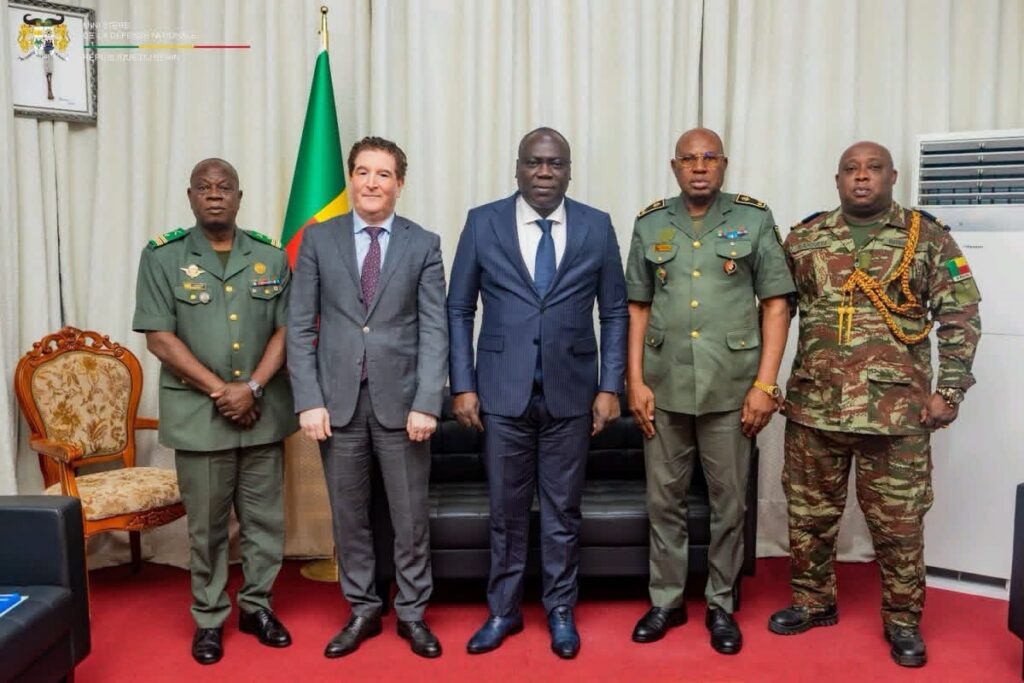
On 24 September 2026, the minister delegate to the president in charge of national defence, Gildas Agonkan, received Algeria’s ambassador to Benin, Ammar Hadjar, in Cotonou. At the centre of their talks: deepening bilateral cooperation on defence and security.
Algeria signalled its willingness to share operational experience with Benin’s armed forces, particularly through troop training and capacity development. The offer lands in a regional context where armies are grappling with asymmetric threats and constantly shifting tactics from armed groups.
But the most telling detail may come from Cotonou itself. Rather than leaning on a single partner, Benin is pursuing a deliberate policy of diversifying its military cooperation and seeking complementary skills and expertise.
Why Algeria’s track record matters
The value of this cooperation lies largely in the experience the Algerian army has built up in fighting armed groups. Algeria’s defence ministry continues to highlight its capabilities and its counter-terrorism feedback.
For Cotonou, the goal is not simply to obtain equipment. It is also about strengthening skills, training, operational readiness and interoperability across its forces.
Minister Agonkan expressed a wish to draw more heavily on Algerian experience and called for framework agreements covering different aspects of national defence. The stated aim: build a lasting partnership and boost the operational capacity of Benin’s forces.
A diversification strategy that is out in the open
The opening toward Algiers is not an isolated act. It fits into a broader dynamic Benin has launched with several partners.
In recent months, Cotonou has multiplied defence exchanges with various countries, including the United States, the United Arab Emirates, Germany and the Netherlands. Benin’s defence ministry itself points to a policy of military cooperation with several states and to agreements that allow Beninese soldiers to benefit from training and refresher courses abroad.
The logic is clear: multiply cooperation channels to access a wider range of expertise, training and capabilities.
This approach also lets Benin seek partnerships tailored to its own security realities, especially in the north of the country, where forces face the threat of armed groups active across the Sahel.
Benin’s priority: strengthening its own capacity
Military cooperation does not mean transferring responsibility. The guiding principle remains the reinforcement of national capacities.
Benin already has its own training and development structures. In July 2026, the National Higher School of the Armed Forces (ENSA) recorded a 96.15% success rate for its 22nd class of the preparatory course for the staff diploma, with trainees from seven countries. The ministry presents this school as a tool for training and for building the resilience of the forces.
Opening up to foreign expertise therefore complements this effort rather than replacing it.
The approach taken with Algiers could allow Beninese soldiers to compare their methods with other experiences, acquire new skills and strengthen their ability to respond to threats whose forms are changing fast.
Cotonou keeps control of its security cooperation
No date has yet been announced for signing a framework agreement between the two countries. Discussions are expected to continue before any new commitments are formalised.
But the political and strategic signal is already visible: Benin is closing no doors when it comes to security cooperation.
From Washington to Abu Dhabi, from Berlin to Algiers, and through other partners, Cotonou is looking to multiply its sources of expertise and training.
In a regional environment marked by the spread of asymmetric threats, this diversification is above all a way for Benin to gradually consolidate its own defence capabilities, combining national experience with that of partners holding different skills.
The Algerian offer thus arrives in an already moving landscape. It adds a new piece to a security architecture Benin is trying to build around a simple principle: strengthen its forces, diversify its partners and keep control of its defence choices.
You may also like
Mali war crimes report: the human and economic cost of impunity for families in Ségou, Mopti and Tombouctou
Mali’s fuel import loan: how the 8 billion CFA BOAD deal hits households, businesses and the wider economy
RAFFINOR-BF: the concrete impact of Burkina Faso’s gold refinery on citizens and the national economy
Niger’s competitive dialogue reform: how a 2022 decree left businesses and taxpayers footing the bill
What Benin’s UN security doctrine means for citizens, businesses and the regional economy