The United States has signaled a major pivot in its diplomatic approach toward three West African nations currently battling Islamist insurgencies. These military-led governments, which recently severed ties with France in favor of Russian partnerships, are now seeing a renewed interest from Washington.
The Department of State announced that Nick Checker, head of the Bureau of African Affairs, is scheduled to visit Bamako. His mission is to express American recognition of Mali‘s sovereignty and establish a fresh diplomatic trajectory, moving past previous political friction. Furthermore, the US aims to collaborate with Mali’s neighbors, Burkina Faso and Niger, on mutual security and economic objectives.
Notably absent from the current agenda is the historical emphasis on democratic transitions and human rights. While the previous administration had halted military aid following the coups between 2020 and 2023—including the ongoing detention of Niger‘s Mohamed Bazoum—the current Donald Trump administration is moving in a different direction.
This policy transformation has become increasingly apparent over the last year. It began with the dissolution of USAID operations in the region—a key development player—shortly after the president’s inauguration. This has been followed by consistent signals that the United States is narrowing its focus to security and mineral wealth, leaving governance and development as secondary concerns.
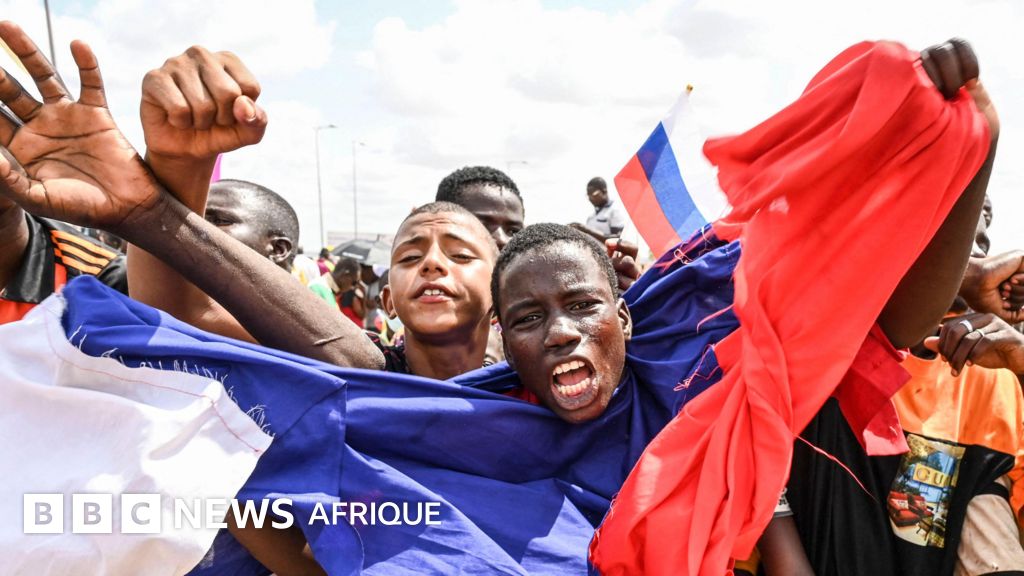
By explicitly mentioning “respect for sovereignty,” the US is tapping into the Panafricanist sentiment that has bolstered the popularity of military leaders in Bamako and neighboring capitals. These leaders have built their public support by rejecting France, the former colonial power.
In Burkina Faso, Captain Ibrahim Traoré has positioned himself as a champion against “imperialism” and “neocolonialism.” Through aggressive social media promotion, he has garnered significant support among the youth across the continent.
The Trump administration has made it clear that the rejection of European-style constitutional models by these regimes is not a primary concern. Massad Boulos, a senior advisor on Africa, stated that while democracy is valued, the United States intends to avoid interfering in the internal affairs of other nations, asserting that people should be free to choose their own systems.
This represents a sharp departure from the Biden era, where General Michael Langley, head of Africom, emphasized that military support must be coupled with good governance and environmental considerations.
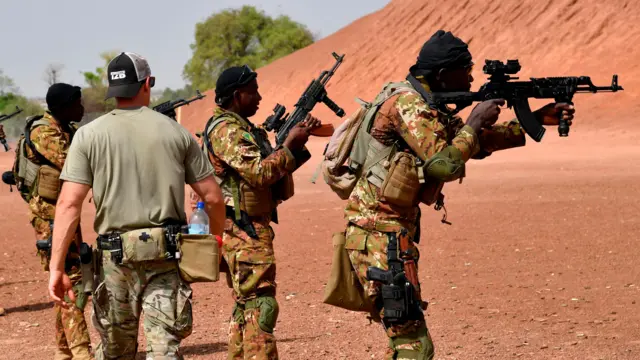
Today, counter-terrorism support is the top priority. This was recently echoed by Rudolph Attalah and General John Brennan of Africom, who confirmed that the United States remains active in assisting these military-led nations against jihadist factions, specifically the Islamic State.
Washington’s shift appears to be driven by three main factors. First, there is profound concern regarding the security vacuum in the Sahel, a region that now accounts for nearly half of global terrorism-related fatalities. Officials fear that a total loss of government control could create permanent sanctuaries for extremist expansion.
In the volatile “tri-border region” where Mali, Burkina Faso, and Niger meet, the Islamic State in the Greater Sahara (ISGS) remains a potent threat, evidenced by the recent strike on the airport in Niamey.
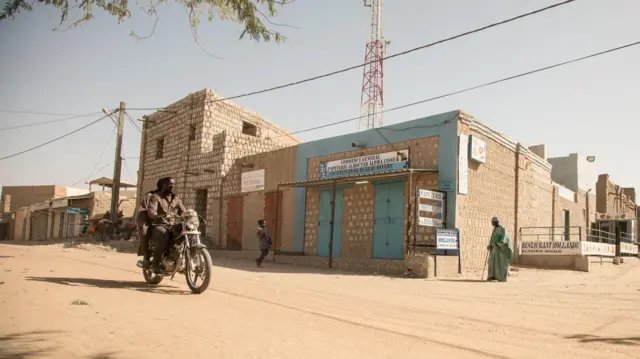
Second, the region’s vast mineral resources are at stake. The Sahel is a major gold producer, while Mali holds lithium reserves and Niger possesses critical uranium deposits. Niger‘s military government has already seized control of uranium operations from the French company Orano and is exploring a partnership with Russia.
Third, the United States is determined to counter Russia‘s growing influence. Unlike France or the EU, the current White House does not view the presence of Russian security contractors—roughly 1,000 in Mali and smaller groups elsewhere—as an automatic disqualifier for partnership, despite reports of human rights violations linked to these forces.
Washington aims to balance Moscow‘s reach with its own security offerings. However, this will not involve large-scale troop deployments, as Trump has promised to avoid “endless wars.” Instead, the focus will be on intelligence sharing and potential arms supplies. There are no plans to reopen the major drone base in Agadez, from which 800 American troops were recently expelled.
As these three nations have exited CEDEAO to form the Alliance of Sahel States (AES), neighboring countries like Bénin, Nigeria, Togo, Ghana, and Côte d’Ivoire are increasingly worried about militant spillover. While American intelligence may offer tactical advantages, history suggests that military power alone cannot solve the deep-rooted socio-economic challenges facing this impoverished region.