
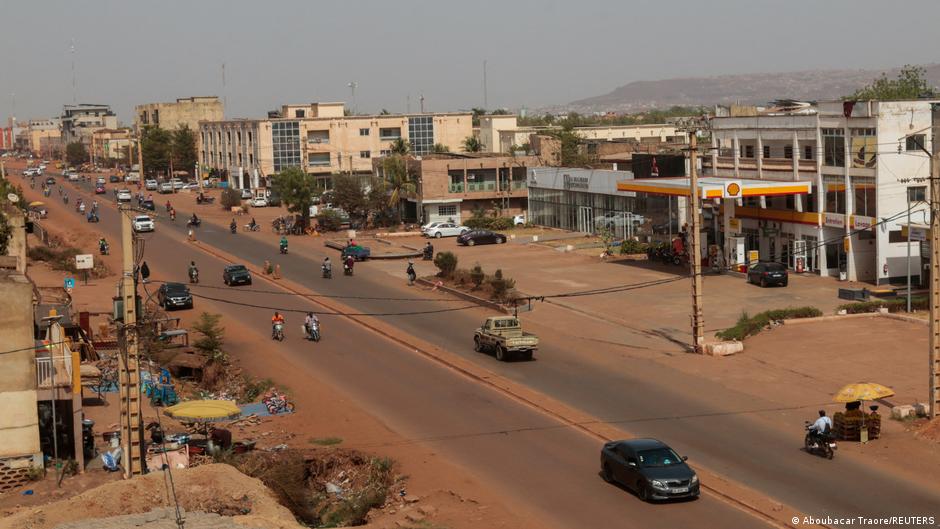
Human rights group urges militant factions to lift blockades in Mali
Amid escalating militant activity in Mali, an international human rights organization has issued a urgent appeal for armed groups to cease disrupting civilian movement and ensure respect for humanitarian law. The appeal comes as the Jama’at Nusrat al-Islam wal Muslimin (JNIM) continues a two-week blockade of key roadways leading to the capital Bamako.
The blockade, initiated on April 30, has severely impacted the flow of essential goods into the landlocked nation, where overland imports account for most supply routes. Amnesty International warns that the restrictions are creating unacceptable hardships for civilians, threatening their access to food, medical care, and basic safety.
Civilian convoys targeted by armed groups
According to reports from the organization, militants attacked a civilian truck convoy on May 6, transporting goods including fresh produce between Bamako and Bougouni in southern Mali. The trucks, which were not accompanied by military escorts and carried no weapons or personnel, were allegedly targeted despite compliance with humanitarian norms.
Military response intensifies in northern strongholds
In response to the blockade and ongoing militant control in northern regions, the Malian Armed Forces have announced plans to escalate offensive operations. Military spokesperson confirmed targeted strikes in Kidal, a city under the control of the National Movement for the Liberation of Azawad (MNLA) and its allies, including the JNIM, since late April.
Local residents report intermittent power outages and severely disrupted telecommunications in Kidal, where nearly 200 Malian soldiers are reportedly being held captive by separatist forces following clashes on April 25. Conflicting narratives from multiple sources have left civilians uncertain about whom to trust in the current climate of distrust.
Central Mali: a growing stronghold of extremist control
Analysts monitoring the situation describe a strategic expansion of militant influence in central Mali, particularly along the Niger River’s left bank in the Ségou region and parts of Koulikoro. In these areas, government institutions have reportedly withdrawn, leaving civilian populations under de facto jihadist administration. Schools remain closed, and jihadist groups impose zakat (religious tax) on hundreds of villages, further straining local livelihoods.
According to Abdoulaye Sounaye, a researcher specializing in Sahelian militant dynamics, both government forces and armed groups are currently in phases of observation and rearmament. “The Malian government appears to be preparing for a major offensive, while the JNIM and MNLA are also reorganizing, anticipating potential military escalation. The civilian population remains caught in the crossfire.”
Calls for inclusive dialogue to resolve the crisis
Experts emphasize that a sustainable resolution to Mali’s deepening security crisis requires nationwide dialogue involving all political and social stakeholders. Ahmed Ould Abdallah, head of the Saharan Studies Center (4S), stresses that the current government must adopt an open approach to negotiations to prevent perpetual conflict.
“The crisis is not merely military—it is political. The Malian government must engage with all segments of society to negotiate a lasting solution. Continuing to exclude armed groups labeled as terrorists will only prolong instability.”
Despite official refusal to engage with the MNLA and JNIM—which the government classifies as terrorist organizations—reports suggest that secret negotiations have occurred between military authorities and jihadist leaders to facilitate fuel supply routes.
Humanitarian fallout worsens as prices surge
Residents in Gao, a city under government control, report a dramatic rise in food prices, with the cost of staple goods such as onions doubling in recent weeks. The economic strain compounds the challenges faced by civilians already struggling with disrupted services and widespread insecurity.
“People are told to trust official statements, but distrust runs deep,” shared a resident. “We don’t know who to believe anymore.”
You may also like
-
French national detained in Senegal over homosexuality amid tightened laws
-
Digital beauty standards trap young women in N’Djamena
-
The decline of Russia’s influence in africa
-
Bénin: advanced security leadership training courses commence
-
Harvey elliott’s uncertain liverpool future after a challenging loan spell at aston villa