
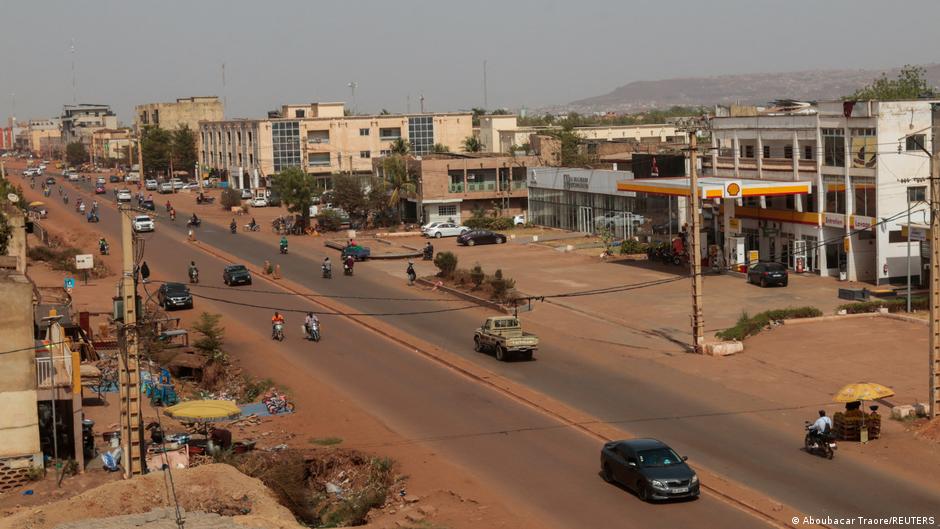
As jihadist factions intensify pressure on Bamako, residents across central and northern Mali endure the fallout of relentless attacks by armed groups. The capital, heavily reliant on imports transported via land routes, now faces severe disruptions due to a blockade enforced by militants for nearly two weeks.
Amnesty International has issued a strong appeal to Jama’at Nusrat al-Islam wal Muslimeen (JNIM) to immediately lift restrictions on civilian movement and uphold fundamental humanitarian rights. The blockade, which began on April 30, has severely restricted access to Bamako, cutting off essential supplies and paralyzing daily life for millions.
“The ongoing siege of Bamako is inflicting unacceptable hardships on civilians, threatening their rights to food, health, and safety. Such actions violate international humanitarian law and must cease without delay,” stated a spokesperson for the organization.
On May 6, militants reportedly targeted a civilian truck convoy carrying goods—including fresh produce—between Bamako and Bougouni in the south. According to Amnesty, the vehicles were unescorted by military forces and carried no weapons or personnel linked to the state.
Military escalation in Kidal
The Malian army has announced plans to escalate aerial strikes in Kidal, a city now under the control of the National Movement for the Liberation of Azawad (MNLA) and its jihadist allies, including JNIM. Government forces claim to have conducted multiple airstrikes on the city, while separatist groups report holding 200 Malian soldiers captive following clashes that erupted on April 25.
Residents in Kidal describe deteriorating conditions, with frequent power outages and disrupted telecommunications isolating the region further. Distrust among locals has deepened as conflicting narratives from different factions create widespread uncertainty about the true state of affairs.
A Gao resident, speaking under condition of anonymity, highlighted rising living costs amid the crisis. “The price of onions has doubled in just weeks,” she noted, adding that government communications urge citizens to rely solely on official statements for updates.
Deteriorating conditions in central Mali
Analysts warn that the security situation in central Mali is rapidly worsening, with jihadist groups consolidating control over vast areas. Key regions, including the left bank of the Niger River in Ségou and parts of Koulikoro, are reported to be under militant influence, where state institutions have withdrawn entirely.
Militant factions have imposed zakat taxes on hundreds of villages, forcing closures of schools. As of late January, over 2,300 educational facilities across Mali remained shut, with the north and central zones bearing the brunt of the closures.
“Both the Malian government and jihadist groups are currently in a phase of regrouping and rearmament,” explained Abdoulaye Sounaye, a researcher specializing in Sahelian militant dynamics. “The military leadership appears determined to respond forcefully, while armed groups are bracing for potential offensives. Civilians caught in the middle will continue to suffer the consequences of this escalation.”
Experts emphasize that sustainable peace in Mali demands inclusive dialogue involving all stakeholders—despite the government’s official stance rejecting negotiations with groups labeled as terrorists. Recent covert talks between military authorities and JNIM were reportedly conducted to secure fuel supplies, illustrating the complex, pragmatic realities of the crisis.
Call for national reconciliation
Ahmed Ould Abdallah, director of the Sahara Studies Centre (4S), stressed the urgent need for political leadership to address the crisis through dialogue. “The current turmoil is not merely a security issue; it reflects deep political fractures. The Malian government must demonstrate openness to negotiations with all national components to avert perpetual conflict.”
“A solution will eventually require all parties to come to the table,” predicted Sounaye, adding that prolonged confrontation risks exacerbating humanitarian suffering across the country.
You may also like
-
Humanitarian crisis escalates as jihadists blockade Bamako
-
Rumored political meeting at Ousmane Sonko’s home debunked as misinformation
-
Laurent gbagbo secures new term as ppa-ci leader in Côte d’Ivoire
-
Senegalese opposition leader calls urgent meeting in Dakar
-
Ppa-ci bars key members from upcoming congress in Abidjan