
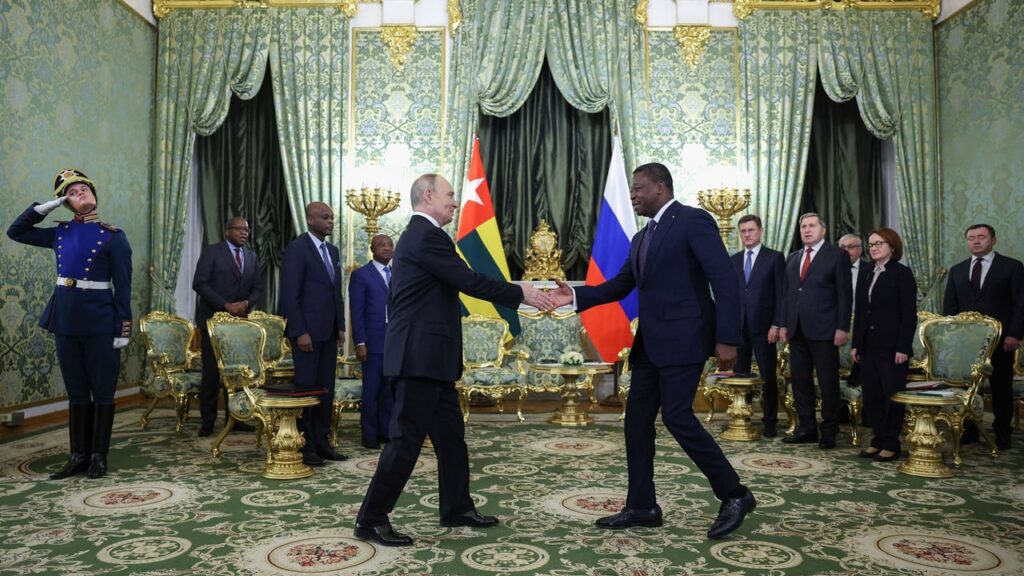
Lomé is navigating uncharted waters in West Africa’s security landscape. Over recent years, the Togolese government has quietly forged partnerships with international actors to bolster its defense against escalating jihadist threats. Among these alliances, two stand out: one with Turkey, focused on air support and military assistance, and another with Russia’s Africa Corps, which has gained momentum since 2025.
These covert collaborations reflect a strategic shift in Togo’s approach to regional stability. With jihadist groups expanding their reach across the Sahel, Lomé faces mounting pressure to secure its borders and protect its citizens. The country’s leadership, under President Faure Gnassingbé, appears to be exploring unconventional avenues to strengthen its security apparatus.
Turkey’s growing influence in West Africa
Turkey’s engagement in Togo is not new. For years, Ankara has positioned itself as a key partner in Africa, offering military training, logistical support, and aerial capabilities. The cooperation between Lomé and Ankara reportedly includes intelligence-sharing and joint counterterrorism exercises, aimed at curbing the influence of Islamist militants operating near Togolese borders.
Analysts suggest that Turkey’s involvement aligns with its broader strategy to expand its footprint in West Africa, where it competes with other global powers. The partnership has also extended to infrastructure projects, with Turkish firms securing contracts in critical sectors such as energy and transportation.
Russia’s Africa Corps makes its mark
Since 2025, Togo has quietly welcomed Russian military personnel linked to the Africa Corps, a restructured version of the Wagner Group. While Moscow has long maintained a presence in Africa through private military companies, the Africa Corps represents a more formalized approach to security cooperation. Reports indicate that Russian advisors have been deployed to assist Togolese forces in training and operational planning.
The Africa Corps’ arrival coincides with a period of heightened instability in the Sahel. Neighboring countries such as Burkina Faso and Niger have increasingly turned to Russian security support, citing dissatisfaction with Western partnerships. Togo’s engagement with Moscow could signal a broader trend in the region, where nations seek alternative allies to address their security challenges.
Faure Gnassingbé’s balancing act
President Faure Gnassingbé’s government has carefully navigated Togo’s foreign relations, maintaining ties with both Western and non-Western partners. While Lomé has historically leaned on France and the United States for military aid, the emergence of new alliances with Turkey and Russia underscores a pragmatic shift. This multi-pronged approach allows Togo to diversify its security partnerships while avoiding over-reliance on any single ally.
The government’s secretive handling of these agreements reflects the sensitivity surrounding such collaborations. Publicly, Lomé emphasizes regional cooperation through organizations like the Economic Community of West African States (ECOWAS). However, behind closed doors, Togo is exploring every available option to fortify its defenses.
Implications for regional stability
The growing involvement of Turkey and Russia in Togo raises questions about the long-term implications for West Africa’s security architecture. On one hand, these partnerships could enhance Togo’s capacity to counter jihadist threats. On the other, they may contribute to a more fragmented and competitive security landscape in the region.
Critics argue that reliance on foreign military support—especially from actors with opaque agendas—could undermine Togo’s sovereignty. Meanwhile, proponents contend that such alliances are necessary to fill gaps left by traditional partners, particularly in the face of persistent security vacuums.
As the Sahel’s security crisis deepens, Togo’s strategic maneuvering highlights the complex choices facing West African nations. Whether these alliances will bring stability or further instability remains to be seen.
You may also like
Niger: does Tiani’s purge expose hidden fractures at the top?
Everest Finance dévoile Sama Naffa, une épargne à petits pas au Sénégal
Niger’s junta chief replaces army chief after failed mutiny
Gabon refines trade strategy to position local businesses in the African continental market
Bénin teacher integration: Anselme Amoussou praises political will after major progress at the Marina