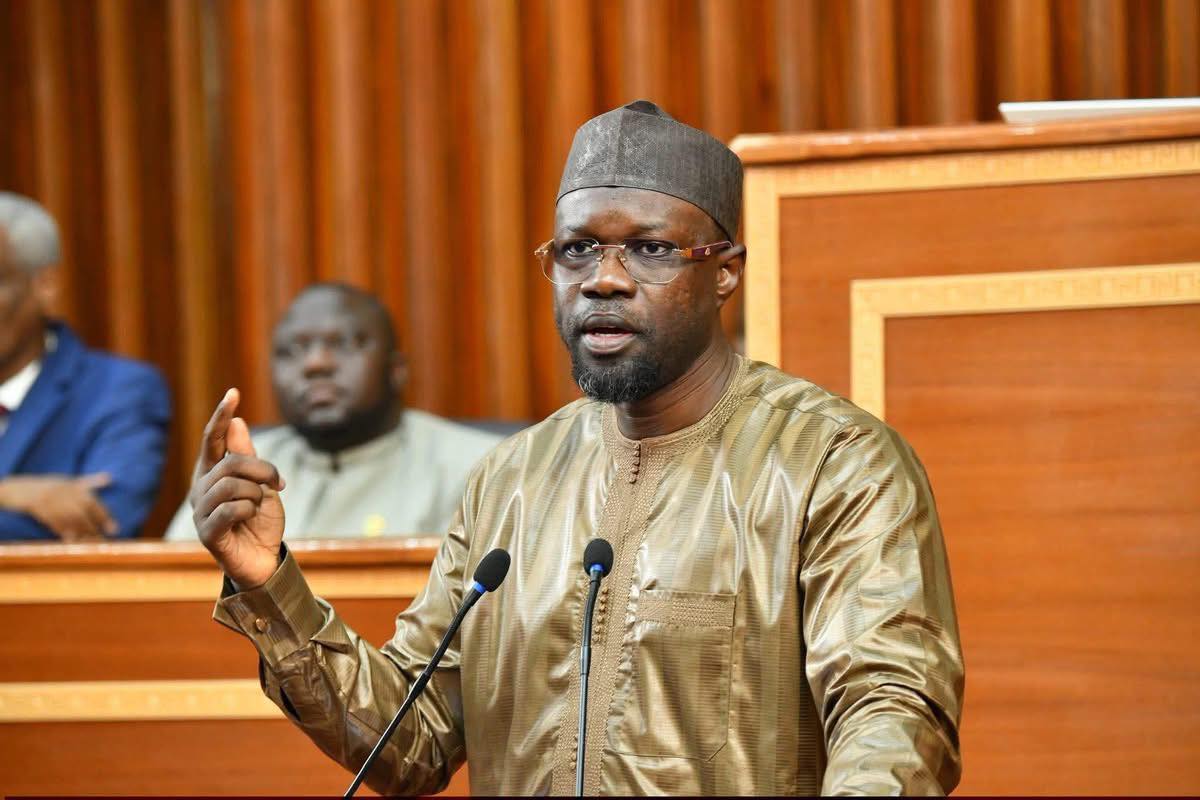
In a political chessboard move executed with calculated precision, Ousmane Sonko has secured the presidency of Senegal’s National Assembly, following a sequence of institutional upheavals that have left few observers indifferent. His swift transition from political exile to legislative leadership underscores a strategic ambition that continues to redefine the nation’s power dynamics.
Institutional maneuvering or calculated ascent?
The sudden vacancy at the helm of the Assembly, coinciding with Sonko’s removal from prior responsibilities, set the stage for an unanticipated power shift. Within days of his official sidelining, the outgoing Speaker’s resignation paved the way for Sonko’s unexpected ascension to the perch of the country’s legislative body.
For critics, the timeline is anything but coincidental. By assuming the Assembly’s presidency, Sonko now wields control over legislative priorities, budgetary allocations, and the passage of laws—tools that could either facilitate governance or serve as instruments of obstruction against the executive branch.
Legislative dominance as a lever of confrontation
The consolidation of legislative authority under Sonko’s leadership has raised concerns about an impending institutional deadlock. Analysts warn that the new Speaker’s position could escalate into a full-blown power struggle, where legislative paralysis becomes a weapon rather than a function of democratic oversight.
« This is no longer a matter of policy debate; it is a calculated attempt to paralyze the state apparatus, » remarked a political observer familiar with the unfolding developments. « The gloves are off, and the battle for institutional supremacy has begun. »
From opposition firebrand to institutional powerhouse
Once a vocal critic of the establishment, Sonko’s transformation into a key institutional figure has drawn sharp criticism from his adversaries. Detractors portray him not as a champion of reform, but as a pragmatic operator who has leveraged crises to advance his own political agenda. The once-idealistic tribune now stands accused of abandoning his reformist rhetoric in favor of raw political ambition.
His ascent raises a critical question: Is this a legitimate bid for influence, or merely the opening salvo in a broader strategy to destabilize the highest echelons of government? One certainty remains—Senegal’s political equilibrium has shifted, and the struggle for institutional control is far from over.