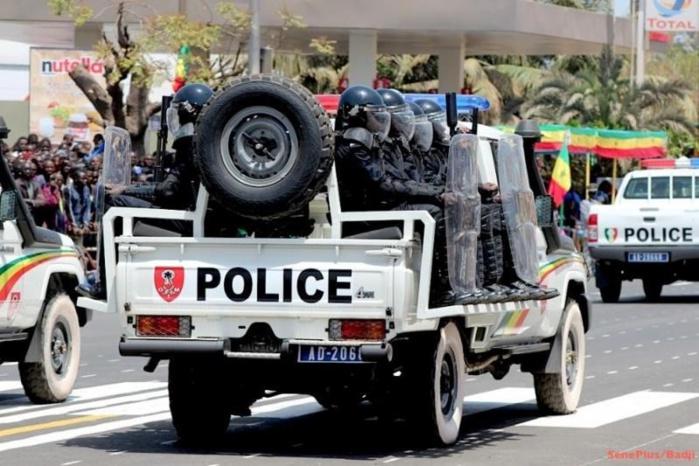
Over the past eight days in Dakar, authorities have conducted intensified identity checks targeting foreign nationals. According to official figures, 490 individuals were subjected to verification procedures, with 36 of them referred to the public prosecutor for irregular stay. While presented as routine administrative measures, these operations have sparked growing unease among civil society groups and long-term foreign residents.
a student’s unsettling experience
Amadou Bangoura, a 30-year-old Beninese student who has lived in Senegal for five years pursuing higher education, experienced firsthand the anxiety these controls can provoke. After finishing a workout at the Liberté 6 sports complex around 10 p.m., he was stopped by a police patrol requesting identification. “My documents are at home,” he explained, recounting the sudden fear that crossed his mind—deportation, imprisonment, or facing the prosecutor. Though his papers were ultimately in order, the episode left him shaken.
His case is not unique. Since late June, the Direction de la police des étrangers et des titres de voyage (DPETV) has conducted sweeping verification campaigns across several neighborhoods in Dakar and its outskirts, officially framed as security-enhancing initiatives.
sharp rise in administrative checks
Between June 30 and July 8, 2026, these operations led to nearly 500 foreign nationals being questioned. Of those, 36 were found to be in irregular situations and subsequently referred to legal authorities for deportation proceedings. The data underscores a marked increase in such administrative interventions, raising questions about their proportionality and impact on resident foreigners.
civil society warns against growing climate of suspicion
In a joint statement published on July 13, several advocacy groups—including Legs Africa, Frapp, Nawle, Afrikajom Center, and Diwan Citoyen—voiced strong concerns over what they describe as the escalation of administrative measures targeting foreigners residing in Senegal. While acknowledging the state’s sovereign right to regulate immigration and border security, the organizations cautioned against conflating sovereignty with arbitrariness.
Their main worry lies in the shifting perception of foreigners in Senegal. “What is alarming today is not the existence of migration policies, but the normalization of permanent suspicion toward foreigners,” the statement read. It warns that this trend risks reducing legal stays to bureaucratic ordeals, transforming foreign residents from rights-bearing individuals into perceived administrative risks.
balancing security and hospitality
Elimane Kane, president of Legs Africa, emphasized that control operations should not be framed as a contradiction between security and hospitality—two values traditionally upheld in Senegalese society. While recognizing the state’s duty to monitor borders and verify identities, he cautioned against interpretations that could equate such measures with a rejection of foreigners.
“Security does not exclude otherness,” he stated, urging better coordination among security forces to prevent these checks from being perceived as persecution rather than necessary administrative procedures. He also highlighted the global reality of professional mobility, noting that “just as Senegalese citizens work abroad, foreigners have the right to come here and contribute.” The solution, in his view, lies not in blaming migrants but in creating opportunities for Senegalese youth to access meaningful employment.