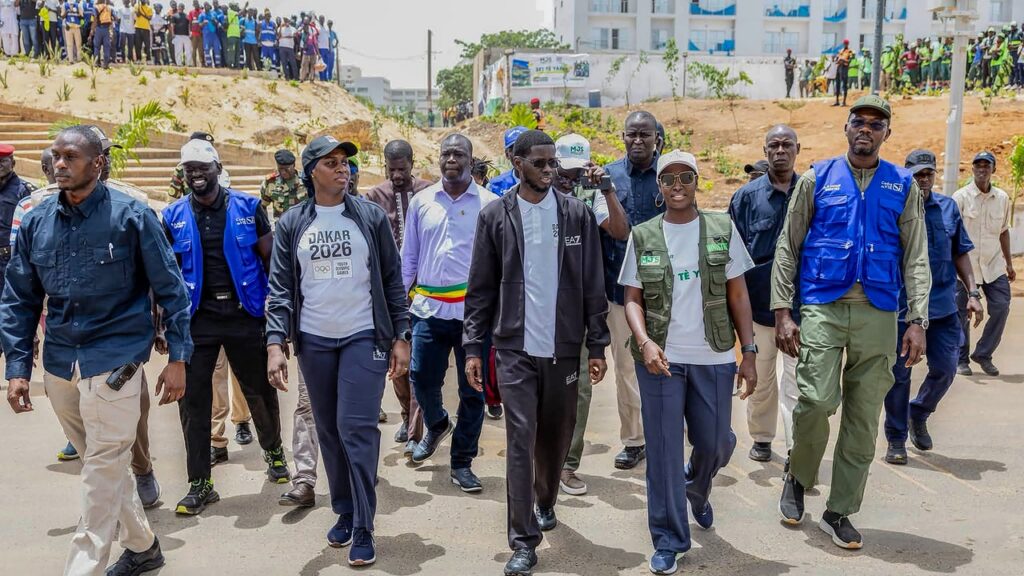
President Bassirou Diomaye Faye’s refusal to set a date for Senegal’s local elections has triggered a wave of reactions across the political spectrum, with analysts and citizens alike questioning the implications for the country’s democratic trajectory. The elections are theoretically due in January 2027, but the absence of an official calendar has left the nation in a state of suspended animation, fueling speculation and unease about what lies ahead.
The political fallout: from speculation to open criticism
What began as a strategic ambiguity has now morphed into a full-blown public debate. Opposition figures, civil society organizations, and even some within the ruling coalition have voiced concerns that the prolonged uncertainty could erode trust in state institutions. The lack of a clear timeline has become a rallying point for those who accuse the president of sidestepping democratic accountability.
Observers note that the silence is not merely a matter of timing but a deliberate political maneuver. By keeping the date under wraps, Diomaye Faye appears to be consolidating his grassroots support while avoiding the risks of an early electoral showdown. Yet, this approach carries its own dangers: it invites accusations of manipulation and could galvanize a fragmented opposition.
Reactions from the streets to the institutions
Public sentiment is mixed. Some view the delay as a necessary pause to strengthen the president’s party, Kiiraay – Les Patriotes républicains, before facing voters. Others see it as a troubling sign of democratic backsliding. In Dakar and beyond, the debate has moved from private conversations to public forums, with social media amplifying calls for transparency.
Local leaders, who are directly affected by the postponement, have also weighed in. Without a set date, municipal councils operate in a limbo that hampers long-term planning and resource allocation. This uncertainty trickles down to everyday governance, affecting services and development projects.
What comes next: scenarios and stakes
As the clock ticks toward the theoretical January 2027 deadline, several scenarios are emerging. One possibility is that Diomaye Faye will announce the elections at a moment of maximum political advantage, catching opponents off guard. Another is that continued silence could spark legal challenges or even protests, forcing the government’s hand.
International partners are watching closely. Senegal has long been viewed as a stable democracy in West Africa, and any perceived erosion of electoral norms could impact its standing. The president’s next move will be scrutinized not just at home but across the region.
The road ahead for Senegal’s democracy
Ultimately, the fallout from this period of uncertainty will shape the political landscape for years to come. Whether Diomaye Faye’s strategy pays off or backfires depends on how he navigates the growing pressure. For now, the nation waits, and the mystery endures.
You may also like
Dioura aftermath: the debate Bamako cannot silence as JNIM’s narrative takes hold
Niger’s citizenship purge: outcry grows as Tiani’s decrees leave opponents stateless
Moukoko takes over as Libreville prosecutor general: reactions, debate and what comes next
Benin–Spain cultural alliance: what the reaction tells us about what comes next
Niger: Tiani’s widening purge sparks debate over citizenship and loyalty