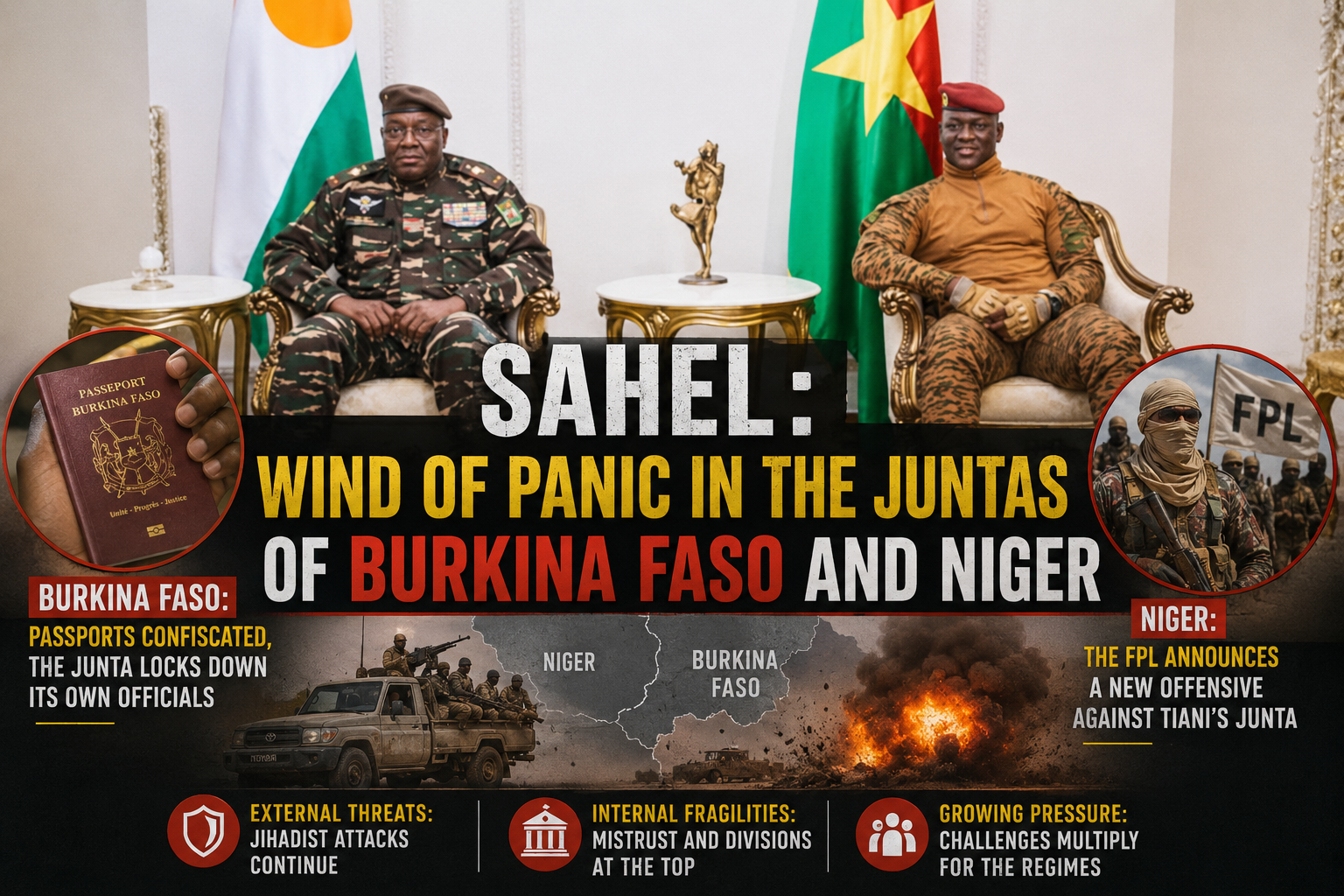
The security and political landscape across the Sahelian-Saharan belt is experiencing heightened tension. While the Burkinabè authorities tighten their grip on key officials, a Nigerien rebel faction has announced an impending offensive against Niamey. These distinct yet interconnected developments underscore a shared reality for the two principal military regimes within the Alliance of Sahel States (AES): they must now contend with both external threats and inherent internal vulnerabilities.
Burkina Faso: consolidating control over the state apparatus
In Ouagadougou, an atmosphere of pervasive distrust appears to have taken hold. Reliable information indicates that the military government has implemented a stringent measure: the confiscation of passports belonging to government members.
This unprecedented restriction extends beyond cabinet ministers, encompassing numerous senior army officers. This signals that surveillance and control are now being applied even within the highest echelons of power.
By preventing certain officials from freely departing the territory, the regime seemingly aims to mitigate any potential for abrupt exits, the leakage of sensitive information, or unauthorized engagement with foreign entities. Such a policy is rarely trivial in a dynamic political environment; it typically reflects a concerted effort to assert reinforced control over the ruling elite when confidence begins to erode.
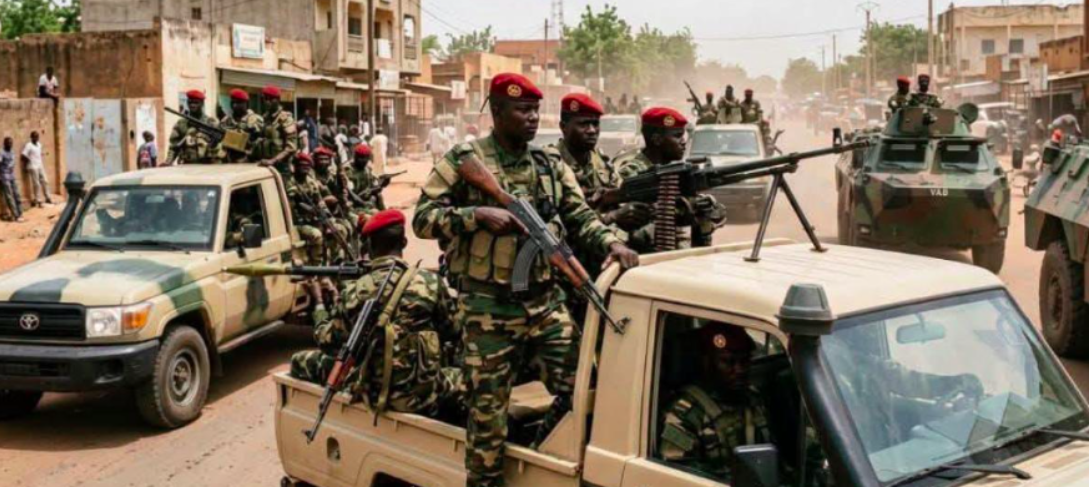
This decision emerges amidst persistent insecurity across a significant portion of Burkina Faso. Despite numerous military operations and extensive reliance on the Volunteers for the Defense of the Homeland (VDP), jihadist attacks continue to target both security forces and civilian populations. This sustained security pressure exacerbates tensions at the apex of the state, reinforcing the authorities’ resolve to secure all decision-making centers.
For many observers, these restrictions also highlight the inherent difficulty military regimes face in maintaining enduring cohesion within their own structures. As power becomes increasingly concentrated, the apprehension regarding internal divisions, rivalries, or defections transforms into a critical strategic concern.
Niger: FPL declares new offensive against the Tiani junta
In Niger, the opposition is taking on an increasingly military dimension.
Just a month following his release on June 22, 2026, Mohamed Salah, Secretary General of the Patriotic Front for Liberation (FPL), has re-emerged with a notably combative discourse.
It is recalled that the rebel leader was freed by forces loyal to Marshal Khalifa Haftar in Libya as part of a sensitive hostage exchange. In return, Nigerien authorities released Barkadine Mahamat Rifi, leader of the Libyan ‘Ahrar Fazzan’ katiba, who was sought by Haftar’s forces.
Emboldened by his release, Mohamed Salah now asserts he is preparing a "major operation" intended to overthrow the junta led by General Abdourahamane Tiani.
Since the coup d’état that ousted President Mohamed Bazoum, the FPL has positioned itself as a resistance movement committed to restoring constitutional order. It continues to demand the liberation of Mohamed Bazoum, whom it recognizes as Niger’s sole legitimate president, elected by universal suffrage.
The FPL’s declarations signify a significant escalation in the Nigerien crisis. While authorities have largely focused their efforts on combating jihadist groups, they must now contend with the prospect of an organized armed opposition explicitly seeking regime change. This proliferation of flashpoints risks further straining the nation’s security capabilities.
Two juntas grappling with multifaceted challenges
These developments illustrate that the challenges confronting the military regimes in Burkina Faso and Niger extend beyond merely counter-terrorism efforts.
In Burkina Faso, authorities appear preoccupied with the stability of their own state apparatus, going so far as to impose unprecedented restrictions on political and military officials. In Niger, the threat increasingly emanates from an organized opposition that now openly declares its ambition to depose the junta.
This confluence of internal pressures, persistent security challenges, and burgeoning political or armed opposition underscores the enduring fragility of governance structures established through coups d’état. Despite rhetoric centered on restoring sovereignty and enhancing security, both regimes continue to face substantial hurdles that call into question their capacity to achieve lasting stability for their respective nations.
As tensions mount, the situation in the Sahel appears increasingly intricate. Military authorities are now compelled to simultaneously manage armed group attacks, political critiques, economic hardships, public expectations, and the potential for dissent within their own power structures. This accumulation of crises could significantly impact regional stability in the coming months.