Unresolved political fund debates resurface amid legislative scrutiny
Senegal’s political landscape has been roiled by a fierce debate over the use of discretionary political funds, a controversy that has intensified as the National Assembly convenes in an extraordinary session. The discussion centers on the origins and management of these controversial funds, particularly their allocation to the Prime Minister’s office.
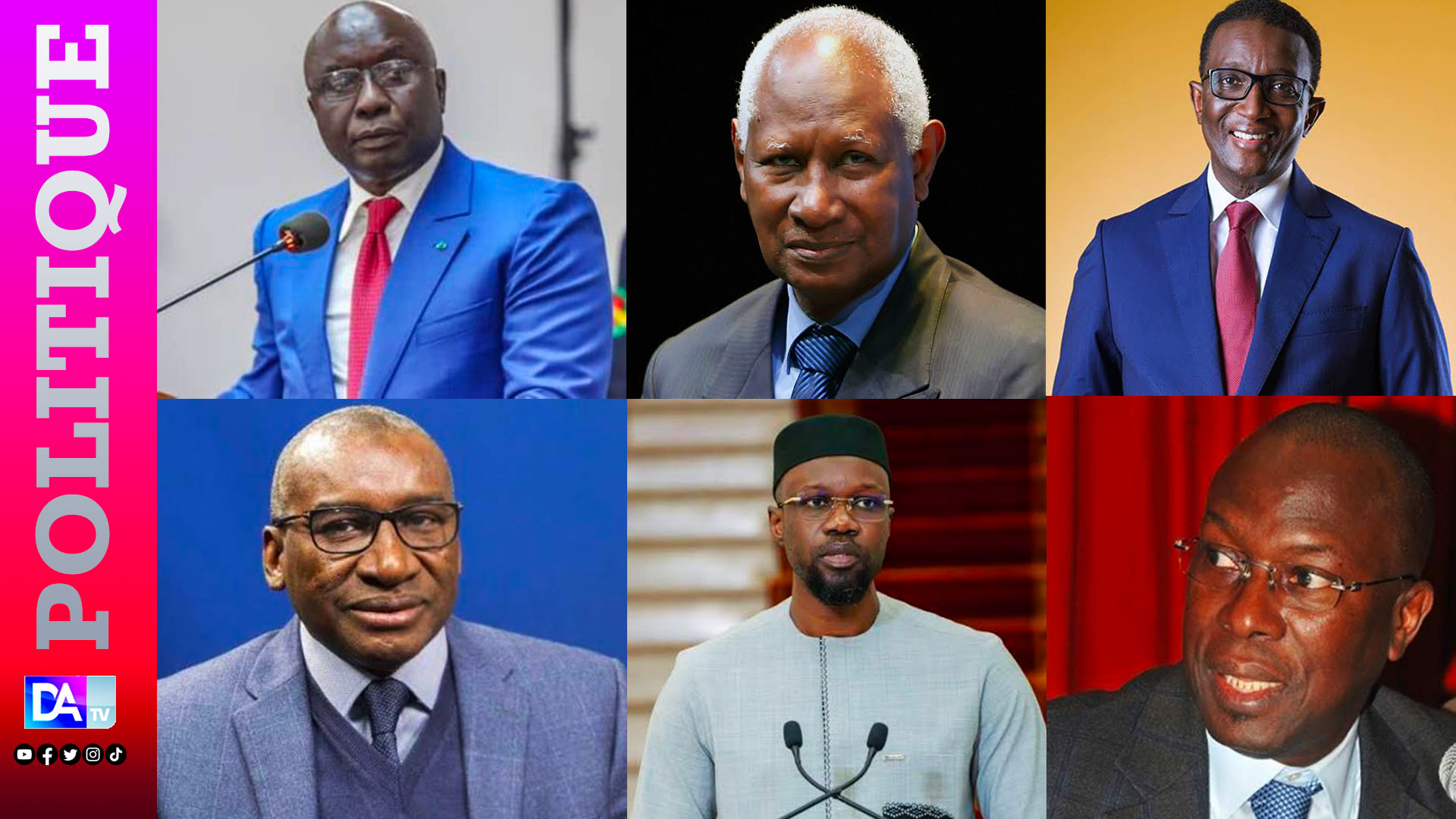
At the heart of the debate is a claim made by former Interior Minister Aly Ngouille Ndiaye, who asserted that Ousmane Sonko became the first Senegalese Prime Minister to receive dedicated political funds. His statement has sparked a wave of reactions, with some questioning the transparency of these allocations and their historical precedents.
Contradictory accounts from the political elite
Aly Ngouille Ndiaye’s remarks, delivered during a televised appearance, reignited discussions about the 1.7 billion CFA francs reportedly allocated to Sonko. The former minister also raised concerns about the lack of clarity regarding the frequency of these disbursements, suggesting that the funds may have been depleted unusually quickly. His comments have drawn sharp responses from political figures who dispute his claims.
Souleymane Ndéné Ndiaye, the last Prime Minister under former President Abdoulaye Wade, provided a counter-narrative by revealing that such funds existed long before Sonko’s tenure. In a 2025 interview, Ndéné Ndiaye disclosed that he had access to these funds even when serving as Director of the Presidential Cabinet, predating his time as Prime Minister. His revelation has cast doubt on the assertion that Sonko introduced the practice.
Further complicating the issue are testimonies attributed to former Prime Ministers Macky Sall and Idrissa Seck, who have both acknowledged the existence of similar funds during their tenures under Wade’s administration. Social media discussions have also highlighted instances where former President Wade reportedly used his own political funds to support Prime Ministers facing financial constraints.
Pastef’s response and institutional perspectives
In response to the controversy, Elimane Pouye, Director General of the Société de Gestion et d’Exploitation du Patrimoine bâti (SOGEPA SN), dismissed the claims as unfounded. He argued that the focus should shift from the existence of these funds to their proper use, emphasizing the need for a transparent and democratic framework to oversee public spending. Pouye suggested that comparing budget allocations across different years could provide clarity on how these funds have been managed.
Supporters of the Pastef movement have pointed out that the party has long advocated for reforms to these funds, with proposals dating back to 2019. This, they argue, underscores that the issue predates Sonko’s premiership and reflects a systemic challenge rather than an isolated incident.
A historical perspective on political funds in Senegal
The debate over political funds is not new in Senegal. Historical records indicate that these discretionary funds have grown significantly over successive administrations. Under former President Abdou Diouf, allocations stood at approximately 650 million CFA francs, while the Wade administration saw this figure balloon to nearly 8 billion CFA francs. A 2008-2012 report by the State General Inspectors (IGE) revealed that 108 billion CFA francs were spent on these funds during that period, with 48 billion lacking proper accounting records.
A notable case from Wade’s tenure is the National Local Development Program (PNDL), a 100 billion CFA franc fund managed by the Prime Minister’s office. This program became the subject of an investigation into former Prime Minister Idrissa Seck, who faced allegations of illicit enrichment linked to the management of the PNDL and the acquisition of two properties. The case remains a stark reminder of the long-standing issues surrounding the oversight of these funds.
Calls for legal reform and transparency
Institutional responses to the controversy have varied. Deputy Guy Marius Sagna revealed that he had submitted a draft law in September 2025 to establish a commission to verify the use of political funds. However, Ousmane Sonko reportedly asked him to delay the initiative, preferring that the reform be driven by the government rather than the National Assembly. Sonko later amended the proposal to broaden its scope, though critics argue that the approach remains insufficient.
Deputy Thierno Alassane Sall, known for his past resignation over transparency issues, has been vocal in his criticism, calling the funds a form of theft and emphasizing the need for parliamentary oversight. He has urged that these funds not be conflated with other discretionary presidential allocations, such as those for intelligence.
El Hadj Momar Samb, Secretary General of the RTA-S, has criticized what he perceives as opportunistic calls for transparency from the current majority, noting that many of its members have previously held high-ranking positions without advocating for reform. He has called for a broader parliamentary review that includes the management of the National Water and Sanitation Office (ONAS), the traceability of oil revenues, and the use of funds in the Matam region.
Balancing tradition with reform
President Bassirou Diomaye Faye has defended the retention of these funds, citing their role in intelligence gathering and social solidarity. He argued that outright abolition could create a void in addressing urgent social needs. Ousmane Sonko has similarly opposed the suppression of these funds but supports their regulation, citing the 1.77 billion CFA francs allocated to the Prime Minister’s office in 2026.
The ongoing extraordinary session of the National Assembly, which began on August 10, 2026, includes a proposal to regulate special credits and secret funds. This legislative push reflects the tension between longstanding institutional practices and the growing demand for accountability from the current administration.