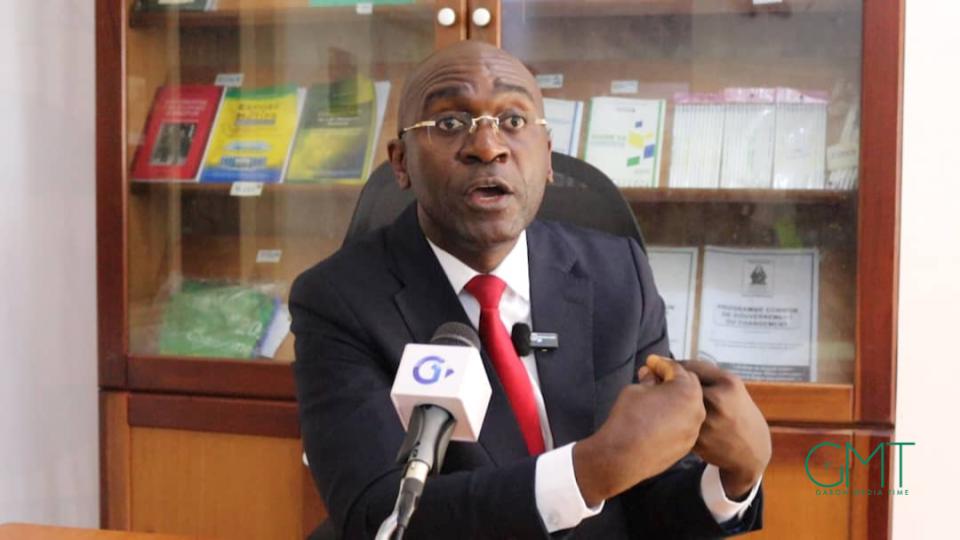
Prominent Gabonese civil society leader Geoffroy Foumboula Libeka Makosso has publicly condemned escalating verbal attacks by certain exiled activists, drawing a clear line between legitimate dissent and outright insults. Speaking at a press conference in Libreville, he denounced recent attacks targeting President Brice Clotaire Oligui Nguema, his wife, and mother, while urging authorities to take judicial action rather than merely expressing outrage when offenses occur.
In Gabon’s charged political climate, Foumboula Makosso emphasized that robust public debate should never cross into personal insults. Highlighting recent statements by an activist known as Lanlaire, he argued that attacks on public figures’ private lives represent a dangerous breach of acceptable civic engagement.
Freedom of Speech Has Limits
Foumboula Makosso stressed that civil activism must remain distinct from verbal violence. Reflecting on his own career, he noted that constructive civic engagement relies on evidence-based advocacy and, when necessary, legal recourse—not gratuitous insults. His message was unequivocal: disagreement does not justify abuse.
The civil society leader warned that the current transitional period, meant to foster reconciliation, should not be misinterpreted as a blanket immunity for inflammatory rhetoric. He reminded the audience that while criticizing leaders is a democratic right, those who overstep legal boundaries must face consequences. “Insults, defamation, and contempt are crimes—not expressions of free speech,” he stated.
Power’s Links with Contentious Activists Under Scrutiny
Foumboula Makosso extended his criticism beyond the activists themselves, questioning the government’s alleged ties with certain diaspora figures whose notoriety stems from aggressive attacks on authorities. He cited instances of invitations to Gabon, appearances on state media, and claims of direct financial incentives—allegedly amounting to €150,000 (100 million FCFA)—reportedly offered to an activist to publicly insult the president. These claims remain unverified at this stage.
The activist leader argued that such perceived proximity could foster a culture of impunity, where outrageous behavior garners visibility or even access to power circles. He called for immediate clarification from presidential aides and institutions to distance the government from such figures.
Time to End Close Ties with Inflammatory Voices
Foumboula Makosso condemned what he described as excessive tolerance for activists whose only contribution is verbal aggression. “The President and his team must cut ties with these figures whose only legacy is insults,” he demanded, warning that inaction risks normalizing abuse as a political strategy.
He cautioned that failing to prosecute clear violations could embolden others, creating the illusion that outrageous behavior is rewarded with visibility or influence. His stance underscores a critical challenge: balancing democratic dissent with accountability for legal transgressions.
Calls for Legal Action Over Insults
Foumboula Makosso urged judicial authorities to pursue legal action against those who cross legal lines, warning that public condemnation alone is insufficient. He also appealed to citizens to stop amplifying inflammatory content by disengaging with such accounts online and reporting them through platform tools.
At its core, his message highlights a broader debate about Gabon’s civic discourse. While free speech is vital for democracy, Foumboula Makosso insists it must not devolve into personal degradation. Criticism of power is essential—but when it breaches the law, the courts—not social media—must intervene.