China’s stealth naval maneuvers raise alarm over potential silent blockade strategy
The question on everyone’s minds isn’t just whether China could isolate Taiwan through force—but whether Beijing is already testing the waters for a strategy that avoids outright war. Recent reports reveal an unprecedented naval surge involving over 100 Chinese ships in the Western Pacific, coupled with what officials describe as a presumed ballistic missile launch from a submarine. While no official confirmation exists, the timing and scale of these operations suggest a deliberate escalation that could reshape regional military dynamics.
Unprecedented military buildup: what’s driving China’s latest naval exercises?
The sheer scale of China’s naval maneuvers—more than 100 vessels, including coast guard ships, destroyers, and the Liaoning carrier strike group—underscores a shift from routine drills to a coordinated, multi-domain operation. Unlike previous exercises confined to the Taiwan Strait, this deployment extends across the Western Pacific, stretching from the Yellow Sea to the first island chain. Analysts note that such movements typically serve multiple strategic goals:
- Island encirclement patterns to simulate blockades or siege operations
- Maritime control tests near critical shipping lanes, including potential choke points like the Bashi Channel and Miyako Strait
- Anti-access/area denial (A2/AD) drills aimed at restricting foreign military intervention
At close to 70 ships still present within the first island chain as of November 13, observers warn that Beijing could be incrementally tightening its grip on Taiwan without triggering immediate armed conflict. The absence of a formal announcement adds to the ambiguity, framing these exercises as a form of psychological pressure rather than transparent strategic signaling.
A submarine-launched missile: a game-changer in regional deterrence?
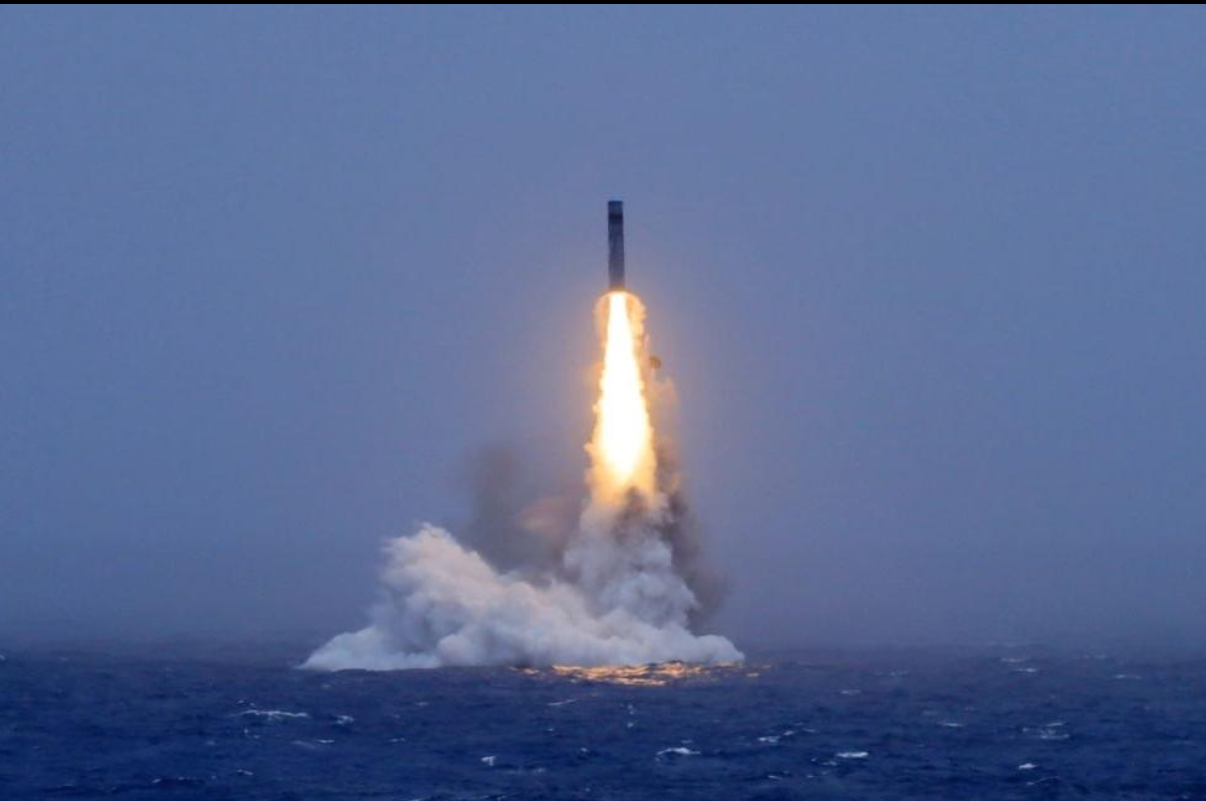
Beyond the fleet’s movements, the most controversial element remains the alleged submarine-launched ballistic missile (SLBM) test. According to Taiwanese security sources, the launch occurred in the Yellow Sea, with the missile reportedly striking a designated target on the Chinese mainland. If verified, this would mark one of Beijing’s most assertive displays of nuclear-capable strategic deterrence in recent years.
Why does this matter? Submarine-based missiles are notoriously difficult to track and intercept, making them a cornerstone of modern nuclear deterrence. Their deployment in this context sends a dual signal:
- To Taiwan: A reminder that China’s military reach now extends across domains beyond conventional naval power
- To the U.S. and allies: An illustration of Beijing’s growing confidence in projecting power in contested waters
Yet crucial questions remain unanswered. What type of missile was launched? Was it a new variant or an existing system? And most importantly—was this a deliberate provocation or a calibrated test of capabilities? Without independent verification, the international community remains cautious. Still, the very possibility of such an escalation underscores the shifting balance of power in the Pacific.
Why Beijing is embracing a strategy of ‘quiet intimidation’
China’s decision to conduct these maneuvers without prior notification fits a broader pattern of covert coercion—a tactic that avoids direct confrontation while achieving strategic objectives. As one Taiwanese official framed it: “It’s as if someone is holding a gun to your head—but keeping it hidden in their pocket.”
The advantages are clear:
- Deniability: No formal declaration means no immediate diplomatic fallout
- Psychological pressure: Creates uncertainty in Taipei and among regional allies
- Capability assessment: Allows Beijing to gauge enemy responses before committing to higher-risk actions
The timing may not be coincidental either. With the APEC summit in Shenzhen mere days away, some analysts suggest Beijing could be using military signaling to project strength ahead of regional diplomacy. Whether these exercises influenced high-level discussions—or simply reflected pre-planned operational cycles—remains speculative. But the juxtaposition underscores a troubling reality: military pressure and diplomatic engagement may now be occurring in parallel, complicating efforts to de-escalate tensions.
The ripple effects: how Japan, the U.S., and global trade are under threat
The implications of China’s naval surge extend far beyond the Taiwan Strait. For Japan, positioned just north of the first island chain, the scenario poses direct risks:
- Energy security: Disruptions to oil tanker routes through the South China Sea could threaten Japan’s already strained supply chains
- Military exposure: Increased Chinese naval presence near Okinawa and the Ryukyu Islands complicates U.S.-Japan defense coordination
- Trade vulnerability: Japan’s heavy reliance on Pacific maritime trade makes it uniquely susceptible to any blockade or denial-of-access strategy
The United States, while not directly targeted, faces growing pressure to sustain its regional posture. A potential Chinese blockade of Taiwan would force Washington to confront a critical dilemma:
- Is the U.S. willing to risk direct military engagement over Taipei?
- Can it maintain freedom of navigation in contested waters without escalation?
- How will it respond to submarine-based missile tests that challenge its detection capabilities?
Global markets are also on edge. The Pacific accounts for over 60% of world maritime trade volume, and any sustained disruption could impact fuel prices, supply chains, and economic stability across Asia and beyond. While no immediate crisis has emerged, the strategic ambiguity leaves businesses and governments navigating uncharted waters.
Diplomatic responses: is the G7 doing enough to counter Beijing’s military ambitions?
On November 11, the foreign ministers of the G7 issued a joint statement expressing concerns over Chinese military activities east of Taiwan. Their declaration highlighted risks to regional stability, freedom of navigation, and international maritime security—but stopped short of concrete measures. While the statement signaled Western unity, critics argue it lacked the teeth to deter further escalation.
The core challenge lies in balancing diplomatic pressure with the reality of China’s growing military assertiveness. Key questions remain unanswered:
- Will sanctions or travel bans prove effective against a nation already isolated from Western consensus on multiple fronts?
- Can multilateral alliances like the Quad or AUKUS coordinate a response that deters maritime coercion without sparking war?
- Is there room for dialogue, or has Beijing already crossed a threshold where dialogue feels like capitulation?
For now, the international response remains reactive. But with each passing exercise, the window for preemptive diplomacy narrows—and the stakes grow higher.
Taiwan’s dilemma: preparing for a future without open war
For Taipei, the challenge is no longer hypothetical. While Beijing has not declared an outright blockade, the cumulative effect of massed naval exercises, A2/AD drills, and submarine-based deterrence paints a sobering picture. The island’s leaders must now prepare for a reality in which military pressure is applied without crossing into full-scale conflict—a strategy known as “gray zone” warfare.
Key considerations for Taiwan’s defense strategy include:
- Enhanced early warning systems to detect submarine movements and missile launches
- Underground infrastructure to ensure command-and-control continuity even under attack
- Regional alliances with Japan, the Philippines, and Vietnam to share intelligence and coordinate responses
The question isn’t whether Taiwan can resist indefinitely—but whether it can maintain deterrence in a landscape where Beijing’s advantages grow with each drill. Behind the headlines, a quieter struggle is unfolding: one where words like ‘blockade’ and ‘deterrence’ replace ‘invasion’ and ‘war,’ but the outcome remains just as decisive.
The unanswered question: how far will China go in the Taiwan Strait?
One thing is certain: Beijing’s latest maneuvers have rewritten the rules of engagement in the Pacific. Whether through submarine-launched missiles, silent naval blockades, or psychological warfare, China is reshaping the regional balance—one drill at a time. For Taiwan, the U.S., and the global community, the time for strategic clarity is now. The alternative—prolonged ambiguity—risks normalizing a new era of silent coercion, where the threat of force eclipses the need for diplomacy.