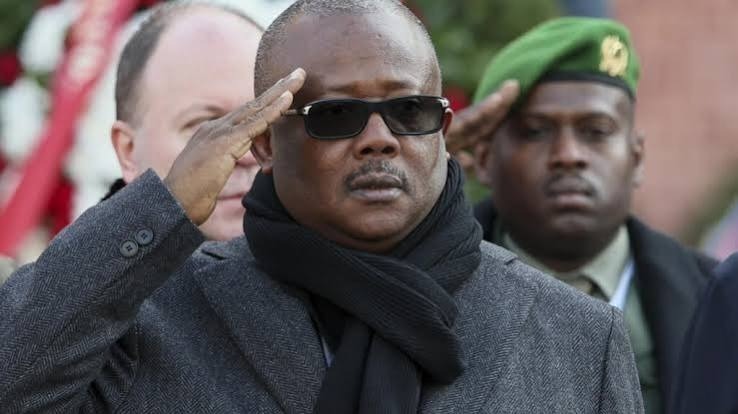
Bissau – The military leadership in Guinea-Bissau has firmly rejected former president Umaro Sissoco Embaló’s attempt to return from exile and run in the planned presidential election, a decision that is already rippling through markets, households and the country’s fragile economy.
A blunt refusal that reshapes the political landscape
In a direct response to Embaló’s public announcement of his intention to come back and contest the presidency, the transitional military authorities issued a statement that left no room for ambiguity. They accused the former leader of trying to destabilise the nation and made clear he would not be allowed to set foot on Bissau soil. The capital, which has grown accustomed to political uncertainty, is once again holding its breath.
Embaló’s gamble from abroad
Speaking from exile, Embaló declared his unwavering determination to return home and stand as a candidate in the election expected by the end of the year. Rather than fading from the scene, he is positioning himself as a legitimate alternative, pointing to transition rules that bar current junta officials from running. To give his bid real weight, a coalition of around a dozen organisations and political parties, dubbed the “Republican Platform,” has been assembled behind the scenes. For Embaló, this is not merely about entering a race – it is about an institutional comeback and a demonstration that his popular base remains intact despite last November’s ouster.
How the November 2025 coup unfolded
To grasp the intensity of this standoff, one must revisit 26 November 2025, when Guinea-Bissau, a country long familiar with military upheavals, plunged once more into chaos.
Tensions had been running high for days. On 23 November, voters had gone to the polls in a decisive presidential election. As counting was wrapping up and both Embaló’s camp and that of his main rival claimed victory, heavy gunfire erupted in the capital. Within hours, armed elements of the Revolutionary Armed Forces of the People surrounded the presidential palace and seized Embaló. The putschists, calling themselves the “High Military Command for the Restoration of National Security,” suspended the electoral process, alleging they were thwarting a plan to manipulate results.
Yet controversy surfaced almost immediately. International observers, numerous diplomats and key opposition figures described the takeover as a “staged arrangement” or “political theatre.” Embaló’s detractors accused him of orchestrating a self-coup to neutralise his opponents’ anticipated victory and halt the ballot’s outcome. Flown out the next day to Dakar on a special flight, Embaló left behind a nation mired in legal and institutional uncertainty.
The junta’s categorical veto
The military leadership now cites that turbulent legacy as the reason for blocking Embaló’s return. In a sharp rebuttal to his statements, the authorities said the ex-president would not be permitted to enter the country, blaming him as the chief architect of the crisis that led to November’s power grab.
“No actor who has compromised social peace and national stability will be allowed to instrumentalise the transition process for electoral agitation,” the military power warned.
For the senior officers now in charge in Bissau, allowing Embaló back would mean reintroducing a major risk factor into an already depleted political landscape. The junta intends to keep tight control over the electoral calendar and who is permitted to compete.
Economic and social fallout for ordinary citizens
The veto is not just a political manoeuvre; it carries tangible consequences for the people of Guinea-Bissau. A prolonged standoff deters investment, disrupts trade flows and undermines the already fragile livelihoods of millions. Markets in Bissau and beyond react to every signal of instability, with prices for basic goods often climbing as uncertainty deepens. Small businesses, which form the backbone of the informal economy, postpone expansion or shutter entirely. Public services, frequently underfunded, face further strain as political attention remains fixed on the standoff rather than on pressing social needs.
For families, the uncertainty translates into difficult choices: whether to keep children in school, whether to invest in a harvest, whether to seek opportunities abroad. The country’s democratic trajectory, already precarious, now hangs more than ever in the balance, with direct implications for the daily lives of its citizens.
A democracy under severe strain
By barring Embaló’s path, the military risks inflaming an already toxic political climate. Much of the traditional opposition finds itself marginalised, hit by exile or legal proceedings, while Embaló’s supporters denounce what they see as authoritarian drift and arbitrary exclusion.
As Guinea-Bissau struggles to chart a roadmap back to constitutional order, the veto thrown at the former president raises a crucial question about the inclusiveness of future elections. Between a deposed leader determined to force his way back from abroad and a military junta resolved to keep the door locked, the country’s democratic future remains deeply uncertain.