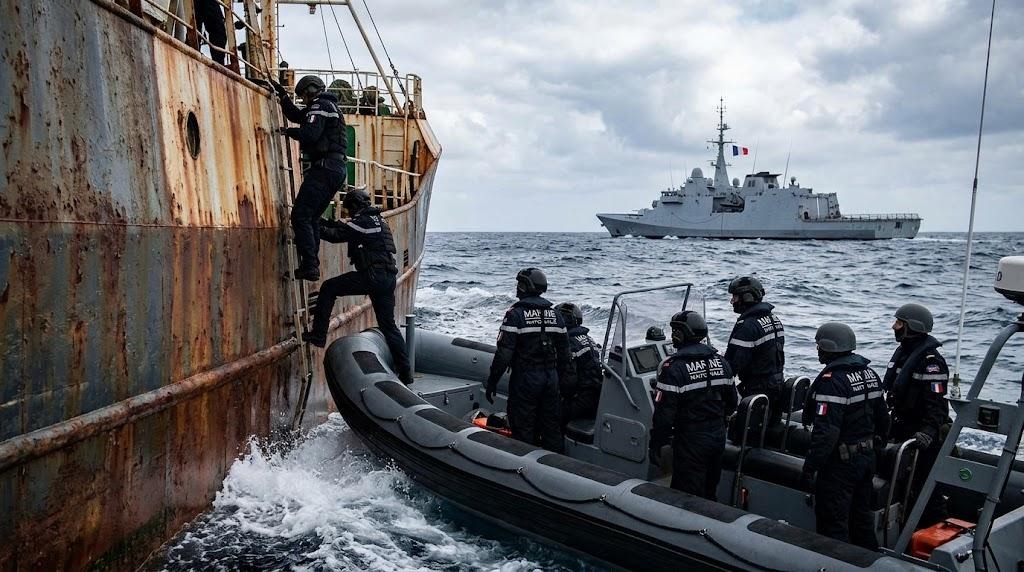
The interception of the DF Peak oil tanker in the Indian Ocean is sparking intense debate over maritime fraud and the exploitation of national flags for sanctions evasion. On October 12, 2026, the French Navy seized the vessel—sailing suspiciously under a Benin flag—at a critical juncture in global sanctions enforcement.
Undercover operation: France disrupts suspected sanctions-busting vessel
French naval forces intercepted the DF Peak, a 244-meter oil tanker, approximately 830 kilometers south of La Réunion. The operation, later confirmed by President Emmanuel Macron, targeted a ship believed to be part of Russia’s so-called ghost fleet, a shadow network of vessels used to bypass international restrictions on Russian oil exports.
Upon inspection, French authorities discovered significant irregularities regarding the legitimacy of the Benin flag displayed by the vessel. Under judicial supervision, the ship was escorted to a designated anchorage zone near La Réunion for further forensic examination, focusing on its administrative records, cargo, and ultimate beneficial ownership.
From NS Captain to DF Peak: A web of deception in maritime registries
The DF Peak, with a gross tonnage of 110,000, has been under EU, US, and UK sanctions since 2024. Investigative tracking reveals its journey from Venezuela to the Indian Ocean, where it attempted to conceal its true identity. The vessel operated under multiple aliases: initially as the NS Captain, then as the Kaliningrad under a Russian flag in April 2024, before adopting the name DF Peak and claiming a Benin registration in 2025.
How fake flags compromise maritime integrity
The suspected misuse of Benin’s flag raises serious legal concerns. Benin’s maritime code stipulates strict criteria for vessel registration, including genuine economic ties between the ship and the country, such as resident ownership, local company registration, or strict management requirements. If the DF Peak was flying a counterfeit Benin flag, this constitutes not only a criminal act under Benin law but also a direct threat to the country’s maritime sovereignty and credibility.
As a signatory to the United Nations Convention on the Law of the Sea (UNCLOS), Benin is legally obligated to exercise effective control over vessels flying its flag. This incident forces Cotonou to confront vulnerabilities in its maritime registry that could expose it to systemic exploitation by illicit trade networks.
The ripple effect: Sanctions evasion and the ghost fleet phenomenon
The DF Peak case highlights a growing chasm between sanctions policies and their enforcement at sea. Shadow fleets rely on layers of shell companies, non-compliant insurance, and risk-prone ship-to-ship transfers to move sanctioned oil—often undetected. This tactic has reshaped global oil trade, enabling Russia to maintain export flows despite restrictions.
France’s interception represents more than a military operation; it is a wake-up call for flag states like Benin. The country must now audit its maritime registry, strengthen oversight, and collaborate internationally to prevent further flag misuse. Failure to act could erode confidence in Benin’s maritime administration and embolden sanctions evaders worldwide.
What comes next: Diplomatic tension and regulatory tightening
This incident has injected fresh urgency into discussions on maritime security and sanctions enforcement. With the DF Peak now under judicial review, both France and Benin face a critical juncture. France may pursue legal recourse against any complicit actors, while Benin must decide whether to delist the vessel—or any associated entities—from its registry to comply with international standards.
As geopolitical tensions rise, the case underscores the need for coordinated action among coastal states, naval powers, and international organizations. The ghost fleet may continue to operate in the shadows, but each interception chips away at its resilience—demanding closer scrutiny of vessel registries, ownership trails, and maritime networks.