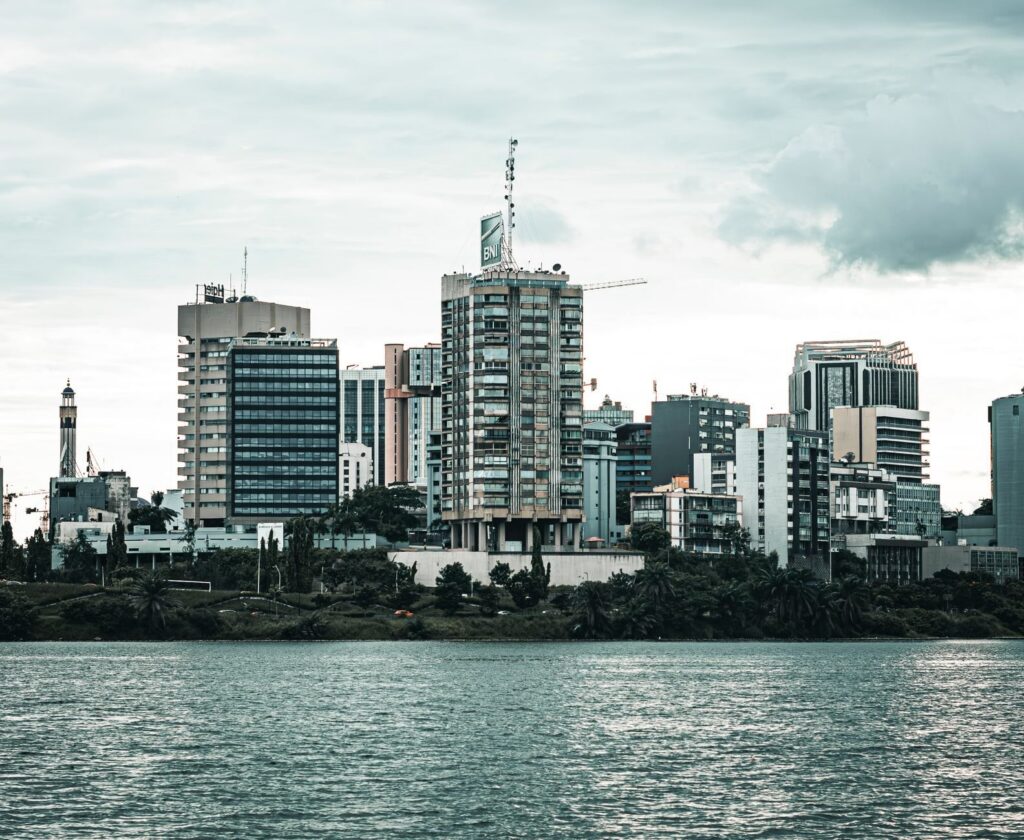
Ivorian President Alassane Ouattara has unequivocally reiterated his commitment to steering Côte d’Ivoire towards an accelerated path of emergence, urging all dynamic forces within the nation to contribute to what he terms the “Greater Côte d’Ivoire.” This rallying cry, issued at the dawn of a new political cycle, underscores the head of state’s ambition to unify administrative, economic, religious, and community leaders around a shared national project. It comes as Abidjan seeks to leverage a decade of sustained economic growth to achieve a significant structural leap forward.
A call for cohesion among Côte d’Ivoire’s vital forces
The presidential appeal explicitly targets every segment of Ivorian society. Republican institutions, political parties, the private sector, civil society organizations, traditional chieftaincies, and the diaspora are all invited to partake in a collective endeavor. The chosen phraseology reflects an inclusive philosophy of public action, where the success of the national agenda hinges on widespread support rather than solely on executive determination. This strategic framing is significant, emerging during a political period where questions of stability and the continuity of public policies are particularly critical.
For Alassane Ouattara, this initiative represents a continuation of the core directives championed since 2011, centered on industrialization, the opening up of rural areas, and solidifying Abidjan’s position as a regional hub. The president aims to transform a favorable macroeconomic dynamic, characterized by an average growth exceeding 6% in recent years, into more tangible social benefits for households. The rhetoric of the “Greater Côte d’Ivoire” encapsulates this dual ambition: strengthening economic indicators and ensuring greater redistribution of wealth.
A long-term economic and political blueprint
Economically, the promise of an expanded Côte d’Ivoire points to several transformative projects already underway. The Port of Abidjan continues its extensive development, while the Port of San Pedro is gaining momentum in the mining and agricultural sectors. The national highway network is being extended northward, connecting towards Burkina Faso and Mali, with the strategic goal of reinforcing West African logistical corridors. The energy sector, identified as a vulnerability following the 2024 supply crisis, is receiving substantial investment to secure production and diversify the energy mix.
However, the political dimension is equally paramount. By engaging the nation’s vital forces, the Ivorian president seeks to broaden the base of support for his administration beyond the confines of the Rally of Houphouëtists for Democracy and Peace (RHDP) party apparatus alone. This rhetorical openness reflects a strategic understanding: major infrastructure projects and economic transformations require a minimal consensus to prevent their reversal with each political transition. The emphasis on the nation, rather than on the presidential camp, aligns with this long-term vision.
A strategy built on national gathering
The choice of vocabulary is far from coincidental. By speaking of a “Greater Côte d’Ivoire,” the executive aligns itself with a political tradition inherited from founding President Félix Houphouët-Boigny, where national ambition was articulated through unifying slogans. This claimed lineage aims to anchor presidential action within historical continuity and to mitigate criticisms regarding an excessive personalization of power. Nevertheless, the concrete implementation of this appeal will ultimately depend on the institutions’ capacity to translate political statements into operational mechanisms.
Observers note that the success of such an ambitious project necessitates measurable progress in governance, the business climate, and the reduction of territorial inequalities. The northern and central regions of the country, less endowed with infrastructure than the lagoon front, remain priority areas. Furthermore, the question of youth inclusion, in a nation where over 75% of the population is under 35, constitutes a structural challenge. The presidential appeal will achieve its full significance only if it translates into concrete mechanisms for involving the mentioned stakeholders in decision-making processes.
You may also like
Senegal: how Sonko’s playful jab at Sadio Mané over 2029 is reshaping the political conversation
Senegal’s shadow funds: How unchecked spending drains public trust and budgets
Bénin: le Sénat tient sa séance inaugurale sous la conduite de Patrice Talon
Gabon : la participation citoyenne au cœur de la Ve République
Is Chad truly experiencing a political easing of tensions?