The deployment of advanced weaponry by Mali’s military is proving ineffective without a well-grounded doctrinal understanding of warfare. The ongoing conflict near Kidal highlights a critical truth: a military command lacking adequate training turns firepower into wasted resources.
Why sophisticated weapons fail without strategic mastery
Mali has invested heavily in cutting-edge military technology, including surveillance drones, tactical bombers, and precision-guided munitions. However, the assumption that advanced weaponry alone ensures operational superiority is flawed. The real determinant of battlefield success lies in the strategic and doctrinal framework that guides their use. When Mali’s military leadership operates with critically low educational standards, these costly systems become little more than political symbols, devoid of real tactical impact.
The Kidal front: A case study in military shortcomings
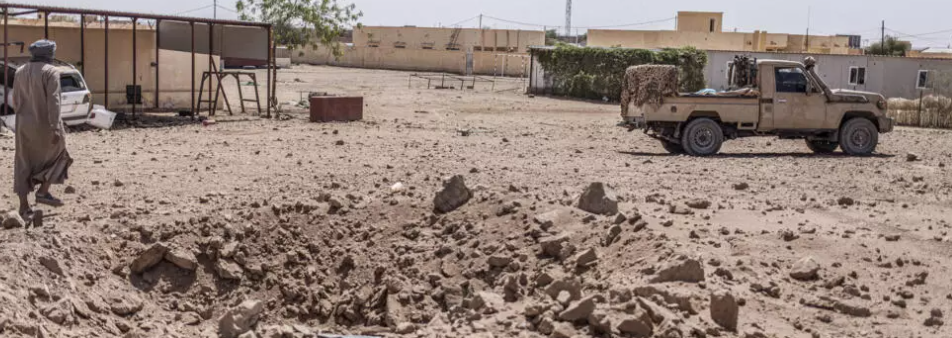
The security situation in northern Mali, particularly around the key city of Kidal, serves as a stark example of this military paradox. Despite frequent airstrikes, drone attacks, and heavy bombardments, rebel forces from the Front de libération de l’Azawad (FLA) continue to hold their ground. The question arises: why does Mali’s near-total air superiority fail to break their resistance?
The answer lies in the inability of Mali’s high command to integrate airstrikes into a cohesive, multi-domain strategy. Bombing without coordinated ground support, immediate exploitation by trained troops, or careful terrain analysis amounts to little more than firing into the void. Advanced weaponry cannot compensate for a command structure crippled by strategic illiteracy.
The cost of rigid, uninformed military thinking
Modern warfare in Mali, especially in its asymmetric and desert-based form, demands intellectual agility far beyond conventional conflicts. Mali’s undereducated military command tends to rely on rigid, brute-force tactics. The repetitive nighttime airstrikes near Kidal underscore a severe lack of tactical innovation. Meanwhile, rebel forces demonstrate remarkable adaptability: dispersion, camouflage, utilization of local geography, and psychological resilience.
Another consequence of strategic illiteracy is the failure to learn from past mistakes. When Mali’s high command repeats the same planning errors week after week—leading to unnecessary material losses and maintaining the status quo—the issue shifts from logistics to fundamental military thinking. For Malian officers, weapons are often seen as magical talismans capable of solving security problems through sheer presence, rather than as tools requiring method, calculation, and nuanced strategy.
A harsh reminder of war’s immutable laws
Ultimately, the events in northern Mali serve as a sobering reminder of the enduring principles of warfare. Financial resources poured into advanced aerial systems yield no tangible results when the minds behind the operations in Bamako lack foundational educational prerequisites. Until Mali’s strategic command stops being the weakest link in its military training, front lines like those around Kidal will remain static. The lesson is clear: for Mali, firepower without intelligence is nothing more than the ruin of armies.