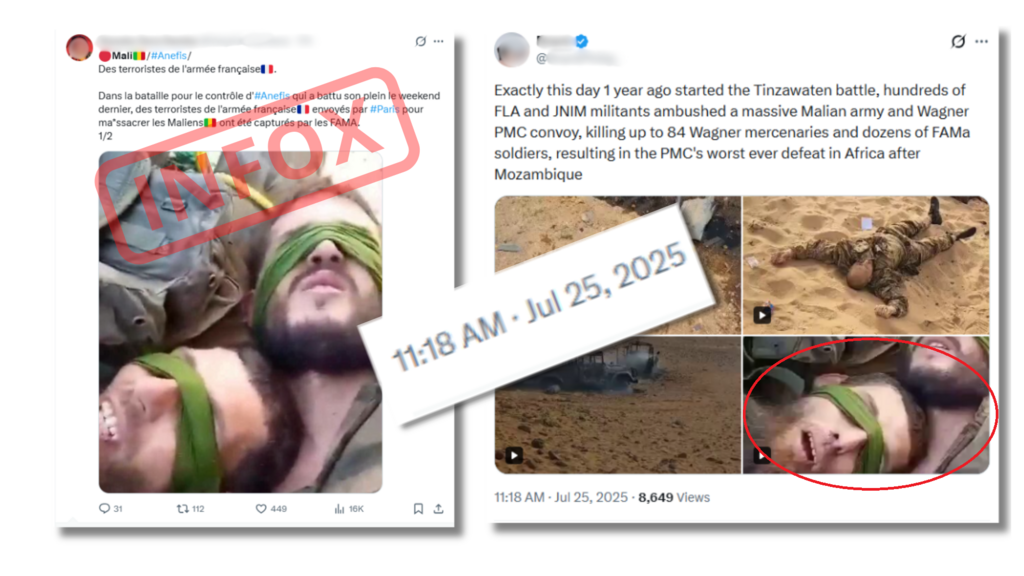
Between July 4 and 9, Malian forces, backed by Russian elements, engaged in heavy fighting against terrorist groups in the Anéfis area. As the dust settled, a new wave of misinformation emerged, falsely implicating French troops—despite France’s withdrawal from Mali in August 2022. Pro-AES accounts sought to spread claims that a French soldier had been killed alongside rebels from the National Movement for the Liberation of Azawad and the Group for the Support of Islam and Muslims.
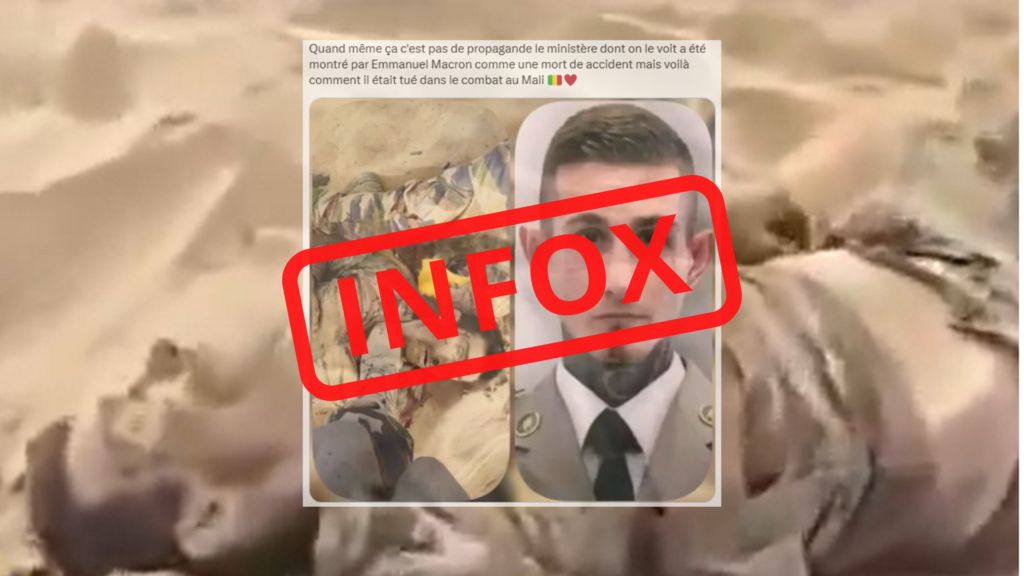
a fabricated narrative using recycled imagery
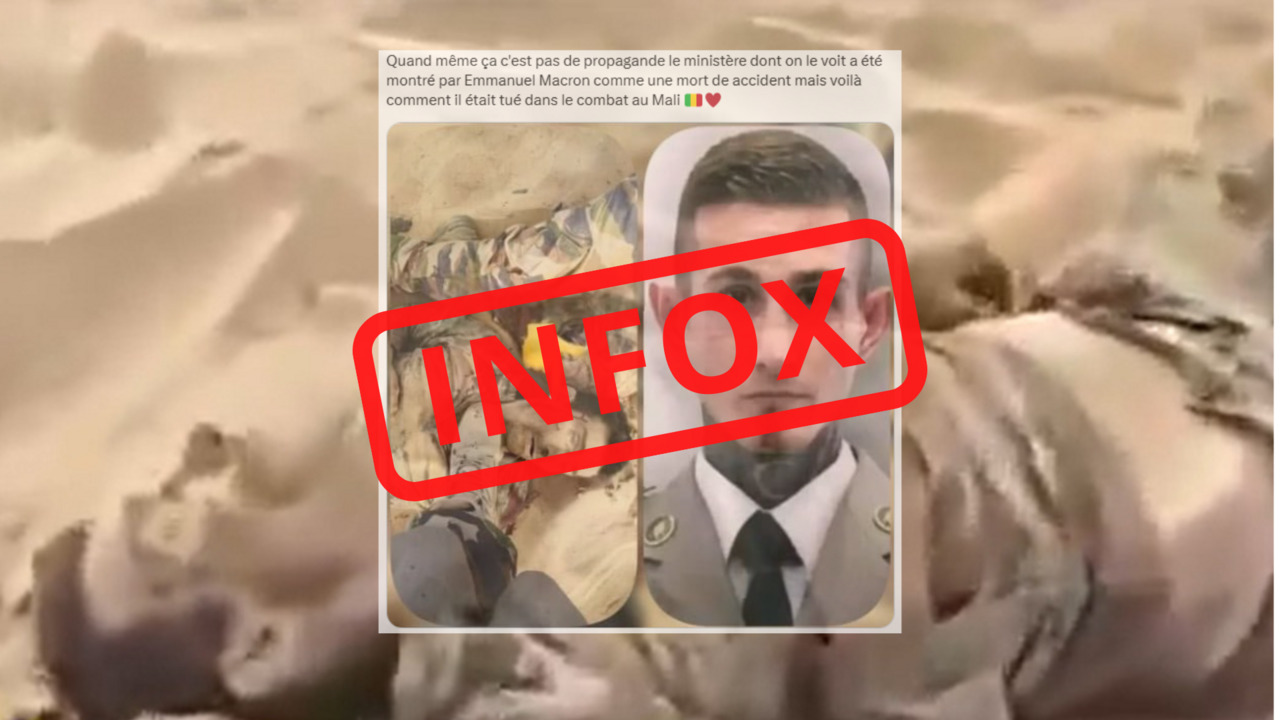
False claims began circulating quietly shortly after the fiercest clashes in Anéfis. On July 9, a misleading post appeared on X (formerly Twitter), twisting the news of a French soldier’s death during a July 7 training exercise in the Alps. Sergeant Pena, a Russian-born legionnaire, had died in the line of duty, and French military officials had already paid tribute to him. The pro-AES accounts cynically suggested, “other hypotheses are circulating, including a possible death in Anéfis, Mali.”
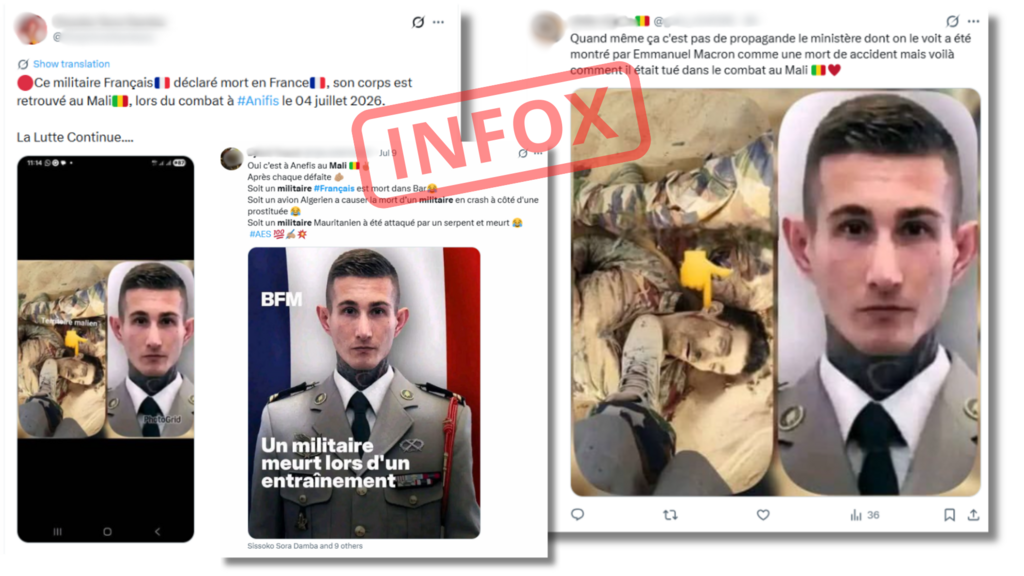
identifying the real victim
The next day, a graphic image surfaced, supposedly showing the French soldier’s body in the sand. The man in the photo bore a striking resemblance to the deceased legionnaire, playing on his Russian origins to sow confusion. However, upon closer inspection by Sahel experts, the image was traced back to footage from the 2024 Tinzaouatène battle. Reverse image searches confirmed it depicted a Russian mercenary, not a French soldier. The source—a shadowy online forum—lacked verifiable details, rendering the claim baseless.
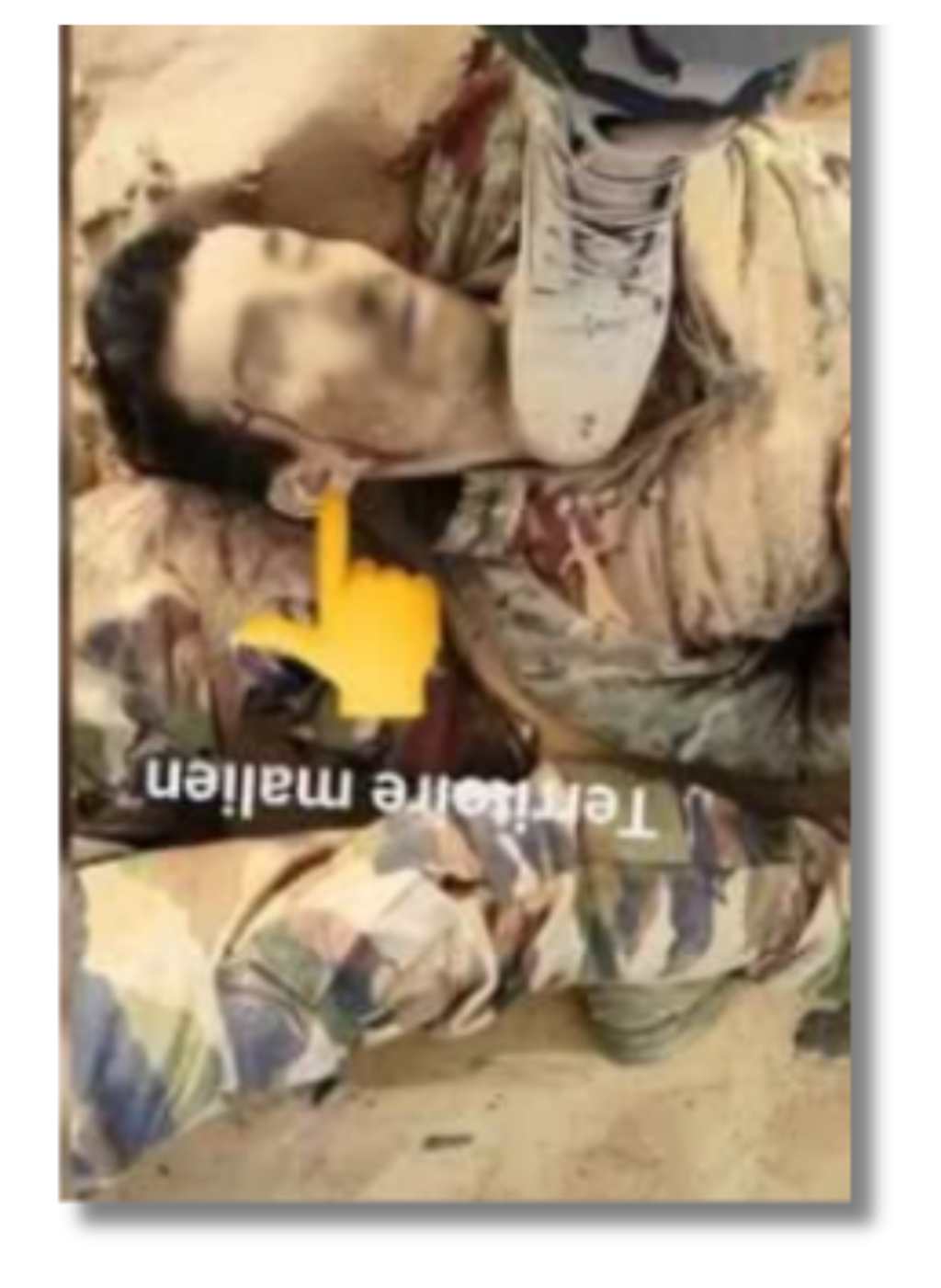
video evidence exposes the manipulation
Analysis of a six-minute propaganda video released by the National Movement for the Liberation of Azawad in 2025, marking the first anniversary of the battle, revealed the same body lying alongside other Russian fighters. While the footage was grainy, key details matched: the arrangement of the bodies, camouflage patterns, facial features, and hairstyles all aligned with the archived images.
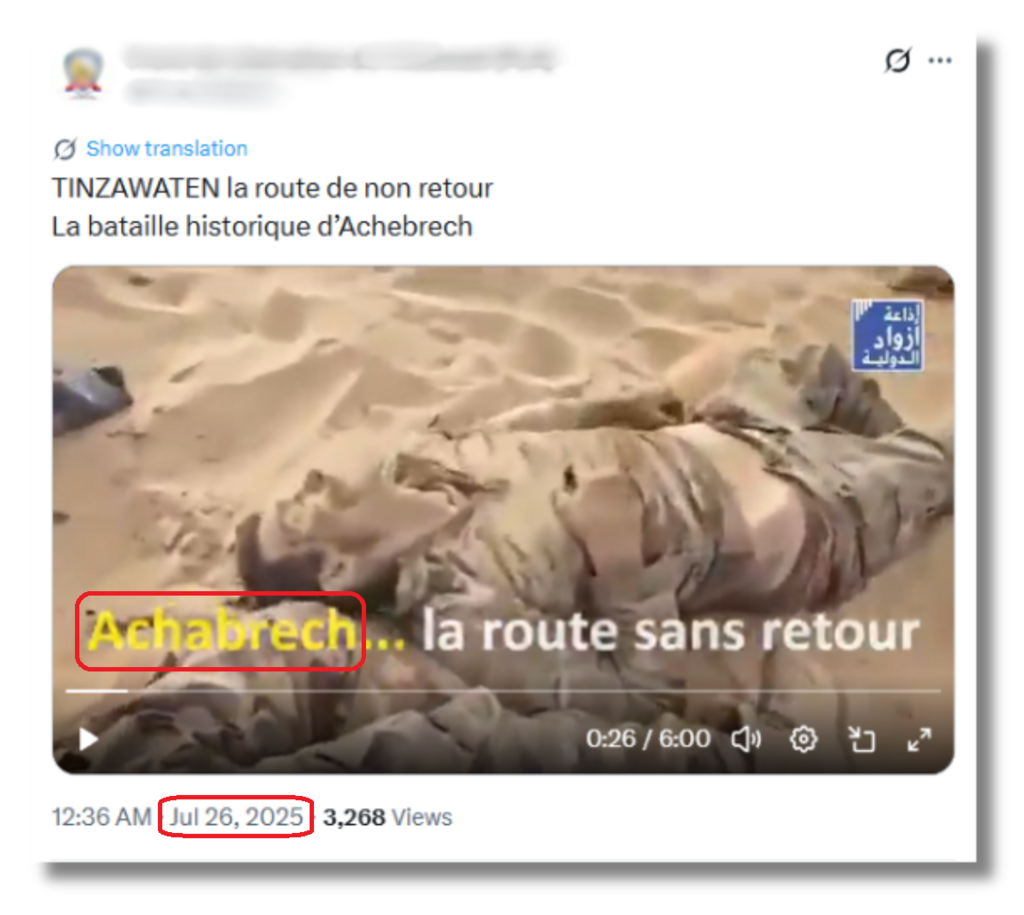
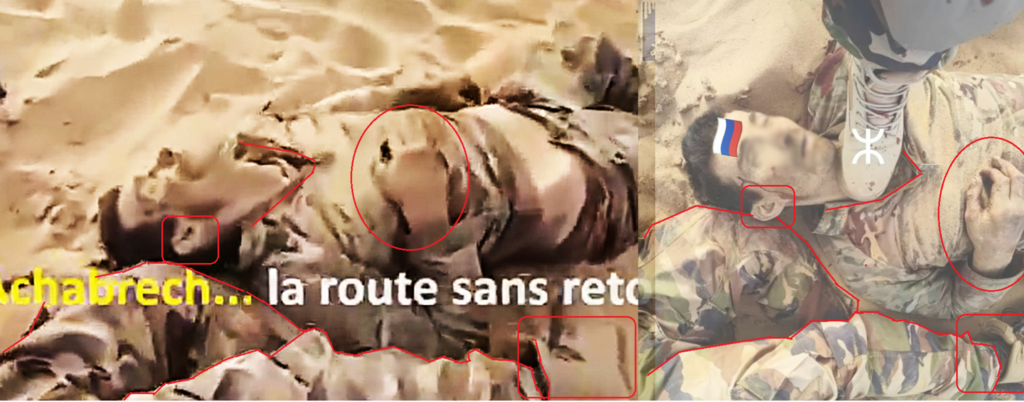
The fabricated narrative relied on an image taken out of context: an archived photo of Wagner Group members killed in Tinzaouatène in 2024, not a French soldier allegedly found in Anéfis in 2026.
a failed manipulation
The false claim that French troops are complicit with terrorists is not new. However, this particular misinformation campaign failed to gain traction. It remained confined to accounts known for spreading Sahelian propaganda and garnered little amplification. Commentators quickly exposed the deception, signaling the narrative’s weakening after years of repetition. As of now, the misleading post has garnered fewer than 50,000 views. Nevertheless, the attempt to impersonate a fallen French soldier and exploit his memory remains a reprehensible act.