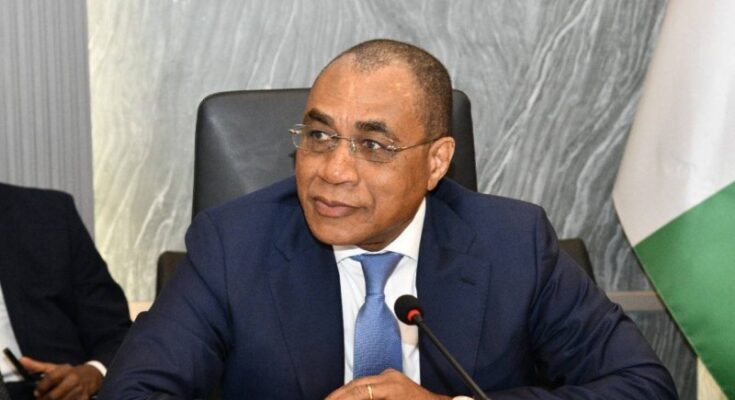
West Africa’s Côte d’Ivoire is stepping into a new era of environmental governance with the unveiling of an ambitious national carbon taxation strategy. Engineered by the Ministry of Economy, Finance and Budget, this visionary initiative aims to curb greenhouse gas emissions while accelerating the nation’s transition toward a greener economy.
confronting climate and economic challenges head-on
Recent economic expansion in Côte d’Ivoire, particularly in the post-Covid recovery phase, has come at an environmental cost. Between 1990 and 2024, the country’s carbon intensity rose from 0.15 to 0.18 tonnes per thousand dollars of GDP—a direct result of heavy reliance on fossil fuels, rapid industrialization, escalating transport needs, and emission-heavy agricultural practices.
Climate-related disruptions—including rising temperatures, erratic rainfall, and increased environmental risks—are already taking a toll on key sectors, especially agriculture, which remains the backbone of both employment and GDP.
aligning with global climate commitments
This new fiscal strategy reflects Côte d’Ivoire’s commitment to meeting its international climate obligations. Under its updated Nationally Determined Contribution (NDC 3.0), the country has pledged to reduce greenhouse gas emissions by 33.07% independently and up to 74% with international support, all by 2035.
The plan is also aligned with fiscal reforms negotiated under the IMF’s Resilience and Sustainability Facility (RSF), positioning a locally tailored carbon tax as a central pillar of the national climate strategy.
building on existing environmental levies
Côte d’Ivoire already employs several fiscal tools aimed at environmental protection, including excise duties on petroleum products, targeted green taxes, and levies on forestry and mining activities. However, their primary purpose has been revenue generation rather than driving low-carbon transitions. The new carbon tax is designed to transform fiscal policy into a powerful catalyst for sustainable behavior among businesses and households.
a progressive, equitable carbon tax framework
The proposed carbon tax will primarily target fossil fuels, with liquefied petroleum gas (LPG) excluded. Modeling indicates significant potential for emissions reduction: an initial levy of $8 per tonne of CO₂ could cut emissions by 0.2 million tonnes, while scaling up to $50 per tonne could yield a reduction of 1.2 million tonnes.
While acknowledging potential short-term price increases for fuels and a slight drag on economic growth, authorities emphasize a responsible rollout. A portion of the revenue will be reinvested to cushion the impact on vulnerable households and support the green transition.
directing revenue toward sustainable development
Proceeds from the carbon tax will be channeled into critical initiatives: expanding universal access to electricity across the country, subsidizing cleaner cooking solutions such as gas and solar stoves to reduce charcoal dependency, and providing direct cash support to low-income families.
The strategy also includes incentives for low-emission vehicles, including tax breaks, targeted exemptions, and the rollout of charging infrastructure to support the adoption of electric mobility.
a phased, decade-long implementation roadmap
Implementation will unfold in three strategic phases:
- Phase 1 (2026–2027): Establishing the legal, institutional, and technical foundations for the carbon tax.
- Phase 2 (2028–2029): Launching the tax with a moderate initial rate and beginning real-world application.
- Phase 3 (2030–2035): Gradual scaling, consolidation, and ongoing evaluation and refinement.
Through this integrated approach, Côte d’Ivoire seeks to balance economic growth, social equity, and environmental stewardship—demonstrating leadership in Africa’s response to the global climate crisis.