UN sanctions against Corneille Nangaa: what impact on DRC peace efforts?
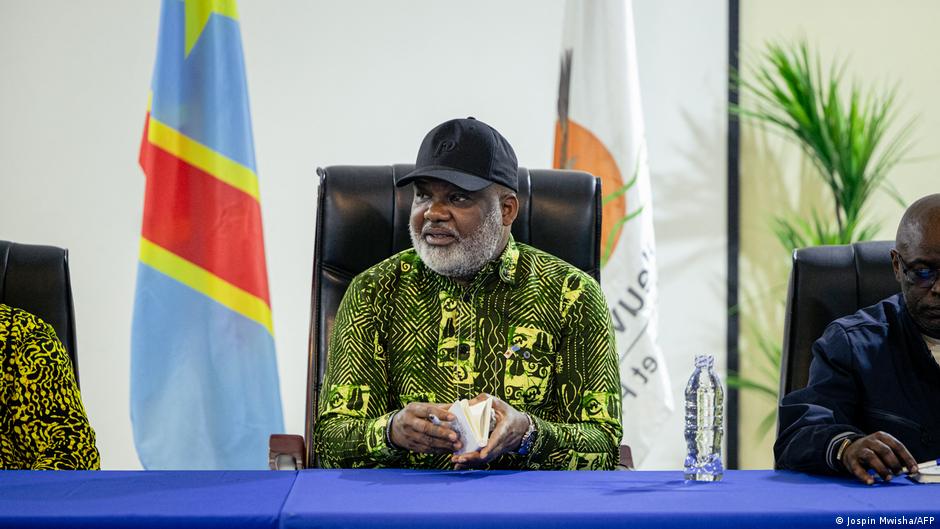
The United Nations Security Council has imposed sanctions on Corneille Nangaa, coordinator of the M23 rebel movement in the Democratic Republic of Congo (DRC), alongside several other leaders of armed groups operating in the country’s eastern provinces. These measures come as the DRC holds the rotating presidency of the UN Security Council for July.
Besides Nangaa, the list includes John Imani Nzenze, head of intelligence for the AFC/M23, Charles Sematama, military leader of the Twirwaneho armed group, Gustave Kubwayo of the FDLR, Sébastien Kimenyi also from the FDLR, and Muhammed Lumisa, commander of the ADF.
The AFC/M23 has dismissed these sanctions as “selective” and “discriminatory,” arguing they undermine ongoing peace processes in which the group is engaged.
Timing raises questions about UN intentions
Professor Bob Kabamba, a political scientist at the University of Liège in Belgium, suggests the sanctions may be an attempt by the UN to isolate the M23 from peace negotiations, potentially complicating diplomatic efforts.
“It will be challenging for the UN to continue engaging with the AFC/M23 on the ground, especially regarding the implementation of peace agreements and coordination with the UN mission in DRC. The UN has repeatedly collaborated with the group in the past,” Kabamba explains.
Diplomatic pressure or obstacle to peace?
Professor Julien Mahatma Tazi, an international relations expert at the University of Kinshasa, views the timing differently. He believes the sanctions reflect a dual strategy: maintaining international visibility on the DRC crisis while reinforcing accountability for conflict actors.
“The DRC’s leadership in the UN Security Council has kept the eastern conflict in the global spotlight. The sanctions signal that negotiations do not absolve leaders of responsibility for fueling violence. They aim to increase pressure on armed group leaders while supporting diplomatic initiatives,” he states.
Tazi emphasizes that the sanctions could weaken the international legitimacy of armed group leaders, restrict their movements, and limit their access to financial resources—if enforced effectively by member states.
Civil society demands swift enforcement
In rebel-controlled areas like Walikale in North Kivu, civil society leaders express frustration over the lack of enforcement of previous sanctions. Fiston Misona, president of the Walikale Civil Society, highlights the urgency:
“Every time sanctions are imposed, they are rarely enforced as required. We urge the UN to ensure these measures are applied without delay against those responsible for human rights violations in DRC,” he insists.
This is not the first time Corneille Nangaa has faced sanctions—he was previously targeted by the United States twice and once by the European Union.