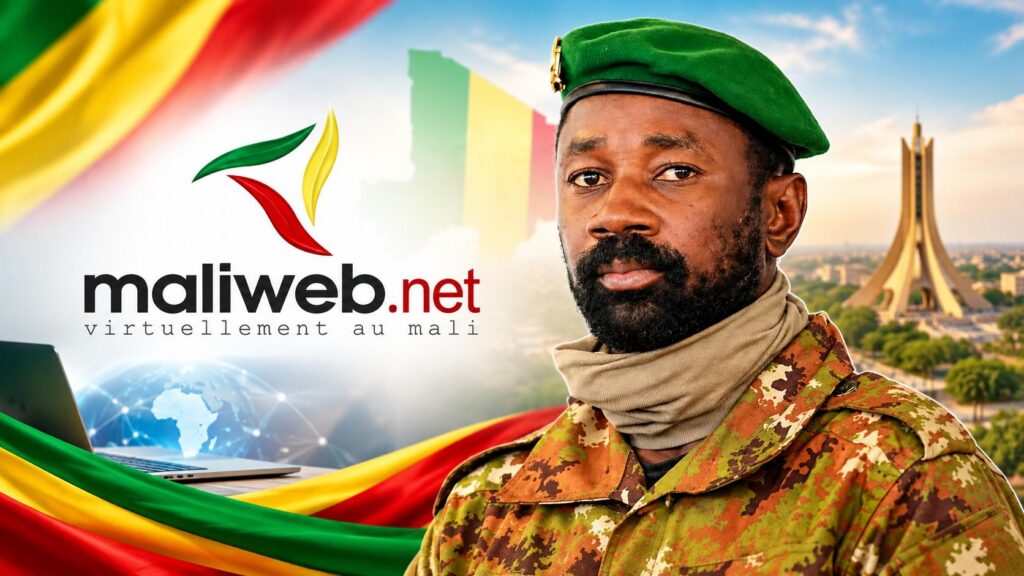
The information war in Mali has taken a troubling turn, and the fallout is now impossible to ignore. At the center of the storm is Maliweb.net, a once-respected online news portal that has increasingly become a mouthpiece for official military messaging. The question everyone is asking: what does this mean for the future of independent journalism in the country? The public debate is heating up, and the stakes could not be higher.
From news outlet to echo chamber: the transformation of Maliweb.net
Mali’s media landscape has long been a battleground, but the line between factual reporting and wartime propaganda has never been more blurred. Maliweb.net, which once showcased the diversity of the country’s online press, has gradually morphed into a central relay for the government’s narrative, often at the expense of the truth on the ground.
A case study in skewed coverage: the September 15, 2026 events
The events of September 15, 2026, offer a stark illustration. Multiple eyewitness accounts and field observations indicated deadly clashes that resulted in the deaths and capture of over 150 Malian soldiers in the Dioura and Mondoro areas. Yet the coverage provided by the website told a radically different story.
By republishing statements from the Army General Staff without any independent verification, the portal downplayed the losses under the guise of a glorious counterattack. The narrative presented to readers depicted a heroic manhunt and the systematic destruction of terrorist bases, deliberately obscuring the human toll paid by the armed forces.
The mechanics of a systemic manipulation
This asymmetric treatment of security news relies on well-oiled mechanisms:
- Exclusive relay of institutional versions: By publishing almost exclusively the communiqués of the DIRPA or state press articles without prior cross-checking, the portal unilaterally validates the government’s communication strategy.
- Invisibility of losses and setbacks: Human tolls on the side of the Malian Armed Forces (FAMa) are systematically understated or silenced, in order to maintain a sense of military infallibility among the public.
- Disqualification of dissenting voices: Any attempt at independent verification or mention of operational difficulties is indirectly marginalized, labeled as disinformation or as damaging to troop morale.
The Malian citizen and the trap of information asphyxiation
This shift raises a major democratic question. By abandoning its duty of reserve, verification, and balance, Maliweb.net is not merely relaying press releases: it is actively participating in the construction of a distorted narrative of the war.
For citizens and observers, the quest for objective information has become an obstacle course. By transforming a space for information into an ideological echo chamber, aligned media actors erode public trust in the local press and deprive society of a clear-eyed view of the country’s real security situation.
Reactions and the road ahead
The public reaction has been swift and divided. Some defend Maliweb.net as a necessary tool for national unity in times of crisis, while others warn that silencing independent voices will only deepen the crisis of confidence. Media watchdogs and citizen groups are calling for greater transparency and a return to ethical journalism. The coming months will be crucial in determining whether Mali’s media can reclaim its role as a watchdog or whether it will remain a tool of state propaganda. The world is watching, and the future of democracy in Mali may well depend on the answer.
You may also like
Cotonou’s savings push: what the fallout means for West Africa’s financial future
Benin–Spain cultural alliance: what the reaction tells us about what comes next
Niger: Tiani’s widening purge sparks debate over citizenship and loyalty
Benin–Cuba economic reset: the debate, the doubts and what happens next
One year on, Marguerite Gnakadé’s case still stirs debate about Togo’s direction