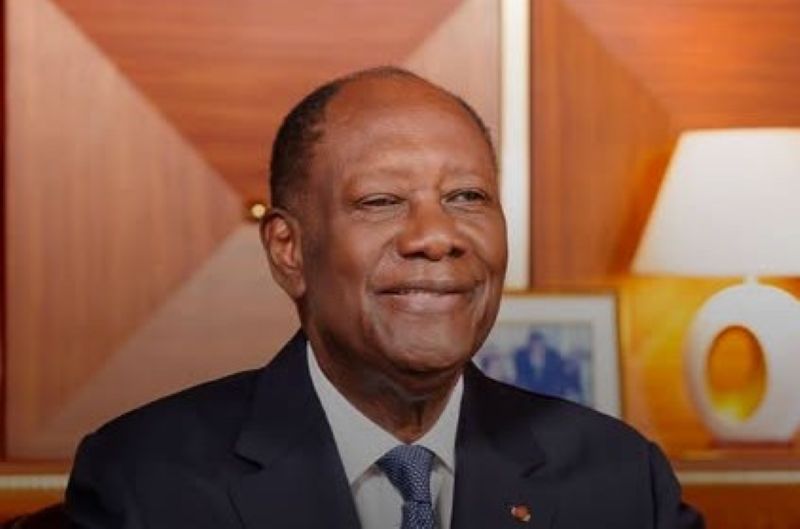
Ivory Coast’s Ouattara seeks grander vision with balanced governance
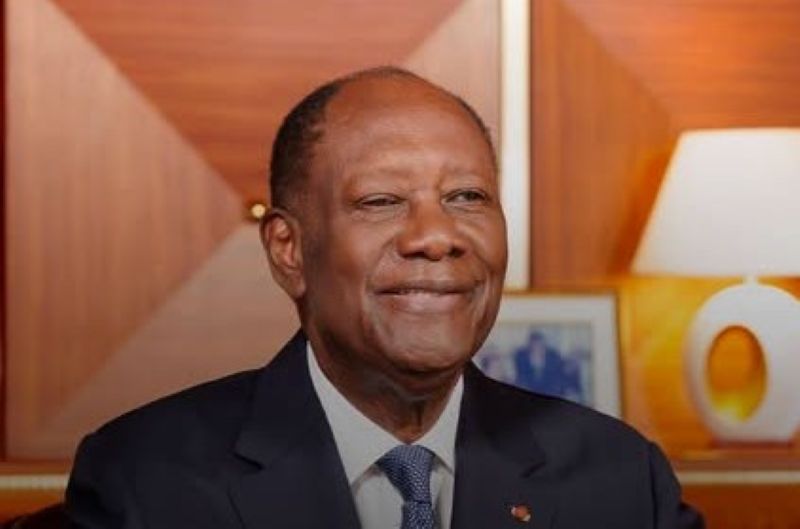
Abidjan — As Ivory Coast marks 66 years of independence, President Alassane Dramane Ouattara is redefining the nation’s political trajectory. His address to the nation transcends conventional economic metrics or security promises, instead weaving together two critical imperatives: accelerating national transformation while reinforcing the rule of law.
At the heart of the « Greater Ivory Coast » vision lies a fundamental question: how can economic growth and political stability translate into tangible benefits for all citizens? This is no mere political slogan but a call to action that demands unity across institutions, businesses, political parties, civil society, traditional authorities, religious communities, and the diaspora.
Building a greater nation: beyond economic metrics
The president’s vision signals a shift from routine governance to a collective national endeavor. Ivory Coast’s favorable economic trajectory and substantial investments in infrastructure, transportation, energy, and port capacities are well-documented. However, the true measure of success lies not in towering skyscrapers or expanded highways, but in the nation’s ability to bridge territorial divides, empower its youth, and convert growth into lasting improvements in living standards.
« Greater Ivory Coast » will only materialize if it becomes a social reality, not just an economic one. This requires more than infrastructure; it demands inclusive policies that leave no community behind.
Progress with accountability: the rule of law as a safeguard
In his televised address, President Ouattara reaffirmed the urgency of addressing flood-prone and disaster-risk zones across the country. Yet he drew a clear line in the sand: no administrative action should operate outside the bounds of legality. Recent operations in areas like Koumassi have drawn scrutiny, with the president emphasizing that investigations must lead to accountability and legal consequences where warranted.
This stance underscores a broader principle: modernization and disaster prevention cannot justify the creation of administrative gray zones where citizens face displacement without due process or sufficient safeguards. A firm state can and must act decisively, but it cannot abandon the rule of law in the process.
The ultimate test: coherence in governance
Ivory Coast stands at a crossroads where economic ambition must align with social equity and institutional integrity. The president’s vision hinges on two pillars: fostering national unity and upholding the rule of law. The call for unity will ring hollow if citizens feel excluded from the nation’s progress. Similarly, the rule of law loses its meaning when state actions themselves bypass legal frameworks.
President Ouattara’s message is deceptively simple yet politically demanding: build faster, secure more effectively, modernize the nation, but never lose sight of those for whom this transformation is intended. « Greater Ivory Coast » will be judged not by the scale of its infrastructure or economic metrics, but by its ability to harmonize public power, justice, and inclusion. This coherence—not slogans—will determine whether Ivory Coast’s next chapter marks a true leap forward.
You may also like
Ivory Coast’s refusal of US deportee deal: what it means for West Africa’s economy and sovereignty
Senegal’s 2026 budget: what a Sonko blockade would mean for households and businesses
Nourane Foster’s PCRN resignation: what it means for Cameroon’s voters and 2027 race
Senegal’s electoral reform debate: what the fallout from Khalidou dit Mbaye Sokoma’s plan means for the country’s next steps
Senegal: how Sonko’s playful jab at Sadio Mané over 2029 is reshaping the political conversation