Gabon parliament grills government on national priorities
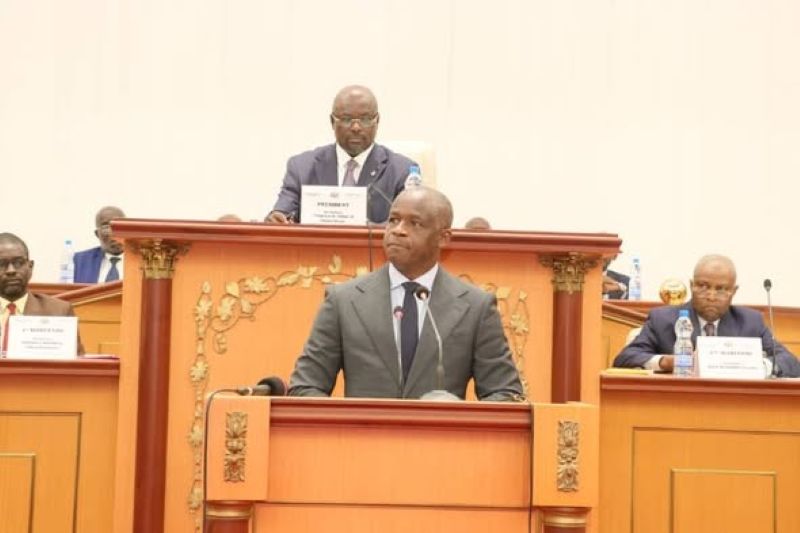
Libreville, June 3, 2026 — Gabon’s National Assembly transformed into a forum where lawmakers scrutinized government performance on pressing national issues.
Beyond routine parliamentary procedures, Tuesday’s oral questions session became a platform for genuine democratic debate. For the first time since the 14th legislature convened, Gabonese deputies exercised their constitutional oversight role, exposing critical challenges faced by citizens across purchasing power, education, healthcare, security, employment, and economic sovereignty.
At the Léon Mba Palace, following constitutional provisions and parliamentary rules, legislators directed nearly twenty inquiries to government officials. This pivotal moment precedes the June 15 parliamentary congress where President Brice Clotaire Oligui Nguema will deliver his State of the Nation address.
youth challenges dominate parliamentary debate
Among the most pressing concerns was the alarming spread of drugs and addictive substances in schools. Sixth Vice-President of the National Assembly Huguette Tsono confronted Vice-Premier Hermann Immongault about the crisis, who acknowledged its gravity while reaffirming the state’s commitment to safeguarding education.
This issue transcends academic boundaries. With youth comprising the majority of Gabon’s population, combating addiction emerges as a strategic imperative for social stability and human development. The education debate followed suit when Deputy Dorland Chancely Olengué questioned Education Minister Camélia Ntoutoume-Leclercq about reform progress. The minister assured that initiatives remain on track with the government’s established timeline, though families’ high expectations contrast with the long-term nature of systemic improvements.
economic sovereignty takes center stage
The session also spotlighted economic transformation. The gradual ban on imported chicken sparked discussion about public policy direction. Agriculture Minister Pacôme Kossy argued the measure aims to build a robust national poultry sector capable of meeting domestic demand while generating employment.
This decision exemplifies a broader ambition: reducing food dependency while strengthening local production. Mining reforms presented by Mines Minister Sosthène Nguema Nguema followed similar logic. The announced ban on raw manganese exports aligns with a strategy to capture greater value addition within national borders.
This shift marks departure from traditional raw material export models, echoing trends across African nations seeking to industrialize their resource wealth.
social urgencies remain unaddressed
Everyday challenges also dominated discussions. Interior Minister Adrien Nguema Mba fielded questions about delays in national ID and passport issuance—particularly acute for inland populations facing administrative access barriers.
Social Affairs Minister Armande Longo épouse Moulengui addressed pensioners’ concerns, CNAMGS insurance holders, persons with disabilities, and single mothers. These queries underscore that economic growth alone cannot address concrete living conditions without corresponding social improvements.
parliament’s renewed institutional role
Beyond ministerial responses, the session demonstrated the Assembly’s resurgence as a public debate arena. By enabling legislators to raise diverse issues from food security to industrial transformation, education to healthcare administration, the National Assembly reasserted its democratic oversight function.
Closing remarks by Assembly President Michel Régis Onanga Ndiaye paved the way for the upcoming parliamentary congress—a major political milestone evaluating progress on reforms initiated during the Transition period.
This inaugural oral questions session of the 14th legislature served as a revealing snapshot. It captures a nation engaged in profound transformation while confronting substantial social expectations.
Between economic sovereignty, state modernization, and citizen welfare improvement, the government faces mounting pressure not just to articulate ambitions but to deliver tangible results. The coming months will determine the credibility of Gabon’s public action through measurable outcomes.