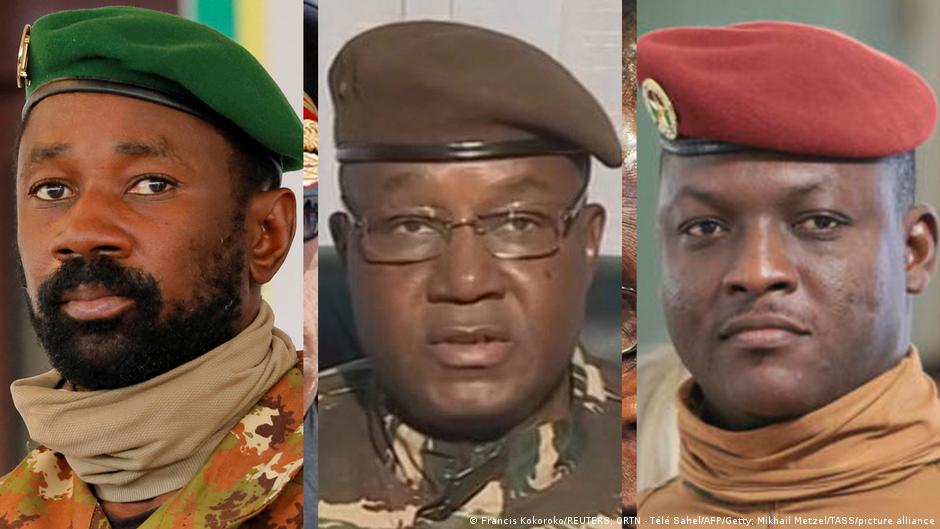
The Sahel region has become a focal point for political transformations in recent years. Burkina Faso, Mali, and Niger, collectively known as the Alliance of Sahel States (AES), have experienced military takeovers between 2020 and 2023. These nations share a common challenge: combating terrorism and armed groups that have destabilized their territories, spanning over 2.8 million square kilometers.
While the military leaders cite security concerns as justification for their power, the prolonged absence of elected leadership raises critical questions about their commitment to restoring democracy. Citizens are increasingly skeptical about the junta’s intentions, especially as democratic principles are openly questioned by the ruling authorities.
In Mali, for instance, national consultations led by the military recommended dissolving all political parties and associations, as well as elevating the junta leader, General Assimi Goïta, to the presidency for renewable five-year terms. Since his 2020 coup, Goïta lacks electoral legitimacy, relying solely on claimed popular support in a climate of repression.
searching for a new political identity
Similar scenarios unfold in Niger and Burkina Faso, where national consultations were boycotted by major political parties. Democracy thrives on checks and balances, yet these transitions reflect a broader regional trend: a rejection of neocolonial structures in favor of homegrown governance models.
The recent coups in the Sahel signal a departure from the democratic frameworks established in the 1990s through national conferences. These earlier efforts aimed to institutionalize the rule of law and democratic alternation, but their implementation has often been flawed. Today, voices across the region advocate for alternative systems that prioritize sovereignty and continental values over Western-inspired models.
public opinion and democratic legitimacy
In cities like Ouagadougou, Bamako, and Niamey, debates rage over the reliability of democratic processes. Military leaders frequently manipulate public opinion to maintain power, sidelining democratization efforts. For example, Mali’s democratic journey began in 1992 with the election of Alpha Oumar Konaré but has since been marred by political and security instability, culminating in multiple democratic ruptures.
Niger’s experience with multiparty democracy in the 1990s also faced disruptions, fostering hope initially before institutional dysfunction led to military intervention. Since the 2023 coup against President Mohamed Bazoum, Nigeriens remain divided on the value of democracy, with international bodies like the Economic Community of West African States (ECOWAS) attempting to reinstate democratic order through sanctions.
However, many in the Sahel view these sanctions as interference by Western powers. The AES countries’ withdrawal from ECOWAS underscores their pursuit of autonomy and rejection of external influence in their political affairs.
the role of political parties
Political parties in opposition play a crucial role in shaping democratic discourse. Their ability to mobilize, propose alternatives, and hold governments accountable is vital. Yet, in countries like Guinea—where over 50 parties were banned ahead of a constitutional referendum—the military leadership has systematically suppressed dissent. The junta’s claim that the referendum will restore constitutional order is met with skepticism, as repression and restrictions on free expression persist.
As the Sahel navigates this period of transition, the future of democracy remains uncertain. Will the region embrace new governance models, or will military rule become the norm? The answers lie in the balance between sovereignty, public trust, and the enduring struggle for democratic values.