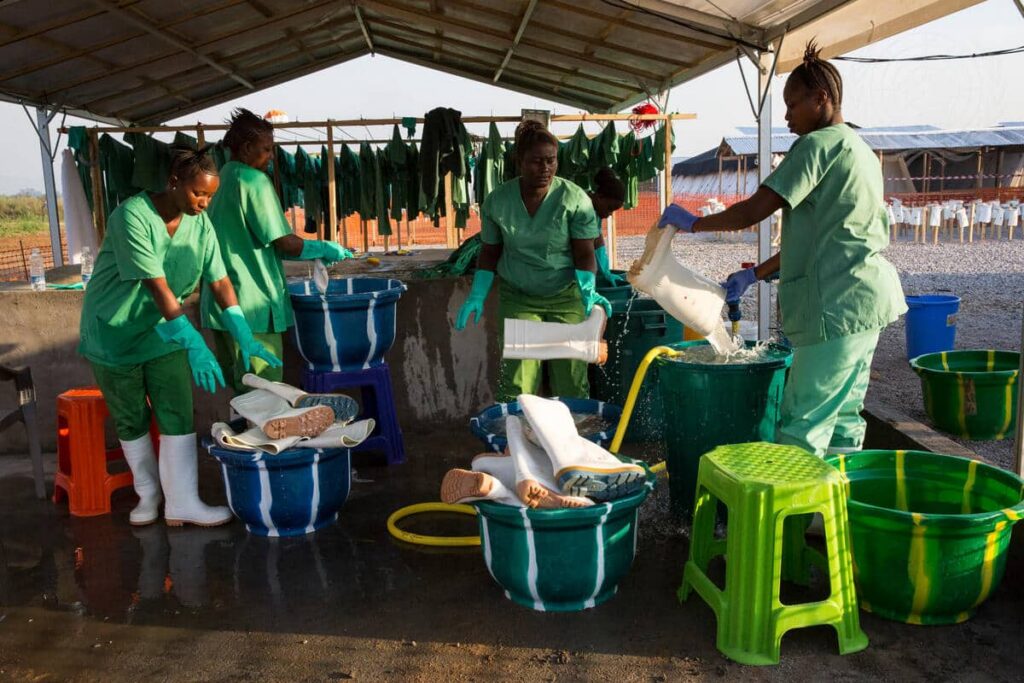
In the Democratic Republic of Congo (DRC), a deadly Ebola outbreak emerged in Ituri Province on May 15, and the situation has deteriorated rapidly since. The Bundibugyo Ebola virus, a rare strain for which no approved vaccine or targeted treatment exists, has now spread across multiple regions, including North Kivu, South Kivu, Haut-Uele, and Tshopo. Neighbouring Uganda has also reported cases. Despite the deployment of humanitarian teams—including Medair and World Vision—control remains elusive.
Recent data from the World Health Organization (WHO), referenced in an August 3 update by the United Nations, reveals a staggering toll: as of July 30, there were 3,748 confirmed cases and 1,587 fatalities, translating to a 44% case fatality rate. The surge is alarming—567 new cases and 296 deaths were recorded in just one week. The UN warns this is the highest weekly toll since the outbreak began. Among those affected are 44 healthcare workers, with 151 infections reported among medical personnel since the epidemic started.
As the crisis intensifies, the UN highlights that “response capacities are scaling up to match the growing threat.” Organizations like the International Medical Corps (IMC), in coordination with UN agencies, are mobilizing additional resources to combat the spread.
You may also like
Ivory Coast’s World Bank portfolio: what the $5.3 billion reveal means for jobs and the road ahead
Nanga armored vehicles: mounting fallout, public backlash and where Burkina Faso goes from here
After the eyeglasses verdict in Cameroon, a reckoning for the press and its critics
Mali’s official narrative stirs debate as Goïta’s promises collide with daily struggles
Nanga armoured vehicles: Burkina Faso’s ‘made in Burkina’ claim sparks national debate as questions mount