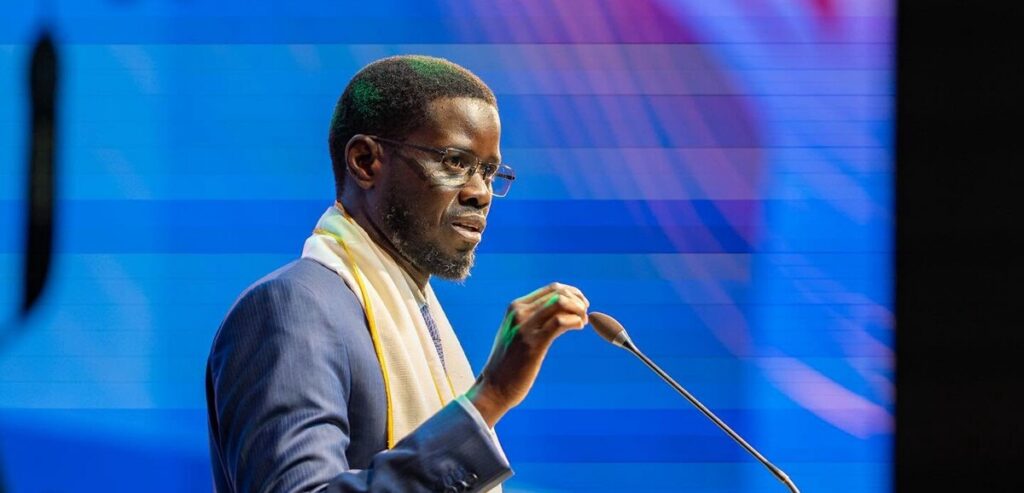
Three Senegalese influencers handed prison sentences for insulting the president
Three prominent Senegalese social media personalities, known for their close ties to the former ruling party Pastef, have been sentenced to prison terms following the circulation of a controversial video on TikTok. The ruling comes amid escalating political tensions between President Bassirou Diomaye Faye and his former ally, Ousmane Sonko.
The video in question was filmed during a religious gathering, where the influencers—Mandoumbe Diop (Lamignou Darou), Magueye Diaw (Oustaz Thiep), and Moustapha Ndiaye (Ndiaye Touba)—made remarks that the court deemed offensive to the head of state. While the president was never explicitly named, the tribunal concluded that the comments were directed at him.
Sentencing details and legal consequences
The tribunal imposed a three-month prison sentence on Mandoumbe Diop, while Magueye Diaw and Moustapha Ndiaye each received two months behind bars. In addition to the incarceration, the three influencers were fined 500,000 West African CFA francs. The court also ruled that their remarks violated public morality standards.
The video, which quickly went viral, included prayers calling for harm to befall “the greatest traitor of Senegal,” with references to paralysis, stroke, and death. The tribunal interpreted these comments as a direct attack on President Bassirou Diomaye Faye, despite the absence of his name in the footage.
A verdict under political scrutiny
This legal decision arrives at a critical juncture in Senegal’s political landscape. The rift between President Faye and Ousmane Sonko, his former mentor, has deepened in recent weeks. The president recently formalized his break from Sonko by launching his own political party, signaling a decisive shift in the country’s political dynamics.
The defense team, led by attorney Me Abdy Nar Ndiaye, has strongly contested the ruling. They argue that the video was purely satirical and contained no explicit references to the president. The legal team has condemned the verdict as a dangerous precedent for freedom of expression in Senegal and has announced plans to appeal the decision.
You may also like
Ivory Coast’s World Bank portfolio: what the $5.3 billion reveal means for jobs and the road ahead
Nanga armored vehicles: mounting fallout, public backlash and where Burkina Faso goes from here
After the eyeglasses verdict in Cameroon, a reckoning for the press and its critics
Mali’s official narrative stirs debate as Goïta’s promises collide with daily struggles
Nanga armoured vehicles: Burkina Faso’s ‘made in Burkina’ claim sparks national debate as questions mount