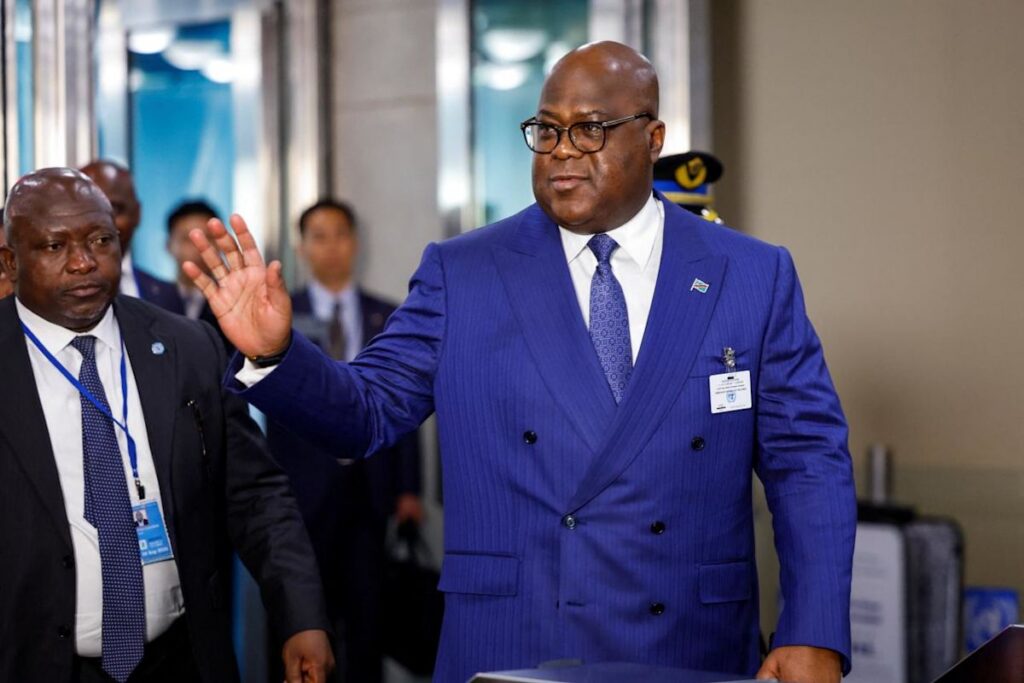
DRC politics: Félix Tshisekedi steps back amid opposition backlash over constitutional reform
On Thursday, August 13, with tensions escalating against the Coalition Article 64 (C64)—a platform formed in May by major opposition political forces in the Democratic Republic of the Congo (DRC)—President Félix Tshisekedi requested Parliament reconsider a bill outlining conditions for organizing a referendum on constitutional reform.
C64 argues this proposal, championed by the ruling party since 2024, is a strategy to enable Tshisekedi to run for a third term, which the 2006 Constitution prohibits.
The previous day in Kinshasa, Dieudonné Bolengetenge, secretary-general of Moïse Katumbi’s Ensemble pour la République and C64 spokesperson, warned the coalition would no longer heed advice and would escalate mobilizations if the president failed to initiate national dialogue.
C64 had set August 15 as the deadline to assess progress in political dialogue initiated by the president, while urging citizens to mobilize and resist if the withdrawal of the current referendum bill under parliamentary review was not confirmed, according to reports in May.
A tentative concession
Though President Tshisekedi’s move falls short of C64’s demands, the coalition has opted to maintain pressure while acknowledging it as a small step in the right direction, stated Prince Epenge, C64 co-founder.
Initially scheduled for July 22, a Kinshasa march by C64 was postponed after appeals from Catholic and Protestant churches in the DRC, which urged political actors to prioritize dialogue.
In addition to C64, 65 Congolese civil society organizations issued a memorandum to the head of state and key institutions on August 10, urging Félix Tshisekedi to abandon the referendum. They warned such a move could exacerbate political tensions, deepen social divisions, and divert institutions from national priorities.
You may also like
Lyon’s goalless stalemate with Chelsea: the real-world fallout for fans, clubs and the women’s game
Eastern DRC peace mediation: what the latest Tshisekedi letter to Gnassingbé means for civilians and local businesses
Mali: JNIM ambush on Russian Africa Corps convoy near Niono — what it means for civilians and local trade
Mali’s poverty crisis: how hunger and hardship are reshaping daily life for millions
Guinea-Bissau’s December election: what Embaló’s return means for daily life, stability and the economy