Russia’s pivotal US envoy dies suddenly as Kremlin faces diplomatic reckoning
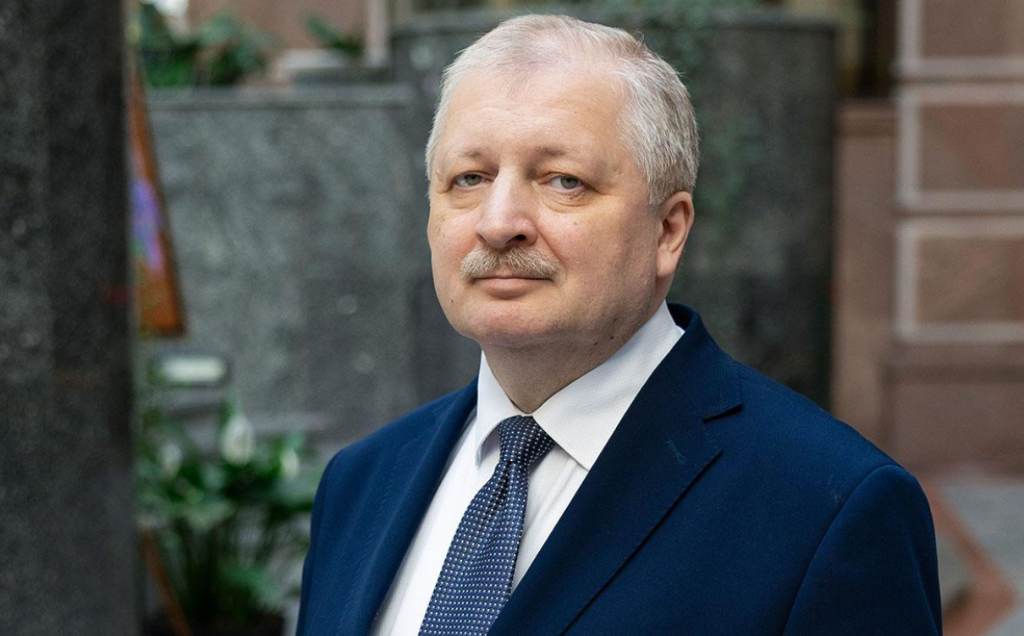
In a stunning turn of diplomacy, Russia has lost one of its most seasoned and strategically vital envoys to Washington. The sudden death of Ambassador Alexandre Dartchiev, announced by the Russian Foreign Ministry, has sent shockwaves through international diplomatic circles and raised immediate questions about the future of Moscow’s presence in the US capital.
Who was Alexandre Dartchiev and why did his role matter?
Alexandre Dartchiev, 66, stood at the crossroads of one of the world’s most complex bilateral relationships. With a career spanning over three decades in Russian diplomacy, he was not just another envoy—he was a seasoned architect of Russia’s strategy toward North America.
Before assuming his post in Washington in March 2025, Dartchiev served as Russia’s ambassador to Canada from 2014 to 2021. He had also held senior roles at the Russian Foreign Ministry, specializing in US and North American affairs, making him uniquely equipped to navigate the fraught corridors of power in Washington.
A diplomat at the heart of a fragile Russo-American reset
Dartchiev took office during a delicate phase in Moscow-Washington relations. After years of deepening confrontation over Ukraine, sanctions, and geopolitical rivalry, tentative signals of dialogue began to emerge following the return of Donald Trump to the White House. The Kremlin clearly saw Dartchiev’s appointment as a chance to restore at least a minimal channel of communication with the American administration.
His mandate was no easy task. With the war in Ukraine ongoing, NATO expansion in Europe, and economic decoupling on the rise, Trust was thin, and stakes were high. Yet Dartchiev’s deep familiarity with US political culture and diplomatic protocol made him one of Moscow’s most effective interlocutors in Washington.
Sudden death sparks uncertainty across diplomatic ranks
The Foreign Ministry’s initial announcement provided few details beyond the fact that Dartchiev had died suddenly. The lack of clarity fueled speculation—until spokesperson Maria Zakharova later clarified that he had died in Moscow after a prolonged chronic illness. No evidence has emerged to suggest foul play or a connection to his diplomatic duties.
The ambiguity of the initial statement, however, has left many wondering: why the secrecy? And more importantly—what does this mean for Russia’s representation in Washington?
What happens now to the Russian embassy in Washington?
In the short term, the Russian embassy will continue its operations under temporary leadership, as is customary in such cases. But the absence of a permanent ambassador at this critical juncture raises serious concerns.
The Kremlin faces a difficult decision: who will fill Dartchiev’s shoes? The choice will not only send signals about Russia’s immediate priorities but could also influence the tone and direction of future negotiations with the United States.
Will Moscow appoint another seasoned diplomat with deep Washington experience? Or will it signal a shift in strategy—perhaps one less focused on dialogue and more on confrontation?
A strategic vacancy at a critical moment in global diplomacy
Dartchiev’s death is more than a personal loss—it is a geopolitical moment. In times of deep diplomatic rifts, embassies serve as fragile yet essential bridges. They allow nations to communicate even when leaders refuse to speak directly.
For Moscow, the Washington embassy is not just an administrative outpost—it is a vital node in its global diplomatic network. Losing a lead envoy of Dartchiev’s caliber at this time could weaken Russia’s ability to defend its interests, shape narratives in the US media and political arena, and manage crises before they escalate.
The question now looms large: Can the Kremlin maintain the momentum of engagement Dartchiev was instrumental in building? Or will his absence become another fracture in an already unstable relationship?
The road ahead: continuity, leadership, or uncertainty?
While the Russian Foreign Ministry has committed to continuity, the symbolic and functional weight of Dartchiev’s role cannot be easily replaced. His successor will inherit not only a vacant office but a complex web of ongoing negotiations, security dialogues, and strategic posturing.
In an era where miscommunication can escalate into crisis, the absence of a trusted envoy—especially one as respected as Dartchiev was within diplomatic circles—cannot be ignored. The Kremlin now faces a moment of reckoning: will it double down on diplomacy, or retreat into isolation?
One thing is certain: the international community will be watching closely. The answer will shape the future of Russo-American relations—and perhaps the stability of global security—for years to come.