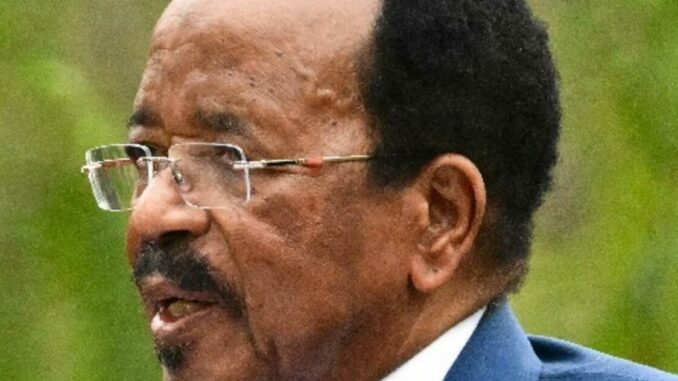
Eight weeks have now passed since President Paul Biya departed Cameroon for what was initially described as a “brief private stay in Europe,” yet the head of state remains abroad. At 93 years old, the prolonged absence of the Cameroonian leader inadvertently intensifies existing questions regarding his capacity to effectively govern. The official silence from authorities further fuels public speculation within a political landscape already marked by the uncertainties that often follow a presidential election cycle.
In an attempt to diffuse the growing controversy, government officials have been quick to reassure the public. Numerous spokespeople affirm that President Biya continues to diligently execute his presidential duties remotely. They also emphasize that no constitutional provision imposes a time limit on a president’s overseas travel. From Yaoundé’s perspective, there is no power vacuum or institutional crisis, asserting that state affairs are proceeding without disruption.
Despite these official assurances, the opposition remains largely unconvinced. The Movement for the Renaissance of Cameroon (MRC), led by Maurice Kamto, vehemently condemns what it perceives as a severe lack of transparency. The party insists that the Cameroonian populace has an inherent right to be fully informed about the President’s health status and his continued ability to fulfill his extensive responsibilities. For MRC leaders, the secrecy surrounding the European visit only deepens public concern rather than alleviating it.
Other opposition figures adopt a more institutional perspective on the situation. Cabral Libii, president of the PCRN, argues that the core issue lies less in the President’s physical absence and more in the inherent weaknesses of the legal framework governing the exercise of power. In his view, the upcoming legislative and municipal elections, scheduled for early 2027, could present a crucial opportunity to implement much-needed institutional reforms.
With President Biya’s current mandate having just begun eight months prior, this extended period away from the country has reignited a long-standing national dialogue. The debate touches upon critical aspects of governance, the succession process, and the urgent need for enhanced transparency at the highest levels of government. Far beyond a mere dispute over a presidential trip, this situation starkly illuminates the inherent fragilities of a political system that has, for over four decades, been largely centered around the singular figure of one man.
You may also like
Mali’s media fallout: Maliweb.net and the fight for truthful reporting
Cotonou’s savings push: what the fallout means for West Africa’s financial future
Benin–Spain cultural alliance: what the reaction tells us about what comes next
Niger: Tiani’s widening purge sparks debate over citizenship and loyalty
Benin–Cuba economic reset: the debate, the doubts and what happens next