The Sahel is changing—and Niger is at the center of a high-stakes diplomatic experiment. In a matter of days, Benghazi, Paris, N’Djamena, and Algiers have sent signals that point to a reshuffling of alliances with far-reaching consequences. Are these moves coming together to reshape the region’s future—or are they the first signs of a new, unpredictable geopolitical game?
The Niger-Libya axis: a quiet alliance emerges
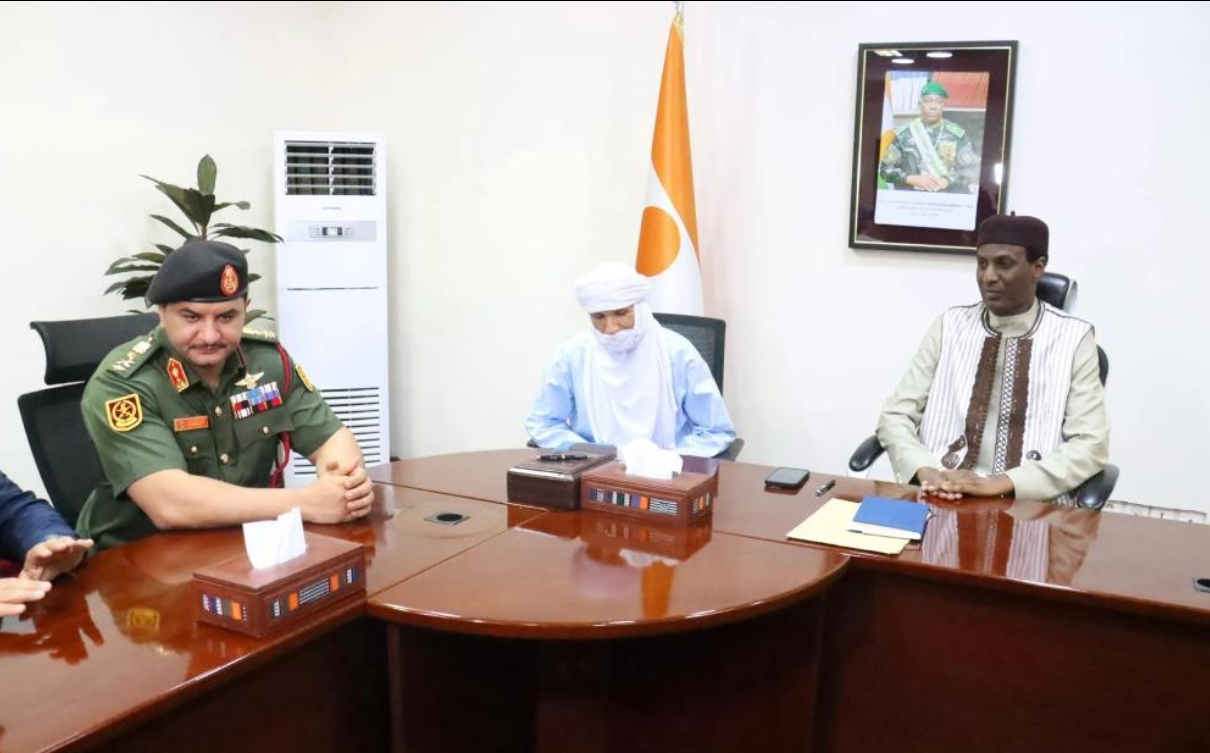
On November 1, 2026, Niger’s Prime Minister Ali Mahaman Lamine Zeine arrived in Benghazi for a meeting with Saddam Haftar, second-in-command of the Libyan National Army under Marshal Khalifa Haftar. Their talks culminated in a strategic cooperation protocol—its details undisclosed, but its implications clear. Niamey is diversifying its security and political partnerships, turning eastward toward eastern Libya at a time when regional balances are shifting.
Days later, Libyan Chief of Staff Khaled Haftar traveled to Paris to meet his French counterpart, General Fabien Mandon. While neither side confirmed the agenda, the timing—just after the Niamey-Benghazi announcement—hints at a broader pattern: diplomacy and defense talks are being staged in rapid succession across the region. These exchanges suggest that Niger is no longer just a theater of insecurity—it has become a hub for negotiation.
Algeria’s counterplay: from the desert to the negotiating table
As Libya and Niger inch closer, Algeria is accelerating its own engagement. On November 3, Algerian Foreign Minister Ahmed Attaf arrived in N’Djamena with a personal message from President Abdelmadjid Tebboune for Chadian leader Mahamat Idriss Déby Itno. The visit went beyond protocol: it underscored a shared concern over regional instability and the implementation of 27 previously signed agreements between the two countries.
But the move carries a deeper message. Algeria, long a dominant force in Sahelian affairs, is signaling it won’t stand by as other powers rearrange the board. With Niger and Chad experiencing friction—including accusations of destabilization—Algiers sees an opportunity to reassert its influence, particularly through military and intelligence cooperation.
UAE’s shadow: oil, influence, and the Haftar factor
The United Arab Emirates has played a long game in Libya, supporting the Haftar camp politically and militarily. Its involvement is not new, but its strategic depth in Fezzan—bordering Niger and Chad—has taken on new urgency. As Haftar’s forces consolidate control in southern Libya, the risk of an external power expanding its footprint into the Sahel becomes real.
This aligns with Algeria’s worst-case scenario. The country views southern Libya as a buffer zone, and any increase in foreign military presence near its borders threatens its national security. The growing ties between Niamey, Benghazi, and Abu Dhabi could pressure Algiers into a more assertive position—one that may go beyond diplomacy.
Morocco’s growing footprint and Algeria’s dilemma
Algeria is not alone in navigating shifting sands. Morocco, Algeria’s rival in regional influence, has strengthened ties with Sahelian states, including Libya and Chad. Khaled Haftar’s October visit to Rabat—where he met Morocco’s top military official—was a clear signal that alliances aren’t forming in silos.
For Algiers, this convergence of interests between Rabat, Abu Dhabi, and Libya’s east raises red flags. Though not yet a formal coalition, these relationships create a network of interests that could challenge Algerian dominance in the Sahel. The question is no longer just about security—it’s about who sets the rules of engagement.
Niger at the crossroads: why every power wants a seat at the table
Niger’s centrality in this geopolitical puzzle stems from its geography, resources, and fragile stability. Positioned between Algeria, Libya, Chad, and Mali, it sits at the crossroads of migration, energy corridors, and illicit trafficking routes. The Algerian Parliament’s late-October approval of military deployment in Niger was a telling sign: Niamey is no longer relying on a single partner.
Meanwhile, the French military footprint has receded across the Sahel, but Paris still maintains selective security contacts—including with Haftar. This fragmented approach reflects a strategic shift: Western powers are no longer the sole arbiters of influence.
Can Niger stay neutral in a divided Sahel?
The recent flurry of diplomatic and military activity reveals a Sahel that has moved beyond counterterrorism. Today, it’s a battleground for control over trade routes, energy flows, and political allegiance. In this environment, neutrality is fragile. Niger’s leadership is balancing multiple partnerships—with Algeria to the north, Libya to the east, and Chad to the west—while fending off accusations of foreign interference from all sides.
As alliances tighten and tensions rise, one question looms large: in 2026, will Niger be a sovereign player—or will it become the pawn in a larger geopolitical game?
What’s next for the Sahel’s new power map
- Military deployments: Algeria’s decision to station troops in Niger could set a precedent. Will others follow, or will Niamey push back?
- Diplomatic realignments: Can Algeria, Morocco, and Libya’s east find a modus vivendi—or will their rivalry deepen?
- External actors: The UAE’s involvement and France’s selective engagement suggest that the Sahel is becoming a proxy space for non-regional powers.
- Niger’s balancing act: With accusations flying from all directions, the government must tread carefully to avoid over-dependence on any single ally.
The coming months will reveal whether these alliances lead to stability—or whether they entangle Niger in a web of competing interests it may not be able to escape.