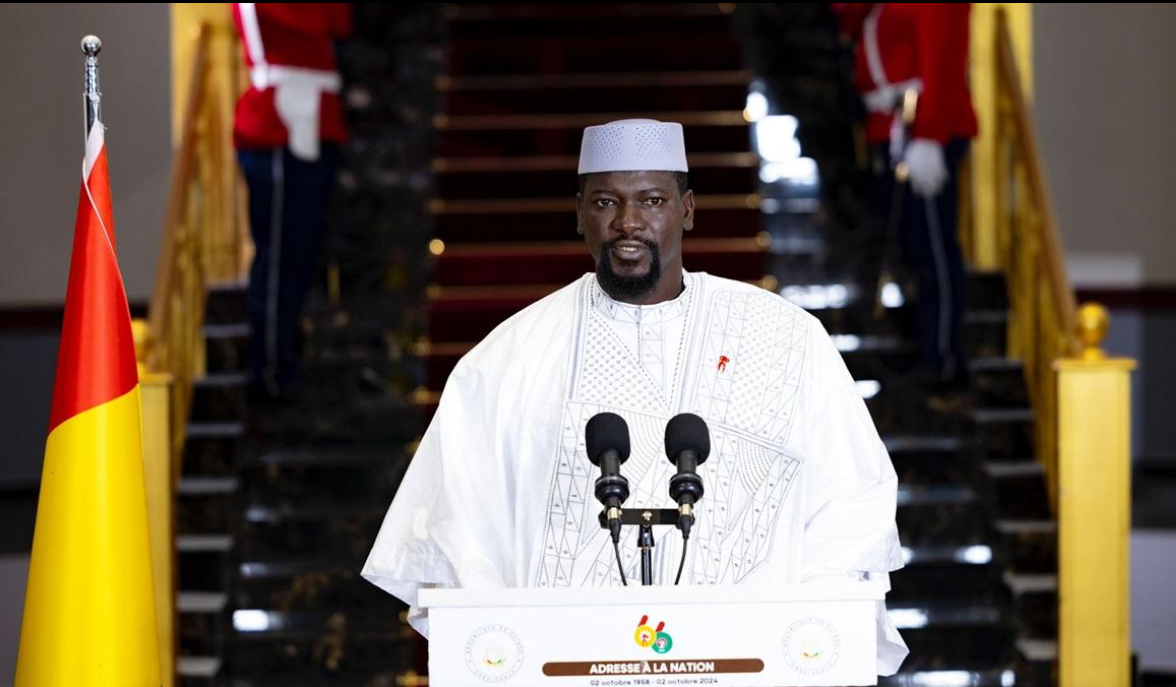
Guinea’s government has taken a bold step in its fight against illegal gold mining, dismissing 22 territorial officials—including military and administrative leaders—accused of enabling clandestine operations and environmental destruction. The move, announced via presidential decree on national television, underscores the administration’s determination to enforce mining regulations while addressing the ecological toll of unregulated extraction.
Among those removed from office is Colonel Fayimba Mara, the prefect of Siguiri—a region synonymous with Guinea’s artisanal gold rush. The crackdown also targets other high-profile figures, such as interim police prefects and military commanders, signaling a systemic overhaul in how the state polices its own ranks. But the question remains: is this decisive action enough to curb illegal mining’s deep-rooted challenges?
Siguiri: the epicenter of both opportunity and crisis
Siguiri, a gold-rich administrative region in Haute-Guinée, serves as both the economic heartbeat of local communities and the flashpoint for environmental degradation. The 22 officials dismissed—spanning prefects, sub-prefects, and security forces—were based in hotspots like Kintinian, Kiniébakoura, and Naboun, where illegal panning has long thrived amid weak oversight.
The decree outlines severe allegations: from enabling clandestine mining to facilitating the use of toxic chemicals that poison water sources and farmland. For communities already struggling with soil erosion and water scarcity, these practices threaten long-term survival. Meanwhile, the state’s response raises a pivotal question—how can Guinea balance law enforcement with protecting livelihoods?
The environmental toll: a ticking time bomb
Illegal gold mining in Siguiri doesn’t just violate statutes; it devastates ecosystems. Deforestation, mercury contamination, and the diversion of waterways disrupt agriculture and fishing—key pillars of local economies. The authorities’ emphasis on environmental protection in the decree reflects growing public pressure, but translating words into action will require sustained monitoring and stricter penalties for repeat offenders.
An inter-ministerial push: who’s responsible for enforcement?
The presidential decree assigns enforcement duties to multiple ministries, from territorial administration to defense and environmental protection. This multi-agency collaboration aims to dismantle illegal networks, but it also spotlights a critical gap: coordination. With responsibility spread across departments, will Guinea’s institutions act with the urgency required to reverse decades of unchecked exploitation?
The ministries tasked include:
- Territorial Administration and Decentralization
- National Defense
- Security and Civil Protection
- Justice and Human Rights
- Employment and Social Protection
- Civil Service Modernization
The interplay between these agencies will determine whether the crackdown is symbolic or part of a lasting transformation.
Nimba Gold Refinery: a game-changer or a missed opportunity?
Two days before the dismissals, President Mamadi Doumbouya inaugurated Guinea’s first gold refinery—the Nimba Gold Refinery (NGR)—in Conakry. Located in the Cité de l’Air district, the facility promises to refine locally sourced gold, boosting national value addition and reducing reliance on raw material exports. The inauguration, attended by top officials and international partners, was framed as a milestone for economic sovereignty.
But the timing of these events—simultaneous crackdown and industrial launch—raises strategic questions. Can Guinea’s new refinery coexist with a thriving illegal mining sector? The refinery’s success hinges on a steady supply of certified gold, which depends on eradicating clandestine operations. Until illegal extraction is curbed, the refinery risks operating at a fraction of its capacity.
The dual challenge: reform and regulation
Guinea’s mining policy now faces a dual challenge: clamping down on illegal activities while fostering legitimate economic growth. The dismissals send a clear message that officials complicit in illegal mining will face consequences. Yet, long-term change requires more than top-down decrees. It demands investment in alternative livelihoods for artisanal miners, transparent supply chains, and community-led conservation initiatives.
As the dust settles on the dismissals, the focus shifts to implementation. Will the government’s inter-ministerial task force close loopholes in enforcement? Can the refinery incentivize legal mining, or will it inadvertently fuel demand for smuggled gold? For a country blessed with mineral wealth but plagued by corruption, the answers will define Guinea’s path forward.
What lies ahead for Guinea’s mining sector?
The road to reform is fraught with obstacles. Legal mining must become more profitable than illegal operations, enforcement must be consistent, and environmental safeguards must protect communities—not just penalize them. The recent sanctions are a start, but without follow-through, they risk becoming a symbolic gesture in a much larger struggle for sustainable development.
Guinea’s future as a mining powerhouse depends on its ability to eliminate corruption, modernize its regulatory framework, and ensure that its natural wealth benefits all citizens—not just a select few.