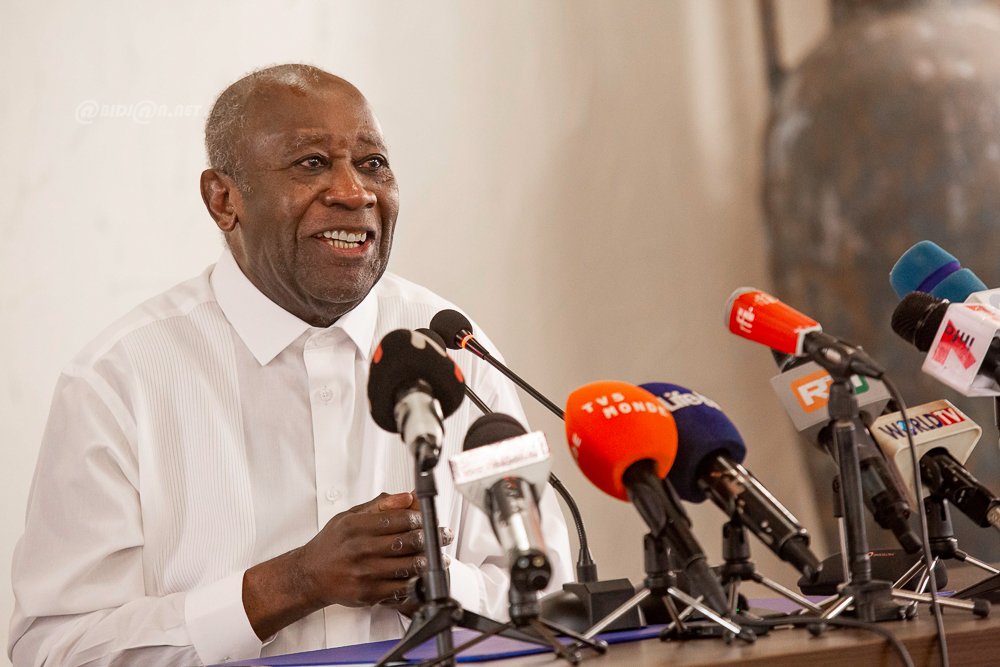
Former Côte d’Ivoire President Laurent Gbagbo, who currently leads the Parti des Peuples Africains-Côte d’Ivoire (PPA-CI), has taken a significant step to modernize the party’s governance. He announced the delegation of key presidential powers to five senior political figures within the organization.
Five leaders entrusted with strategic responsibilities
In an official statement released by the PPA-CI, Laurent Gbagbo detailed the new leadership structure. Assoa Adou has been appointed First Vice-President, tasked with ensuring strict adherence to the party’s statutes and internal regulations across all levels and membership ranks. Hubert Oulaye assumes the role of Second Vice-President, responsible for overseeing party operations and presiding over Central Committee meetings.
Completing the leadership team, Dano Djédjé Sébastien has been named Chairman of the Strategic and Political Council, with authority over general party management and supervision of all activities.
A new era of collective leadership
Explaining this restructuring, Laurent Gbagbo emphasized the party’s commitment to shared governance: “This division of responsibilities reflects our determination to foster a more collaborative leadership model, where complementary roles and unified action drive our progress.”
The decision stems from a fundamental belief in the strength of teamwork rather than individual leadership. “The party’s vitality depends not on one person alone, but on our collective ability to work together toward a common vision,” he stated.
“United in purpose, disciplined in action, and complementary in our roles—that is how the PPA-CI will overcome challenges and serve the people of Côte d’Ivoire most effectively,” he concluded.
You may also like
Senegal: how Sonko’s playful jab at Sadio Mané over 2029 is reshaping the political conversation
Senegal’s shadow funds: How unchecked spending drains public trust and budgets
Bénin: le Sénat tient sa séance inaugurale sous la conduite de Patrice Talon
Gabon : la participation citoyenne au cœur de la Ve République
Is Chad truly experiencing a political easing of tensions?