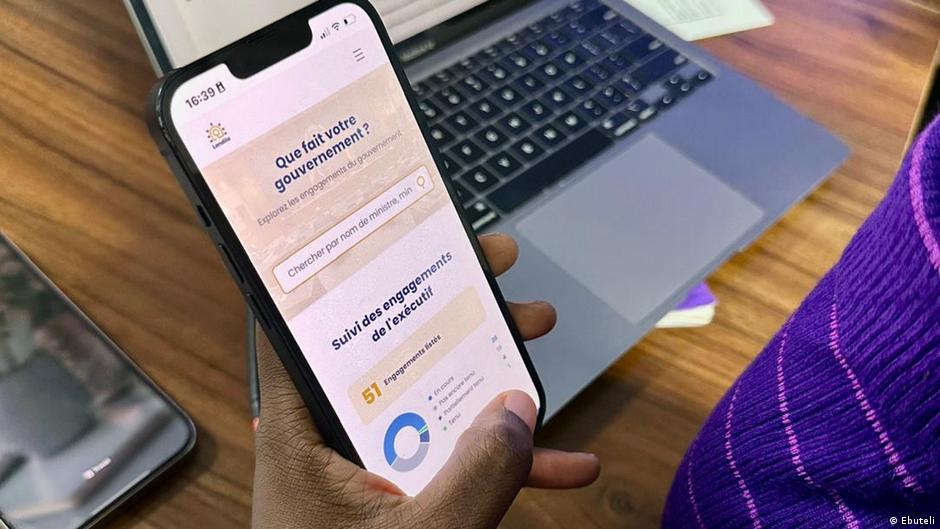
ebuteli unveils landila: a new tool for public accountability in the democratic republic of Congo
In the Democratic Republic of Congo, the esteemed Ebuteli research institute is set to launch Landila today, July 9th. This groundbreaking initiative marks the introduction of the first Congolese citizen barometer specifically designed for monitoring government action.
Landila, an accessible and interactive platform, empowers the public to diligently track the commitments made by the executive branch. It allows citizens to gauge the progress of these commitments and assess the tangible outcomes of public policies. By providing easy access to public information, Landila aims to foster greater transparency and accountability in state governance.
Ebuteli’s vision for Landila is to cultivate a more informed citizenry, enabling robust oversight of governmental activities. Ithiel Batumike, a researcher within Ebuteli’s political division, shared insights into the objectives and operational framework of this new tool.
What can you tell us about this new tool you are launching?
Ithiel Batumike: Landila, a word meaning “to follow” in Kikongo, will enable citizens to assess the commitments undertaken by the government since its inauguration in June 2024. It will provide a clear picture of what has been achieved to date. To commence, we are focusing on six pilot ministries from the approximately forty existing ones. We will begin by tracking the Ministry of Interior, the Ministry of Health, the Ministry of Gender, and the Ministry of Mines. Our goal is to observe the priority commitments these ministries have made and how they are being implemented.
So, this is an accountability tool? Meaning citizens can visit the site, access information, and have the opportunity to hold elected officials accountable?
Ithiel Batumike: Precisely, that is the core objective. We are striving to provide the public with information that empowers citizens to make informed decisions. By making information on government commitments and their implementation readily available, we aim to enable citizens to make the most enlightened choices in the future. This is fundamentally a political accountability tool, which also serves as an extension of our existing Talatala tool, dedicated to monitoring parliamentary activity.
For the average Congolese citizen, who may not be familiar with Ebuteli or your work, how do you plan to promote Landila and ensure a wide audience can embrace this tool, which is primarily designed for them?
Ithiel Batumike: In the past, we have organized extensive awareness campaigns, including outreach in local markets. We intend to replicate this approach, reaching out to all categories of Congolese citizens to popularize the tool. We will also employ various communication methods tailored to different segments of the population, ensuring access to the functionalities and content of this crucial tool for political accountability.