Gabon: Woleu-Ntem, The Laboratory of the New Territorial Contract in Gabon
Libreville, Saturday, July 11, 2026 (Infos Gabon) – In African capitals and major international decision-making centers, presidential tours are often seen as political communication exercises.
Congratulations by President Brice Clotaire Oligui Nguema in the Woleu-Ntem province seem to follow a broader ambition. To make regions long considered peripheral the true drivers of the next phase of national development.
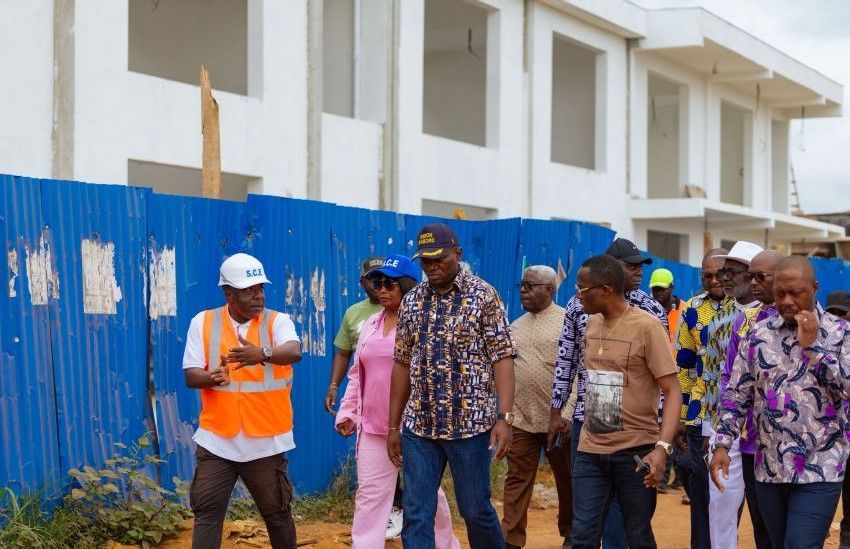
From Minvoul to Oyem, from road infrastructure projects to schools, farm projects, and health equipment, the president’s tour outlines the contours of a new territorial development doctrine in Gabon. A doctrine based on proximity, land investment, and reducing geographical fractures that have long marked the country’s economic history.
Beyond inauguration visits and site visits, it’s now a certain vision of national development being put to the test in this region bordering Cameroon and Equatorial Guinea.
The visit to an agro-sicological farm near Oyem confirms this orientation towards integrated production models capable of generating durable jobs while reducing external food dependence.
Another major lesson is the multiplication of visits, inspections, and arbitrations carried out directly on site. Finally, a more profound transformation in Gabon’s public governance.
Hopital de Minvoul, Gouéma’s municipal market, Mvett Palace rehabilitation, village chiefs’ housing, teachers’ training center, Nkum Yenguï Sports Complex or the modern Lycee with an international section all part of a single investment strategy.
The underlying idea is simple: development can’t be sustainable if economic infrastructure progresses faster than social equipment or public services. This approach seeks to articulate economic growth, social cohesion, and training of human capital.
The Manfred Mendame Ndong center dedicated to training teachers or the Lycee de Nkum Yenguï with scientific laboratories and digital infrastructures testify to this commitment to preparing today’s skills needed tomorrow.
Renewing village chiefs’ housing also responds to another often underestimated priority in African development policies. Strengthening local administrations and local relay points of the state.
The transformation of a country begins rarely in major cities. It takes root in territories capable of becoming balance poles, innovation centers, and production hubs.
Through this tour in Woleu-Ntem, the Gabonese power seems to want to demonstrate that another geography of development is possible. A geography where borders become economic opportunities, where provinces cease to be peripheries, and public investments strive for as much national cohesion as growth.
The true challenge now lies elsewhere. Converting this territorial ambition into measurable and durable results capable of profoundly changing the trajectory of Gabon’s economy and society in the coming years.