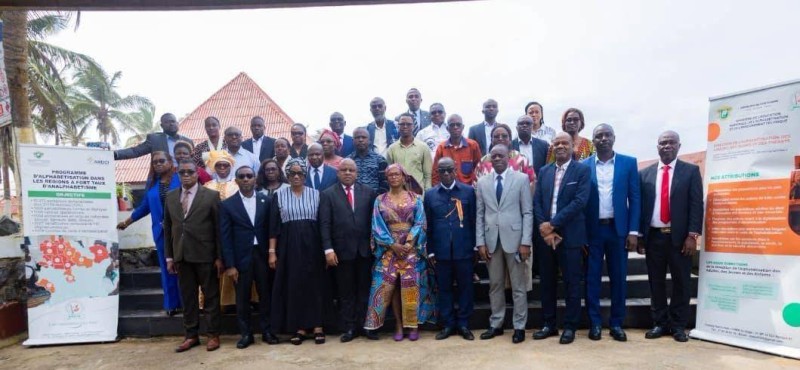
Grand-Bassam recently hosted a pivotal event as Côte d’Ivoire advances its educational reform. From July 10 to 12, 2026, stakeholders gathered to review groundbreaking research and validate the draft National Linguistic Education Policy under the leadership of the Minister of National Education, Literacy, and Technical Training, N’Guessan Koffi.
The workshop brought together educators, linguists, and development partners to establish a robust framework for integrating national languages into the Ivorian school system. The initiative aims to enhance teaching quality while preserving the country’s rich cultural heritage through language.
Preserving linguistic diversity for educational excellence
At the opening ceremony, Mah Louhan Mamadou, Director of Adult and Youth Literacy and Education (DAAJE), commended the minister’s dedication to promoting national languages. He emphasized that Côte d’Ivoire’s linguistic diversity is not just a cultural asset but a strategic tool for improving education outcomes.
« Our nation’s languages are the foundation of identity and knowledge transmission. This policy will ensure they become pillars of learning, making education more accessible and relevant to local communities, » Mah Louhan stated.
Aligning education with national realities
Representing the minister, Diomandé Mabintou Cherif, Secretary-General of the Inspectorate, highlighted the challenges facing Ivorian education. She stressed that modernizing the system requires policies rooted in local contexts, particularly through language.
« Languages reflect our societal values and economic aspirations. By embedding them in education, we empower students to thrive in a rapidly changing world while safeguarding our cultural legacy, » she explained.
Next steps for a transformative policy
The workshop’s outcomes will shape a final policy document guiding the use of national languages in Côte d’Ivoire’s classrooms. This move seeks to boost inclusion, academic performance, and cultural preservation—key pillars for nurturing future generations.
The initiative reflects Côte d’Ivoire’s commitment to leveraging its linguistic wealth as a catalyst for educational innovation and social cohesion.