Burkina Faso’s military leader rejects democracy as incompatible with national progress
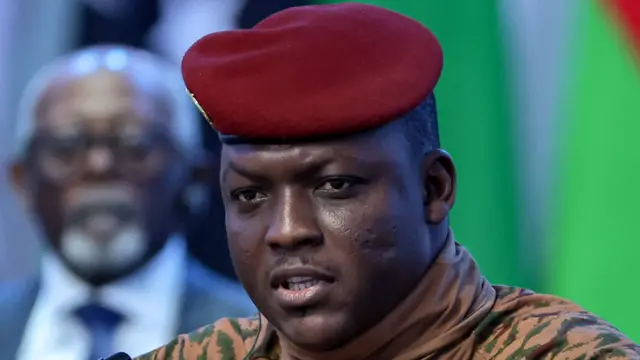
The military head of state of Burkina Faso has declared that the nation must abandon democratic governance, calling it a failed system that brings only destruction to African societies.
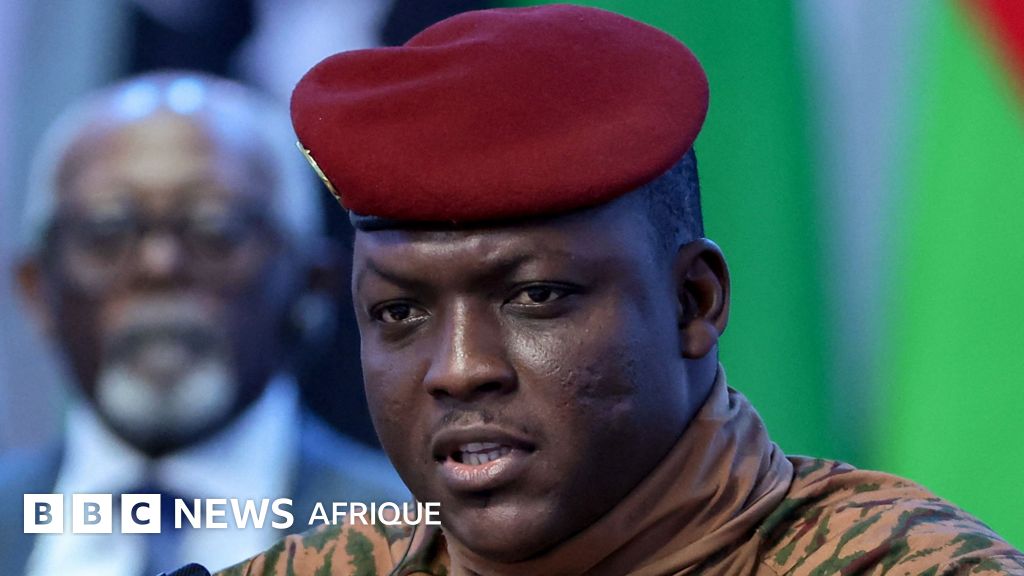
Captain Ibrahim Traoré, who seized power in a 2022 coup, made these remarks during a nationally televised interview. He argued that Burkina Faso requires a completely different approach to governance, one that prioritizes sovereignty and revolutionary mobilization over traditional democratic frameworks.
“The people must forget about democracy,” Traoré stated bluntly. “It is not for us. Democracy is not the solution.” He emphasized his point by referencing Libya as a cautionary example, where Western-backed democratic transitions led to prolonged instability and violent fragmentation after the fall of Muammar Gaddafi’s regime in 2011.
From democratic promises to indefinite military rule
Traoré initially pledged to restore civilian rule by July 2024. However, with two months remaining before that deadline, the military leadership announced a five-year extension of its transitional mandate, effectively postponing any return to democratic elections.
In a sweeping move to consolidate power, Burkina Faso’s authorities banned all political parties in January 2025, seizing their assets and dissolving their structures as part of what they described as a “state rebuilding” initiative. Traoré has consistently criticized political parties as corrupt institutions that foster division rather than progress.
“In Africa—at least in Burkina Faso—what we call a politician is someone who embodies all the worst qualities: a liar, a flatterer, and a demagogue,” he asserted during the interview. “We don’t need these people. We need patriots who work for the nation.”
A revolutionary vision: sovereignty, hard work, and systemic change
Traoré outlined his vision for a new governance model centered on three pillars: national sovereignty, unwavering patriotism, and revolutionary mobilization. He stressed that traditional leaders and grassroots organizations would play a central role in this system, bypassing traditional political institutions entirely.
“We are not trying to copy anyone,” he declared. “We are here to completely change how things are done.” He called for an end to what he described as superficial democratic rituals and a focus instead on tangible development through economic and military self-reliance.
He also condemned what he sees as the hypocrisy of Western powers, arguing that every attempt to impose democracy globally has resulted in bloodshed and chaos. “Wherever Western powers try to establish democracy, it always comes with rivers of blood,” he stated.
Human rights crisis and regional instability
Since Traoré took control, Burkina Faso has faced escalating violence, with over 1,800 civilians killed between 2023 and early 2026. A recent report by an international rights organization attributes two-thirds of these deaths to actions by state forces and allied militias, with the remainder linked to Islamist militant groups.
The country continues to battle a decade-long insurgency that has destabilized the entire Sahel region. Unlike its neighbors, Burkina Faso has distanced itself from Western military cooperation, including partnerships with France, and instead turned to Russia for security assistance. Yet, despite this shift, the violence shows no signs of abating.
Traoré has faced criticism for suppressing dissent, targeting opposition figures, independent media, and civil society organizations. Reports indicate that critics of the regime have been sent to dangerous frontline positions in the fight against Islamist militants, effectively using them as human shields.
Despite these controversies, Traoré has cultivated a strong following across Africa, particularly among those who share his anti-Western rhetoric and vision of panafrican sovereignty. His stance has resonated with regional juntas in neighboring Mali and Niger, all of which have severed ties with former colonial powers and adopted a more confrontational approach to international relations.
As Burkina Faso enters its fourth year under military rule, the future of its governance model remains uncertain. One thing is clear: under Traoré’s leadership, the nation is charting a course far removed from democratic principles, prioritizing revolutionary ideals, self-reliance, and a rejection of Western political influence.