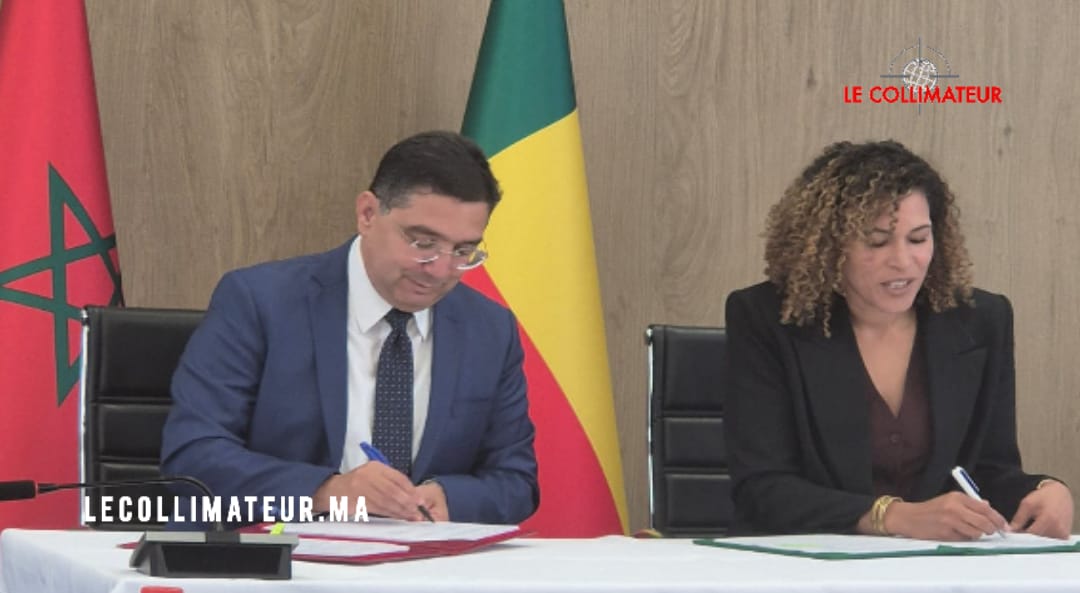
Cotonou witnessed high-level talks this week as the Republic of Bénin and the Kingdom of Morocco reviewed their bilateral cooperation, expressing full satisfaction with progress made while charting a course for deeper and more diversified collaboration.
During preparatory meetings ahead of the 7th session of the Morocco-Bénin Joint Cooperation Commission, Moroccan Foreign Minister Nasser Bourita and his Béninese counterpart Corinne Amori Brunet—joined by Delegated Minister Hugues Oscar Lokossou—highlighted the remarkable strides achieved across multiple cooperation sectors since King Mohammed VI’s landmark visit to Cotonou in June 2004.
These discussions not only assessed the current state of bilateral relations but also explored fresh avenues to inject renewed momentum into the partnership. The delegations underscored the deep-rooted fraternal ties and mutual respect binding the two nations, particularly between King Mohammed VI and Bénin’s President Romuald Wadagni. The shared vision to elevate Bénin-Morocco relations into a stellar model of inter-African cooperation—rooted in solidarity, exchange, and shared values—took center stage.
The meetings culminated in the identification of high-potential sectors poised to drive future collaboration, including:
- Economy and trade – expanding market access and reducing trade barriers
- Industry and investments – fostering joint ventures and industrial projects
- Tourism – promoting cultural and leisure exchanges
- Agriculture – enhancing food security and agribusiness initiatives
- Justice and security – strengthening institutional ties and capacity-building
- Vocational training and higher education – aligning skills development with labor market needs
- Health and digital innovation – accelerating healthcare access and tech-driven solutions
- Culture – deepening people-to-people connections through shared heritage
Both delegations reiterated their commitment to forging a robust economic partnership that actively engages the private sectors of both countries. The goal is clear: position these sectors as catalysts for economic exchange and sustainable development financing.