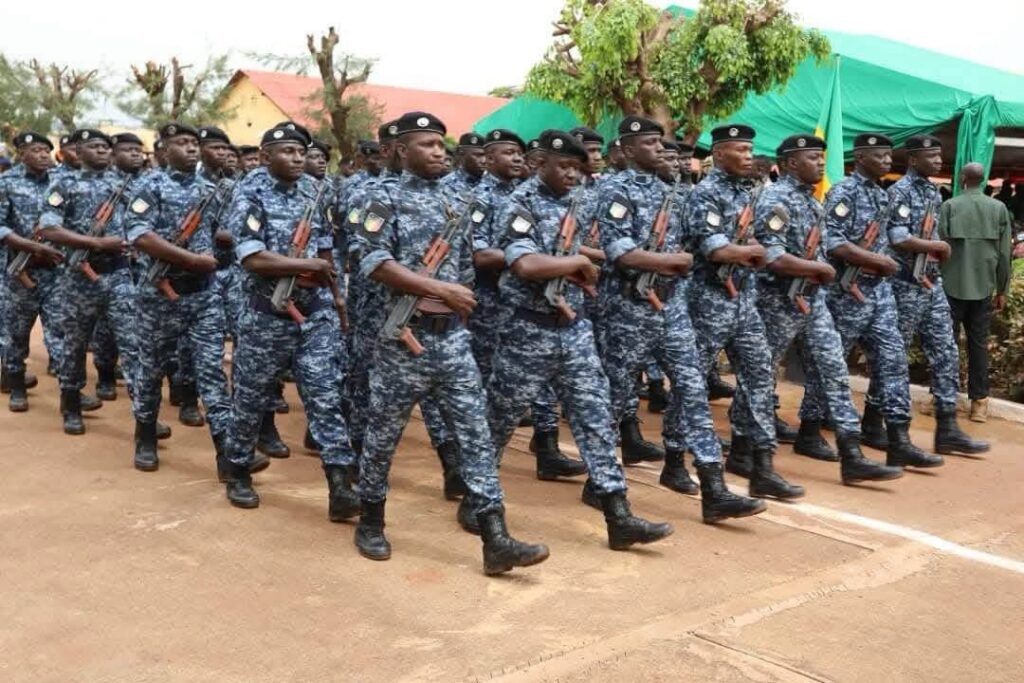
On 22 September 2026, Bamako hosted the 66th anniversary of Mali’s independence with an official ceremony presided over by General Assimi Goïta. The programme included a review of troops, a parade by the Defence and Security Forces and an aerial display. Similar events have been held in previous years, and the national day remains, first and foremost, a commemoration of each state’s history and sovereignty.
Yet this year’s edition has triggered a wider public debate because of the regional context. Mali, Burkina Faso and Niger now present themselves as members of a single Confederation of Sahel States (AES), pledging to deepen political, diplomatic, economic and security cooperation while defending a shared vision of sovereignty. The fallout from the Bamako ceremony has therefore raised a question that is being discussed far beyond diplomatic circles: how far can this confederal architecture advance without erasing the identities, symbols and traditions specific to each member state?
A national day that precedes the confederation
Mali’s decision to maintain a national ceremony around 22 September does not, on its own, prove a break with the AES. On the contrary, the three states continue to display joint initiatives. On 21 September, on the eve of the opening of the 81st United Nations General Assembly, the foreign ministers of Burkina Faso, Mali and Niger met to coordinate their participation and defend a common position on behalf of the Confederation. A few days earlier, Malian, Burkinabè and Nigerien officials took part in Ouagadougou in discussions devoted to energy and mining resources within the AES area. These elements make the hypothesis of an imminent disappearance of the organisation difficult to sustain.
The real question beneath the parade
The true issue may not be the Malian military parade itself. It is rather the place that national symbols will retain in a Confederation that is gradually seeking to build common political mechanisms and a shared identity. Can a Confederation function with three states that fully preserve their calendars, ceremonies, armies and national symbols while simultaneously developing a common political identity? For now, the answer appears to be yes. Mali continues to celebrate its independence. Burkina Faso and Niger also keep their own national days. This does not automatically mean that the AES is disappearing. But it does recall an essential reality: the AES remains a political construction between sovereign states, not the disappearance of those states in favour of a single entity.
Where the real test will lie
To judge the solidity of the AES, observers will therefore have to look beyond ceremonies and parades. The next indicators will be the capacity of the three states to maintain their common commitments, coordinate their foreign policies, develop joint economic projects, strengthen their security cooperation and give concrete content to the Confederation’s institutions. It is on these grounds, and not on the organisation of a national day alone, that the strength of the AES project can truly be measured.
So is Mali, celebrating its independence with a military parade, distancing itself from Burkina Faso and Niger? At this stage, nothing allows such a claim. But another question deserves to be asked: will the AES manage to build a genuine common identity while leaving each of its members free to continue celebrating its national history? Is this the beginning of the end of the AES, or simply proof that each state retains its own national traditions within a common project? The answer will depend less on the ceremonies of 22 September than on the political decisions and actions taken in the coming months.
You may also like
Gabon’s fisheries renegotiation with the EU: what the fallout means for the next deal
Chad minors in military uniforms: public backlash grows as N’Djamena prosecutors widen probe into adult handlers
Oumar’s shooting in Cameroon: the aftermath, the debate, and what lies ahead
Benin’s civil protection agency gets OIM boost: how the fallout could reshape emergency response
Senegal’s BRVM listing: what the market is saying and what happens next