Will Gilbert Houngbo’s uncontested victory at the ILO expose deeper fractures in worker representation?
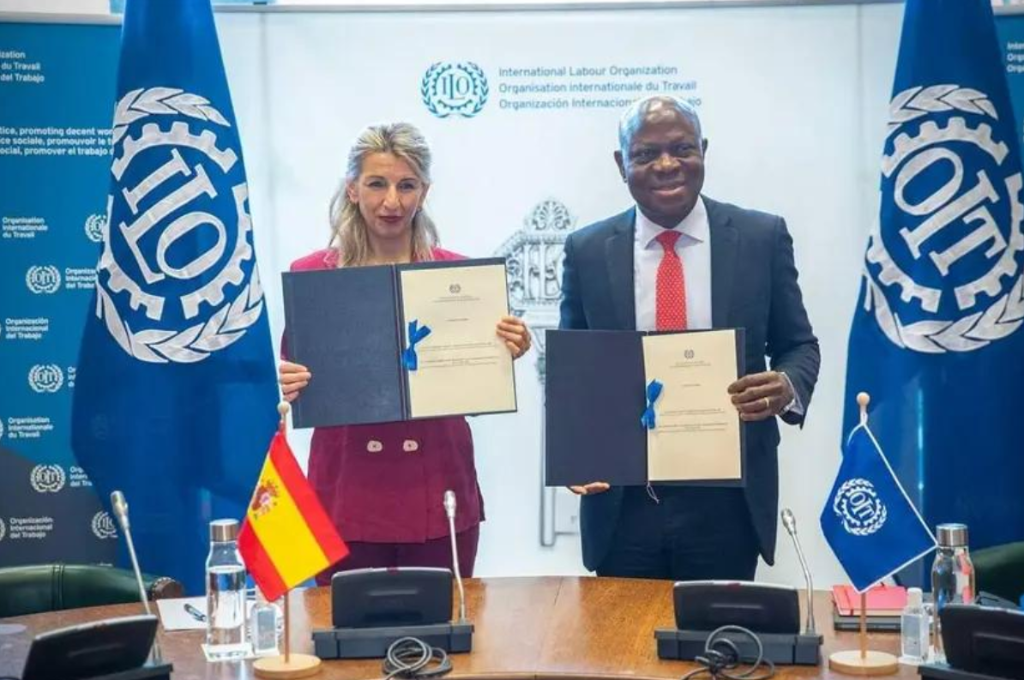
In a dramatic turn of events, Gilbert Houngbo has secured a second five-year term as Director-General of the International Labour Organization (ILO) after his last-minute rival, Spanish Labour Minister Yolanda Díaz, withdrew from the election. While Díaz framed her decision as a move to preserve unity within the global labour movement, her sharp critique of the ILO’s outgoing leadership reveals a troubling narrative: that the organization’s financial instability and weakened social dialogue may have eroded trust among its key stakeholders.
Houngbo’s re-election, now without competition, raises pressing questions. Can an institution dedicated to workers’ rights survive when its own governance model is under scrutiny? What does a vote without opposition say about the health of global social dialogue? These are the strategic dilemmas now facing the ILO as it navigates its future.
The financial crisis at the heart of the controversy
The withdrawal of Yolanda Díaz—after the earlier exit of Peruvian candidate Javier González-Olaechea—transformed a contested race into a one-sided endorsement. Yet Díaz did not go quietly. In her statement, she highlighted what she called the “deepest financial crisis in ILO history,” pointing to delayed and unpaid contributions from member states, particularly the United States, as a major strain on the organization’s budget.
In response, the outgoing administration implemented cost-cutting measures, including staff reductions. But Díaz argued that these steps disproportionately impacted the workforce rather than addressing systemic funding failures. Her critique underscored a growing disconnect: an institution meant to protect workers’ rights was now presiding over workforce reductions within its own ranks.
Such financial strain threatens not only day-to-day operations but the ILO’s very ability to fulfill its mandate—promoting social justice, fair labour standards, and equitable dialogue across governments, employers, and trade unions. Without stable funding, the organization risks becoming a hollow vessel of its founding principles.
Can governance reforms precede financial survival?
Critics, including the ILO Staff Union, have questioned the transparency and fairness of restructuring decisions. They argue that meaningful consultation with employees was lacking during the austerity drive—further eroding trust in leadership. For an agency that champions democratic dialogue and worker empowerment globally, this internal strife sends a damaging message.
Yolanda Díaz went further, asserting that the crisis was not just financial—it was one of credibility. If the ILO cannot model the principles it promotes, how can it expect member states and unions to uphold them? This paradox places Houngbo’s new term under immediate scrutiny: will he pivot toward fiscal stability or deepen the disconnect with the workforce?
Unity or division: Why Yolanda Díaz stepped aside
Díaz’s withdrawal was not merely tactical—it was ideological. She argued that the International Trade Union Confederation (ITUC), the global labour body, had aligned too closely with Houngbo’s vision, sidelining broader concerns within the labour movement. While the ITUC and the International Organisation of Employers (IOE) publicly backed Houngbo, Díaz claimed this endorsement did not reflect the diversity of voices within organized labour.
Her concern was clear: that the labour movement was at risk of internal fracture if dissenting views were marginalized. By stepping down, she sought to prevent a deepening rift—yet paradoxically, her absence left Houngbo with no substantive opposition, raising doubts about the legitimacy of his mandate in the eyes of critics.
This silent election, while procedurally valid, now forces a reconsideration of the ILO’s electoral process. If the absence of competition reflects a lack of consensus rather than unanimous support, what does that say about the organization’s ability to represent global workers authentically?
What’s next for an ILO under scrutiny
Gilbert Houngbo begins his second term with a mandate that feels paradoxically hollow. While he avoided electoral defeat, his leadership now faces a more formidable challenge: restoring trust. The financial crisis, labour discontent, and fractured alliances demand more than rhetoric—they require tangible action.
Restoring the ILO’s reputation will likely hinge on three priorities:
- Financial transparency: Clear communication with member states, especially major contributors, to resolve arrears and secure sustainable funding;
- Social dialogue restoration: Reinvesting in mechanisms for staff consultation and collective bargaining within the ILO itself;
- Strategic realignment: Demonstrating that reform does not mean abandoning the ILO’s core mission—protecting workers—even amid financial pressure.
Without these steps, Houngbo’s uncontested victory may become a symbol not of strength, but of systemic compromise—one that risks further isolating the ILO from the very workers it was created to serve.
From election to reckoning: the ILO’s moment of truth
The ILO has long been a cornerstone of global labour governance. But in an era of rising inequality, precarious work, and weakened multilateralism, its role has never been more critical—or more contested. A second term for Houngbo does not resolve the underlying tensions; it merely postpones the reckoning.
As the world watches, the question is no longer about who leads the ILO. It’s about whether the ILO can lead itself.