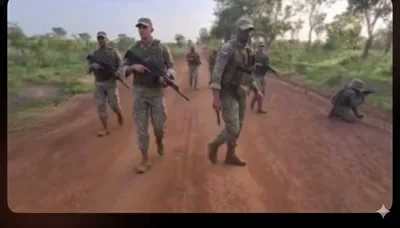
In the southeastern town of Obo, in the Central African Republic, the residence of Thierry, a local father of three, was violently ransacked by a group of Russian mercenaries. The incident has left the family traumatized and their belongings scattered in disarray. Neighbors reported hearing loud noises and commotion before dawn, only to discover the aftermath of the brutal intrusion.
Thierry, who works as a teacher in the community, described the harrowing experience as his home was stripped of valuables, including electronics, cash, and personal documents. “They broke everything,” he recounted, his voice trembling. “Even the children’s school supplies were taken.” The family is now struggling to piece together their lives while grappling with the psychological impact of the invasion.
International presence fuels local tensions
The presence of Russian mercenaries in the Central African Republic has long been a contentious issue. Officially deployed to support government forces in maintaining security, their operations have increasingly drawn criticism for alleged human rights abuses and disregard for civilian welfare. Obo, a remote but strategically significant town, has become a flashpoint in these tensions.
Witnesses in the area claim the mercenaries, often operating under the guise of security contractors, have shown little restraint in their dealings with locals. “They act like they own the place,” said a local shopkeeper who asked to remain anonymous. “No one dares to confront them.” The incident involving Thierry’s family underscores growing concerns about the unchecked behavior of these armed groups.
Calls for accountability and protection
Community leaders are demanding immediate action to hold the perpetrators accountable and ensure the safety of civilians. “This cannot continue,” stated a spokesperson for a local civil society organization. “We urge the Central African authorities and international partners to intervene and prevent such violations.”
Thierry and his family have lodged a formal complaint with local authorities, though progress in investigations remains uncertain. In the meantime, the community is rallying around them, offering support and solidarity in the face of adversity.