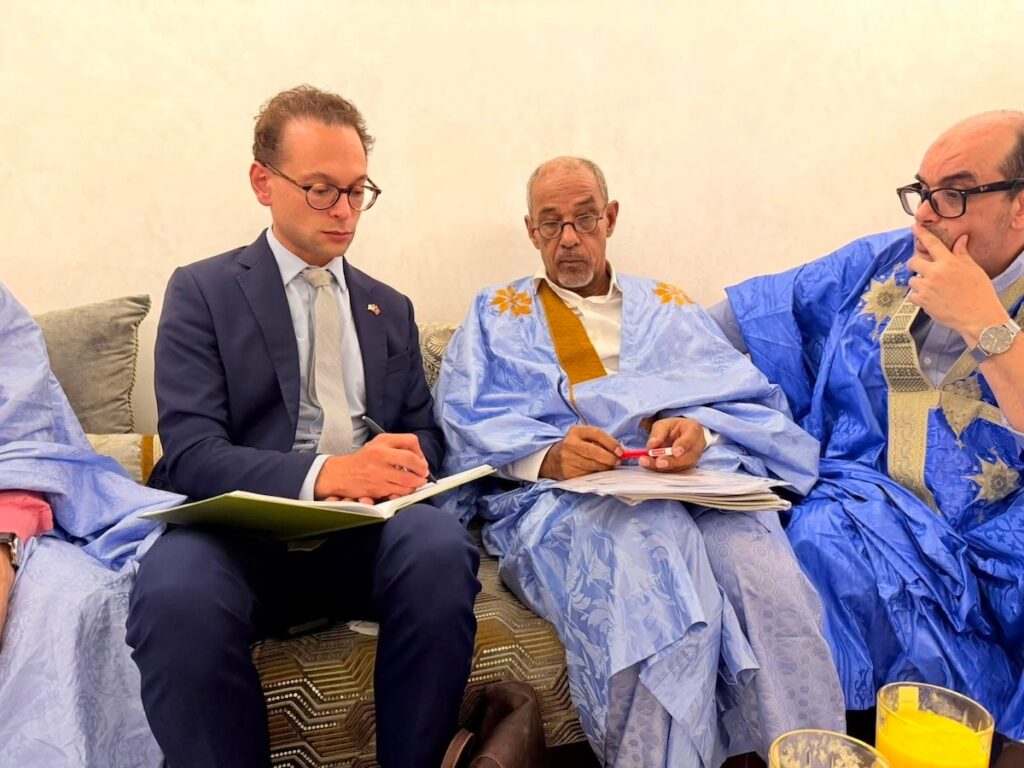
A pivotal discussion unfolded in Laayoune at the residence of Mohamed Lemine Nafa, a member of the Sahrawis for Peace permanent political committee, following an invitation from the American diplomatic mission. The gathering drew key figures and senior members of the movement.
During the session, Sahrawis for Peace representatives outlined their organizational milestones achieved over the past six years, along with their strategic vision for resolving the conflict. They also addressed queries from the US delegation regarding the current state of the Western Sahara dossier.
The movement’s leaders underscored the critical need to include Sahrawis for Peace in the United Nations-led negotiation framework, arguing that it represents a legitimate platform uniting Sahrawi voices advocating for a peaceful political resolution. They emphasized that any negotiation process aimed at a lasting solution must incorporate all Sahrawi representations and stakeholders.
The American political counselor conveyed Washington’s strong commitment to ending the prolonged stalemate. He stressed that the US opposes perpetuating the status quo and reaffirmed support for initiatives aimed at reviving the political process toward a definitive solution.
The diplomat praised Sahrawis for Peace as an active and constructive Sahrawi voice dedicated to negotiated solutions. He assured that the US places particular importance on supporting Sahrawi voices that prioritize agreements ensuring regional stability and security, which could unlock diplomatic pathways and overcome years of confrontational dynamics.
This meeting follows a series of engagements between the US and Sahrawis for Peace, including a recent delegation visit to New York where movement representatives met with US, French, and British permanent ambassadors to the UN.
The timing coincides with the eve of the UN Security Council session reviewing the implementation of Resolution 2797, which has garnered broad international consensus in favor of advancing a political and peaceful solution to the Western Sahara question.