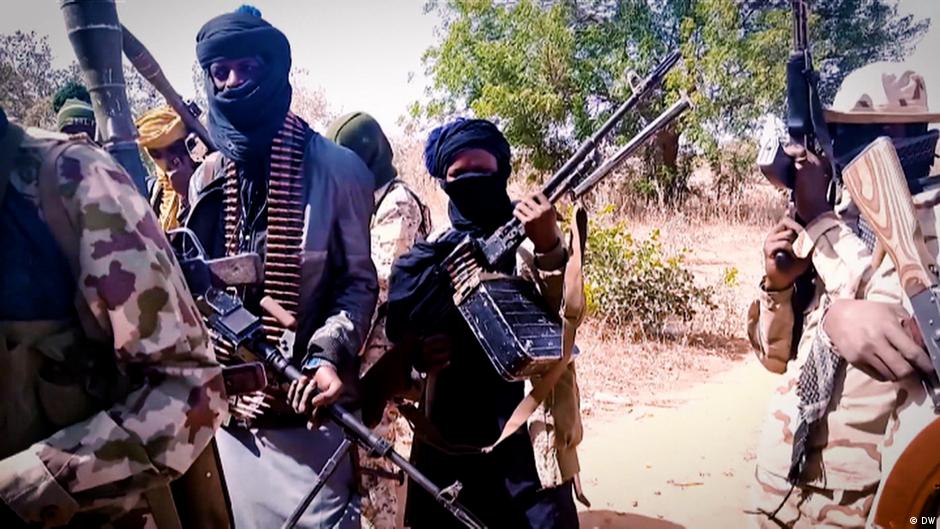
In recent years, kidnapping has evolved into a structured and lucrative industry for Boko Haram, funding its operations across West Africa. This trend is particularly evident in Nigeria—the hardest-hit country—where data reveals a surge in abductions linked to terrorist groups operating in the region.
a growing crisis in the region
Between mid-2024 and mid-2025, over 4,700 people were abducted in nearly 1,000 incidents, according to SBM Intelligence, a Nigerian risk assessment firm. Many of these kidnappings targeted schools in northern Nigeria, where Boko Haram and its splinter faction, the Islamic State West Africa Province (ISWAP), have intensified their campaigns. The violence has also spread to neighboring countries, including Niger, where seven Chadian nationals were kidnapped near the border in late March, with one captive killed and the rest still held.
In the Cameroon’s Far North region, Boko Haram claimed responsibility for abducting bus passengers last year in Zigué, highlighting the group’s expanding reach. The financial demands vary, with ransoms reaching tens of millions of CFA francs for high-profile targets.
economic motivations behind the abductions
“Kidnappings serve two key purposes for these groups,” explains Remadji Hoinathy, a researcher at the Institute for Security Studies (ISS). “First, they forcefully recruit fighters, including women and entire communities, to bolster their ranks or serve as labor or sexual slaves. Second—and crucially—they generate significant revenue through ransom payments.”
For the Chadian hostages in Niger, Boko Haram demanded 50 million CFA francs for five captives. The sixth, a doctor, saw his ransom inflated tenfold to 500 million CFA francs, according to the Chadian Human Rights League. Such figures underscore how kidnapping has become a primary funding mechanism for the group.
government responses and hidden ransom payments
Nigeria officially condemns ransom payments, enacting a 2022 law imposing up to 15 years in prison for those who comply. Yet, enforcement remains inconsistent. Families and local authorities often pay ransoms to secure releases, and allegations persist of Nigerian government involvement in funding Boko Haram.
In November 2025, approximately 230 students and staff from a Catholic school in Niger State were abducted. Reports suggest the government paid a substantial sum—ranging from €1.3 million to €6 million—to secure their release. The Nigerian authorities deny these claims, attributing the outcome to intelligence and military operations. However, experts warn that acknowledging ransom payments could embolden insurgent propaganda.
the strategic importance of the Lake Chad basin
Boko Haram’s roots trace back to Maiduguri, in Nigeria’s Borno State, where it was founded in 2002 by Mohammed Yusuf. The group rejects Western influence, framing education and governance as corrupt. Over time, its insurgency expanded beyond Nigeria’s borders, engulfing Niger, Chad, and Cameroon—the Lake Chad basin, a critical stronghold.
“The Lake Chad basin is vital for three reasons,” notes Hoinathy. “It’s a transnational space linking the Sahel and Libya, a hub for arms and fighters. It’s also a marginalized region with weak state presence, enabling insurgents to exploit economic activities like agriculture and pastoralism. And its geography—marshes, forests, and islands—provides natural hideouts.”
rival factions and shifting tactics
ISWAP, born from a 2016 split with Boko Haram, has adopted a more structured approach, allying with the global Islamic State. Unlike its predecessor, ISWAP prioritizes community engagement over indiscriminate violence, aiming to consolidate control in the Lake Chad region. The rivalry between Boko Haram and ISWAP has fueled a brutal internal conflict, further destabilizing the area.
regional efforts and ongoing challenges
Since 2009, the insurgency has claimed over 40,000 lives and displaced 2 million in Nigeria alone, per UN estimates. Regional cooperation, including the Multinational Joint Task Force (MNJTF), has bolstered military responses, while stabilization programs seek to restore state presence in affected communities. Yet, the adaptability of these groups—reorganizing and resurging despite countermeasures—raises questions about long-term efficacy.
In response, the United States deployed around 200 troops last year to train and support Nigerian forces, reflecting international concern over the crisis. As Boko Haram and ISWAP continue to evolve, their reliance on kidnapping as a funding tool remains a grim reminder of the insurgency’s resilience.