
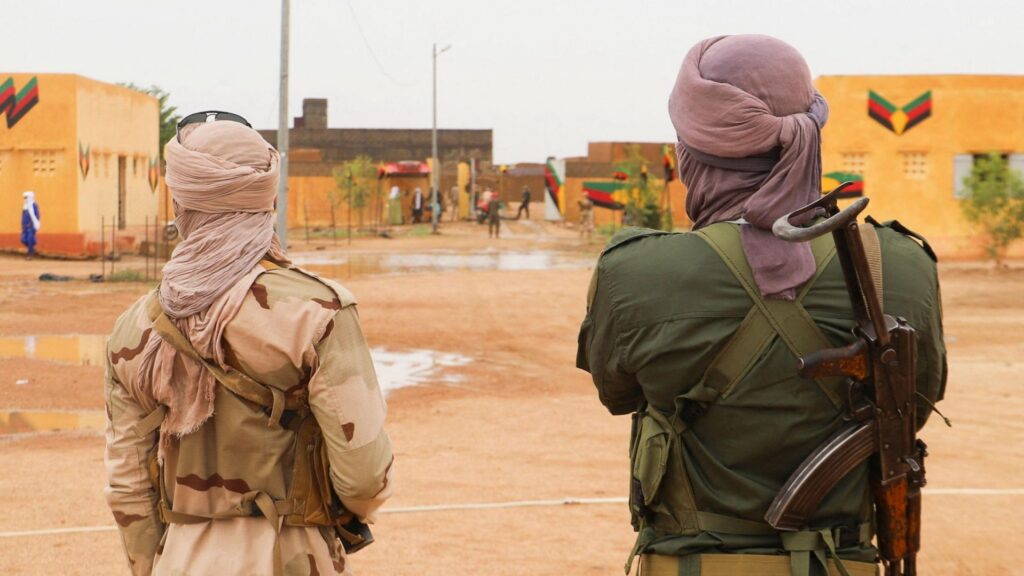
The recent surge in activity by the Jamaat Nusrat al-Islam wal Muslimin (JNIM) and the Front de Libération du Azawad (FLA) has thrust Mali into the spotlight once again, this time as a battleground for shifting geopolitical dynamics between Morocco and Algeria. While Algeria has long positioned itself as a neutral mediator in the Sahel, mounting evidence suggests its involvement in stoking instability across Mali’s borders.
The JNIM-FLA offensive, which has intensified in recent weeks, has exposed Algeria’s hidden hand in Mali’s internal strife. Far from acting as an impartial observer, Algiers appears to be orchestrating a calculated strategy to destabilize its southern neighbor, maintaining what analysts describe as a “controlled tension” to serve its own regional ambitions.
Algeria’s shadow role in Mali’s conflict
Mali’s prolonged security crisis has long been a concern for West African nations, but the involvement of external actors like Algeria has added a new layer of complexity. Reports indicate that Algiers has been actively supporting certain armed factions in Mali, providing logistical and financial backing to groups that challenge Bamako’s authority. This interference not only undermines Mali’s sovereignty but also fuels the cycle of violence that has plagued the country for years.
Morocco, traditionally cautious in its regional engagements, has found itself drawn into this volatile equation. While Rabat has avoided direct confrontation, its diplomatic maneuvers suggest a strategic response to Algeria’s growing influence in the Sahel. The Moroccan government has quietly strengthened ties with Mali’s transitional authorities, offering military cooperation and economic incentives to counterbalance Algiers’ moves.
Regional implications of the Morocco-Algeria rivalry
The unfolding tensions in Mali are not isolated; they reflect deeper geopolitical rivalries that extend far beyond the country’s borders. Algeria’s perceived role in exacerbating Mali’s security challenges has raised eyebrows across the region, with neighboring countries questioning its true intentions. Meanwhile, Morocco’s cautious but deliberate engagement with Bamako has positioned it as a potential counterweight to Algerian ambitions.
For Mali, the stakes could not be higher. The country remains trapped in a cycle of insurgency and instability, with jihadist groups exploiting the power vacuum to expand their influence. The arrival of external actors—whether Algeria, Morocco, or other regional players—risks further complicating an already fragile situation.
What lies ahead for Mali?
As Mali’s transitional government struggles to restore order, the international community watches with growing unease. The JNIM-FLA offensive has already displaced thousands, and if Algeria’s involvement continues unchecked, the humanitarian toll could escalate dramatically. Meanwhile, Morocco’s diplomatic overtures may offer a glimmer of hope, but only if Bamako can navigate the treacherous waters of regional power plays.
The coming months will be critical. Will Mali’s leaders manage to reclaim control over their nation’s destiny, or will they remain pawns in a larger geopolitical game? One thing is certain: the Morocco-Algeria rivalry is far from over, and Mali will bear the brunt of its consequences.
You may also like
Bénin et Émirats arabes unis renforcent leur coopération militaire
Did Togo really spend two million dollars on a symbolic un map?
Did billions vanish from the vaults of the Special Criminal Court in Cameroon?
Why are Bénin’s amazones celebrating a historic handball triumph in Ouagadougou?
Niger’s official narrative masks deep fractures within the ruling junta