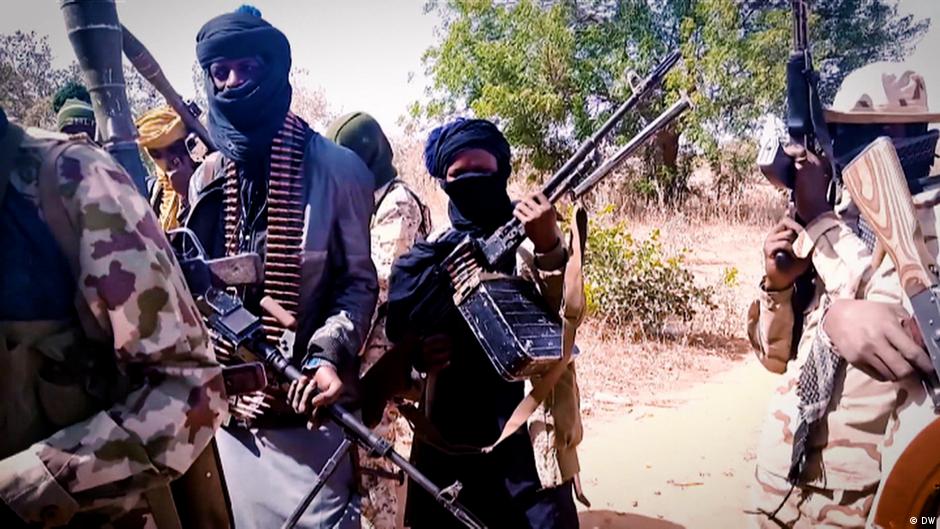
In the vast Sahel region, the shadow of Boko Haram looms large, not just as a militant force but as a criminal enterprise. Kidnapping has evolved into a lucrative industry, sustaining the group’s operations across Nigeria, Niger, Chad, and Cameroon. This West Africa Niger crisis reveals how terrorism and organized crime intertwine, leaving governments and communities grappling with a growing security and humanitarian emergency.
the scale of kidnappings: a structured terror economy
The scale of abductions linked to Boko Haram is staggering. In Nigeria alone—by far the worst-affected country—security intelligence firm SBM Intelligence reports that over 4,700 people were kidnapped in nearly 1,000 incidents between July 2024 and June 2025. These attacks often target schools, markets, and transport routes, particularly in the country’s northern and central regions. The violence has claimed hundreds of lives, with victims including children, teachers, travelers, and local leaders.
The kidnapping epidemic is not confined to Nigeria. In Cameroon, a bus carrying passengers was seized in Zigué, in the Far North region, last year—an attack later claimed by Boko Haram. Across the border in Niger, seven Chadian nationals were abducted near the Tchad frontier in late March. One victim was killed; the others remain in captivity. The group’s demands vary: 50 million CFA francs were sought for five hostages, while a doctor among them faced a 500 million CFA francs ransom—an exorbitant sum condemned by human rights observers.
how kidnappings serve Boko Haram’s dual agenda
According to Remadji Hoinathy, a researcher with the Institute for Security Studies (ISS), kidnappings serve a dual purpose for Boko Haram. First, they are a tool for forced recruitment—young men, women, and entire communities are coerced into joining the group as fighters, laborers, or victims of sexual slavery. Second, they generate significant revenue through ransom payments, which fund weapons, logistics, and recruitment campaigns.
Ransom demands often reach millions of naira or CFA francs. In some cases, families pay directly. In others, communities or even state authorities contribute under pressure. Despite a 2022 law in Nigeria criminalizing ransom payments—with penalties up to 15 years in prison—enforcement remains inconsistent. Reports suggest that authorities have quietly paid ransoms to secure the release of kidnapped students and teachers, including in high-profile cases involving Christian communities.
Boko Haram’s roots and regional expansion
Boko Haram originated in 2002 in Maiduguri, the capital of Borno State in northeastern Nigeria. Founded by preacher Mohammed Yusuf, the group rejected Western education and governance, advocating for a strict Islamic state. Its name, derived from Hausa, translates to “Western education is sin.”
From its early days of preaching and recruitment, Boko Haram expanded beyond Nigeria, establishing a presence in Niger, Chad, and Cameroon. The shared Lake Chad Basin region became a critical operational zone—transnational, sparsely governed, and rich in agricultural and pastoral resources. The area’s geography—marked by islands, swamps, and dense forests—also provides natural hiding places for militants evading military pressure.
As Remadji Hoinathy notes, the Lake Chad Basin is strategically vital due to its porous borders, proximity to the Sahel, and links to arms trafficking routes from Libya. It’s a weak-state periphery where state authority has long been absent, making it fertile ground for insurgent groups like Boko Haram.
the rise of ISWAP: a rival jihadist faction
In 2016, Boko Haram fractured when a faction led by Abubakar Shekau’s successor, Abu Musab al-Barnawi, pledged allegiance to the Islamic State, forming the Islamic State’s West Africa Province (ISWAP). Unlike its parent group, ISWAP adopted a more calculated approach—avoiding indiscriminate attacks on Muslim civilians and instead focusing on building local support and governance structures.
Today, ISWAP and Boko Haram are bitter rivals, locked in a violent struggle for dominance in the Lake Chad Basin. Both groups compete for territory, resources, and recruits, further destabilizing an already fragile region. Their rivalry has only intensified the humanitarian toll: over 40,000 deaths and two million displaced persons since 2009, according to the United Nations.
regional military response: coordination meets resilience
In response to the insurgency, the four affected countries—Nigeria, Niger, Chad, and Cameroon—formed the Multinational Joint Task Force (MNJTF), a regional military coalition backed by international partners. The force conducts joint operations against Boko Haram and ISWAP, targeting leaders and logistical networks.
Yet, despite years of military campaigns, the groups have shown remarkable resilience. Boko Haram and ISWAP continue to adapt, exploiting weak governance, porous borders, and local grievances. As Hoinathy observes, the conflict has exposed limits in purely military strategies. A broader approach—combining security operations with economic development and community engagement—is now seen as essential to long-term stabilization.
The United States has supported Nigeria with military advisors and training since 2023, reflecting growing international concern. But the insurgency persists, driven by a self-sustaining cycle of violence, kidnap-for-ransom, and ideological recruitment.
With no end in sight, the kidnapping economy of Boko Haram continues to finance one of the deadliest conflicts in West Africa—a crisis that demands more than just guns and ransom payments to resolve.